Communications and Marketing | Alumni Office

Lea in the cold blue: a graduate in Antarctica
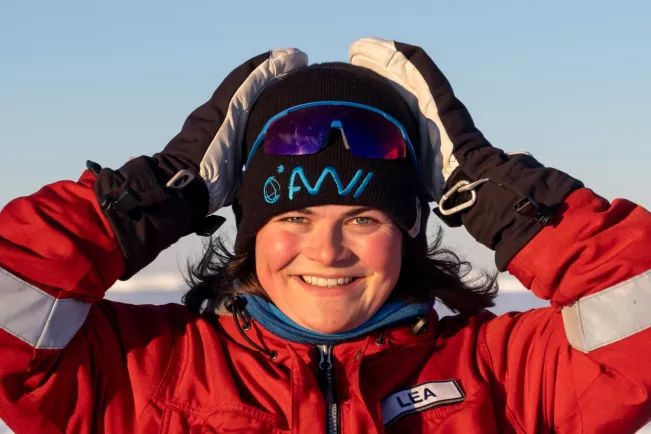
An H-BRS alumna in Antarctica? That really is unusual, so we were grateful that Lea Buse took the time to join us for a video call with her university’s alumni office.
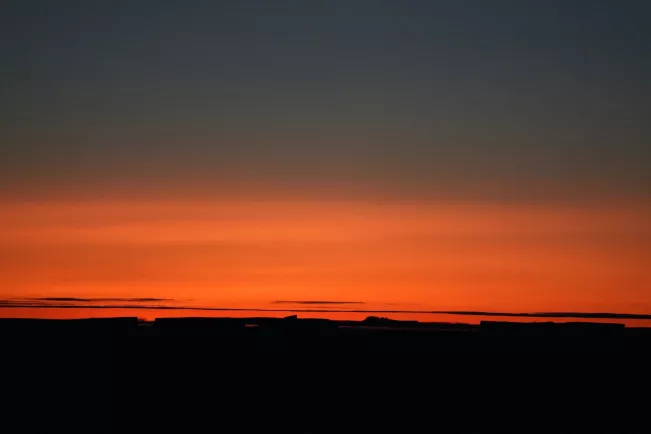
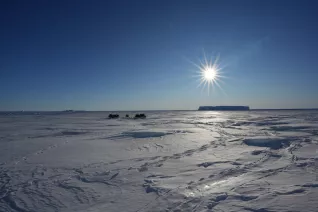
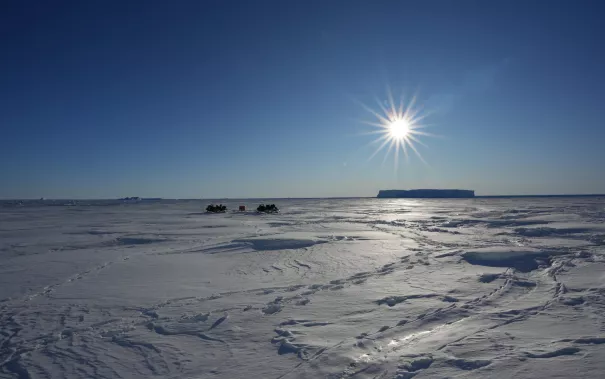
At the start of our conversation in late June 2026, we did a quick check: there are currently thirteen and a half thousand kilometres between us and a difference of around 55 degrees in the outside temperature. Whilst the Rhineland is currently enjoying over 17 hours of daylight, Lea Buse – an electrical engineer and graduate of the H-BRS – hasn’t seen any sun at all for the past two months. At best, a diffuse twilight illuminates the white landscape of ice and snow around Neumayer Station on the Antarctic ice shelf – her current place of work – during the midday hours. Still, the position of the sun treats the overwintering team to a magnificent red sky.
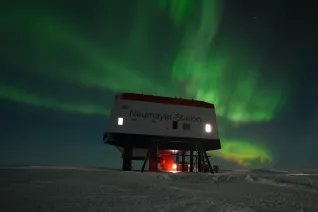
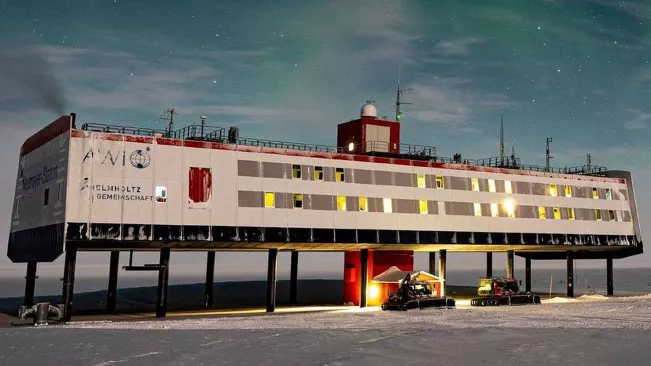
A cup of hot ginger and mint tea in her hand (she brought the dried mint with her from her garden in Cologne), Lea recounts her extraordinary adventure: she is part of the 46th overwintering crew at Neumayer Station III, the key base station for German Antarctic research. Since 1981, the Alfred Wegener Institute (AWI, Bremerhaven) has been operating a station for polar and marine research on the ice shelf on the Atlantic side of Antarctica. “Neumayer III” was inaugurated in 2009. During the Antarctic summer, up to 50 scientists live and carry out research there, measuring the weather, the atmosphere, the Earth’s magnetic field and environmental changes – and, in this place of extremes, they are collecting valuable data that help us to better understand our planet.
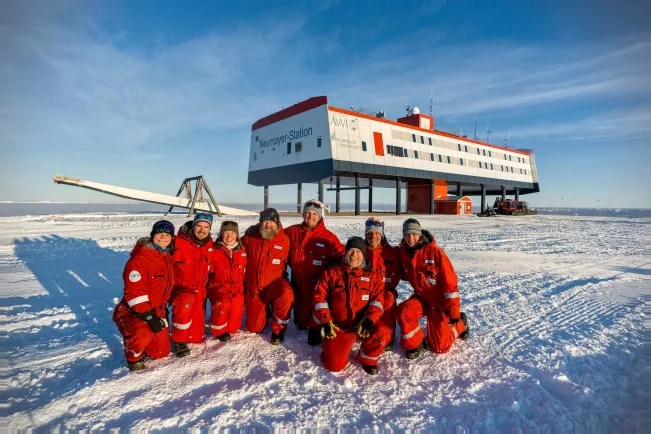
However, from March to early November, it is just a team of eight specialists who manage the station through the Antarctic winter (and look after one another). They cover all the necessary fields of expertise – engineering, medical care, meteorology and geophysics. Of course, the colleague who, as cook and provisions officer, is responsible for keeping spirits high day in, day out, is particularly important.
The team had been preparing for the mission together since the summer of 2025. In November 2025, they set off for the station, where the previous overwintering team briefed the newcomers. During the first few months, they still experienced the noisy, bustling pace of research life. But from March onwards, with the encroaching Antarctic darkness looming, the team was left to their own devices. It is not until August that it becomes noticeably lighter again in Antarctica. Lea and the team will remain at the station until December 2026.
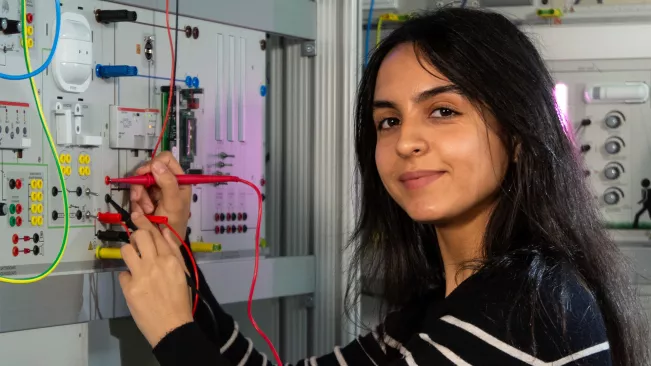
Lea Buse describes herself as a tech geek; she is a hands-on professional through and through. As part of a work-study programme, she completed her Bachelor’s degree in Electrical Engineering at the H-BRS whilst simultaneously undertaking vocational training as an electronics technician at Ford-Werke in Cologne.
The idea of one day working on a polar expedition in Antarctica first occurred to her right at the start of her studies. She constantly carried out research and followed relevant blogs and reports on such missions. She got to know the AWI better whilst training as a research diver and working as a student trainee in permafrost research.
At the Neumayer Station, Lea is responsible for all technical matters alongside her fellow engineer. As such, part of the routine of every working day involves a round of checks to inspect the heating, ventilation and power generation systems. The drinking water treatment process is also checked meticulously, as the station’s drinking water is obtained from snow, to which minerals essential for human health are added. A blocked pipe would have serious consequences immediately.
Work outside the station, on the other hand, cannot always be planned: work on the wind turbine is unthinkable in gusts of up to 160 kilometres per hour. At the end of June, the time had come. Lea was hoisted to a height of around 20 metres by a forklift truck and carried out a thorough maintenance check on the power plant. In total, it took several hours in sub-zero temperatures before she finally secured all the slits with aluminium tape to prevent snow from getting in.
In principle, the AWI also tries to generate as much of the energy required as possible from renewable sources at the Neumayer Station. But under the extreme temperature and weather conditions, this is not always easy: in the early years of the wind turbine’s operation, wind and snow wore away the rotor blades in no time at all. And so, the challenge was first to develop and source rotor blades capable of withstanding Antarctic snowstorms.
The technology used at this third station is designed with minimalism and safety in mind. During the months of preparation, Lea and her colleague received training from the equipment manufacturers on how to operate, maintain and repair the various systems. The spare parts stock is also well-stocked. “But actually, what I enjoy most is learning new practical skills from my colleague – such as working on the lathe – and devising technical solutions. I think it’s simply fantastic to be working here at the station with the full spectrum of technology and science.”
The technical knowledge she gained during her degree is a great help to her. One example is the subject of control technology, taught by Professor Bunzemeier. “Those were very challenging subjects that I really had to get to grips with. But now this fundamental knowledge helps me enormously in understanding, for example, our room air conditioning system or the electricity generation on the ward.”
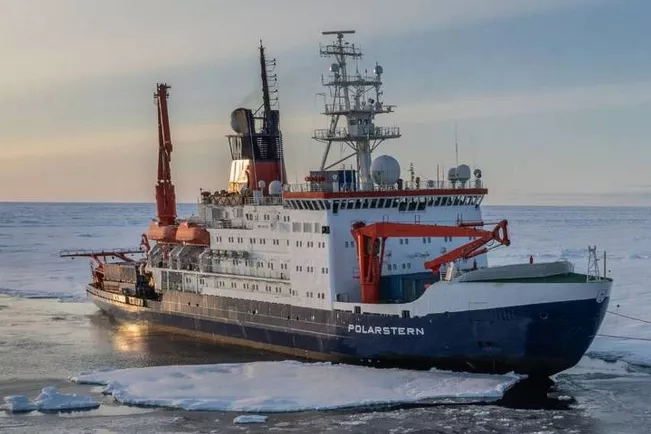
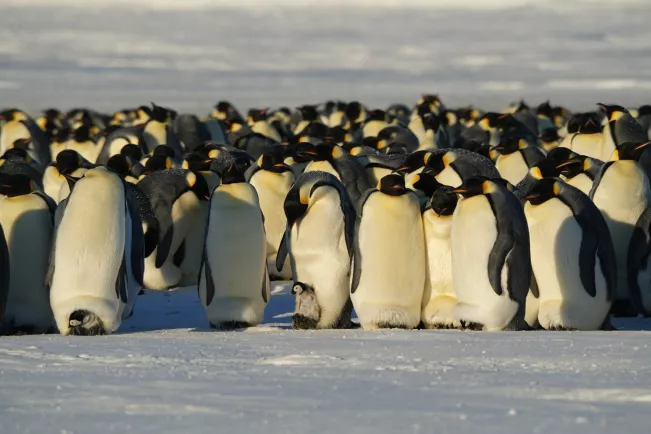
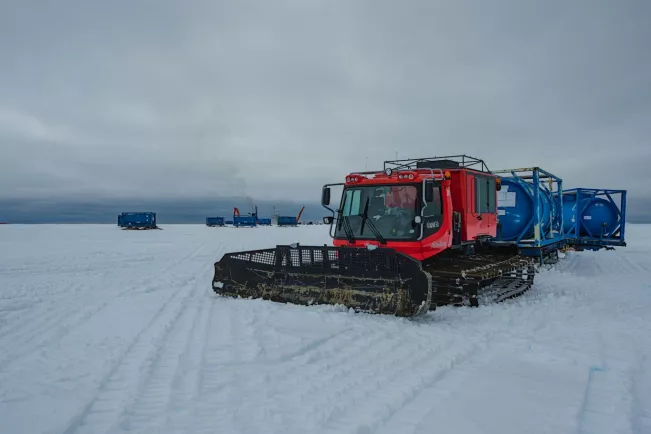
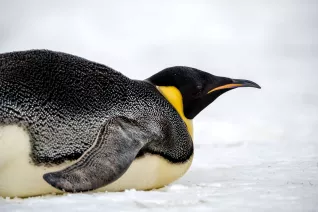
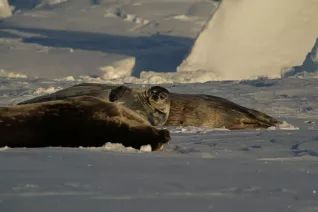
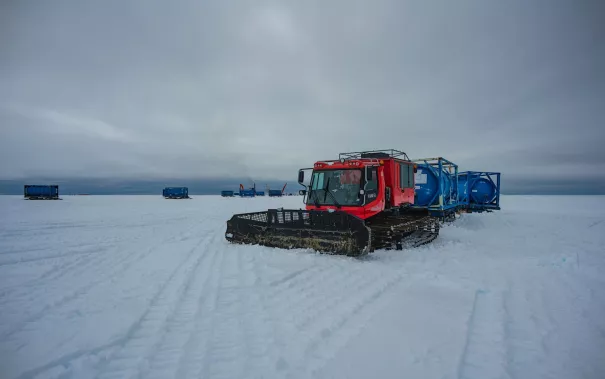
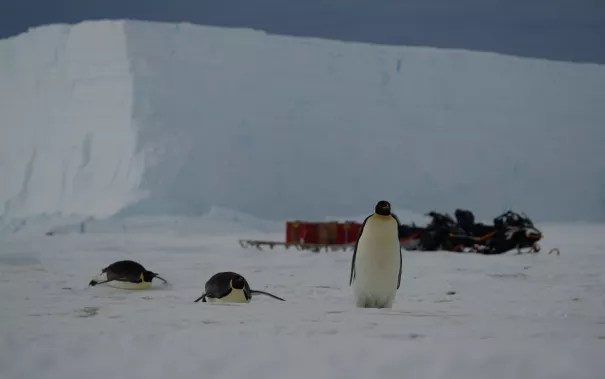
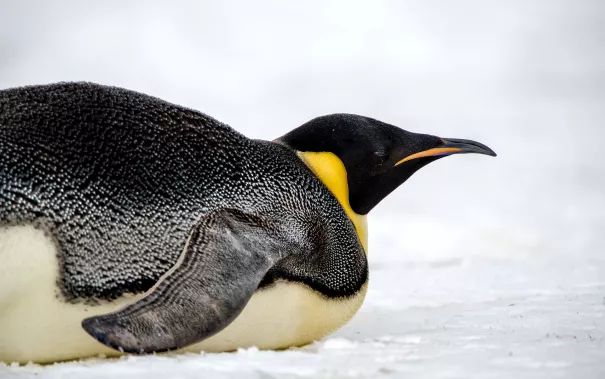
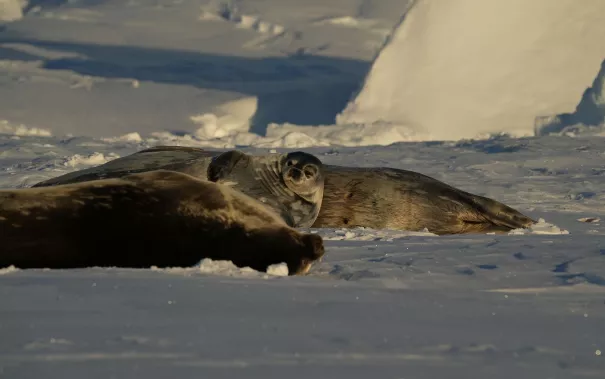
The crew make their way through the ice and snow in a Pistenbulli or on Skidoos – speedy snowmobiles – and sometimes find themselves amongst penguins and seals. Heavy tracked vehicles, on the other hand, are brought into use when, for example, the research vessel ‘Polarstern’ needs to be unloaded. Once a year, during the Antarctic summer, the ship brings supplies and fuel for the whole year. The higher the ice shelf rises above the water, the more labour-intensive it is to hoist containers and transfer fuel. That is why, over the past few months, Lea and a colleague have also been surveying the area around the north-east jetty of the ice shelf, measuring the height there between the edge of the ice shelf and the water’s surface, and assessing whether this spot is better suited for unloading the Polarstern.
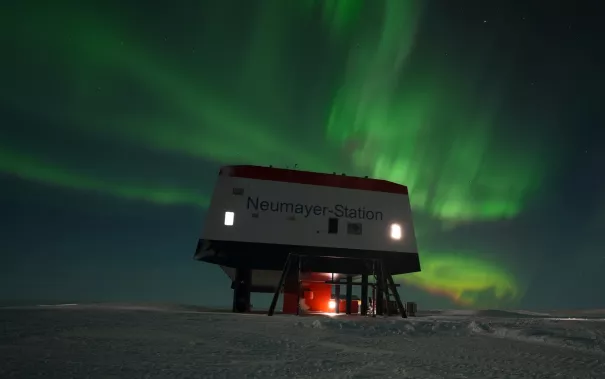
Snow and ice can no longer cause nearly as much damage to the station building as they did to its predecessors: unlike its predecessor stations, which were built into the ice, Neumayer III stands on the snow cover on a platform supported by 16 hydraulic struts. To ensure the station remains level, the technical team regularly raises individual struts slightly. During the Antarctic summer, the station is then lifted completely as part of a major operation.
However, the current station’s lifespan is limited anyway. At some point, the sheet of ice that shifts about 40 centimetres inland every day will break off as an iceberg. Consequently, plans currently envisage the station being used until 2035. The station can then be dismantled down to the very last screw, and the penguins will subsequently wonder: ‘What was that all about?’
Will Lea herself experience this moment in Antarctica? Her enthusiasm for the extremes of the polar world remains undiminished, and on Instagram, under the name “Lea in the cold blue”, she shares her impressions with friends and family. So it will be exciting to see which direction she takes after this experience. Good luck!
Text: Barbara Wieners-Horst. Photos: (unless otherwise stated) Lea Buse, Alfred Wegener Institute
Contact

Location
Sankt Augustin
Room
E 238
Address
Grantham-Allee 20
53757, Sankt Augustin
Telephone
+49 2241 865 9603