High-speed connection of mobile control centres with LEO satellites and 5G

Research project at a glance
Departments and Instituts
Period
01.10.2024 to 31.03.2026

Project Description
The core task is to dynamically and quickly set up mobile 5G campus networks and WLAN cells directly in the affected areas. The flexible integration and networking of various broadband technologies is crucial for this: these include public mobile networks, satellite-based LEO/VSAT terminals for supra-regional connectivity, as well as local field cables and WLAN radio links. This heterogeneous combination creates the necessary redundancy and a robust communication infrastructure that remains functional even in the event of partial failures and ensures continuous connectivity.
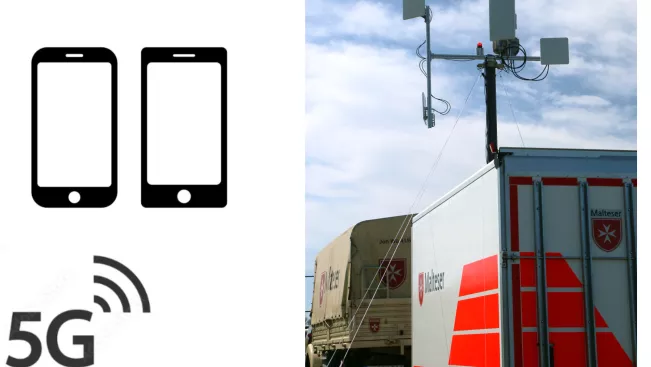
A key focus is on the development of innovative, "secure and robust access nodes" by Hochschule Bonn-Rhein-Sieg. These access points are specially designed to be operated intuitively, securely and reliably by BOS personnel. This is possible even under extreme stress and without in-depth network expertise on site. The nodes enable the ad-hoc setup of high-performance 5G campus networks and high-performance WLAN cells using the latest standards such as WiFi 6E or WiFi 7. The result is immediate operational readiness that closes digital communication gaps in critical situations and sustainably strengthens the resilience of civil protection. The solution aims to optimise the coordination of emergency services and ensure access to mission-critical services at all times.
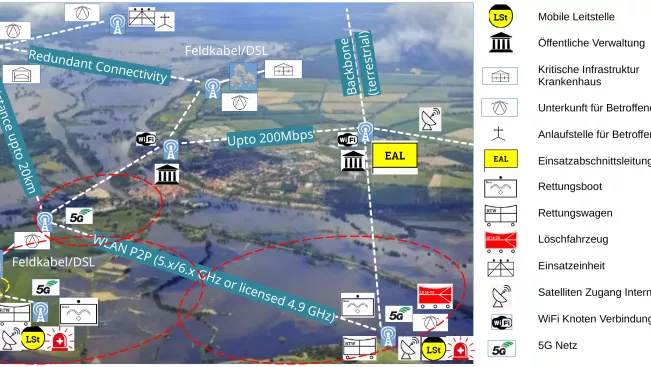
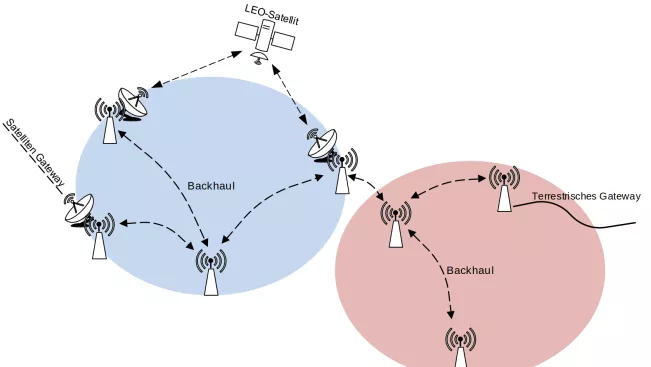
The HiLeit project pursues an agile and iterative solution approach based on the tried-and-tested WiBACK technology from Fraunhofer FIT. This radio-based, fail-safe communication technology forms the backbone for the rapid setup and operation of mobile 5G campus networks and WLAN cells. The methodology focuses on the seamless integration of heterogeneous broadband technologies. To this end, the Unified Technology Interface (UTI) of the WiBACK architecture (WLAN radio relay) is being expanded to optimally integrate LEO/VSAT satellite connections. An adaptive capacity management module is being developed that recognises dynamic uplink and downlink capacities and uses them for intelligent load balancing and failover to ensure maximum bandwidth and reliability.
A central component is the development of an end-to-end security concept. This takes into account BSI requirements and future cryptographic developments while maintaining usability for emergency services. Secure, authenticated and authorised access to the infrastructure is implemented using SIM cards, eSIM or certificates. Data transmission is fully encrypted using post-quantum cryptographic methods. Modern VPNs are used to secure the entire infrastructure.
The federation of several BOS networks is made possible by network slicing, whereby logically separate networks can be provided for different organisations within a common cluster, including secure connection and separation of the clusters. The prototypical implementation and validation of these approaches will be carried out in a technology demonstrator, which will be evaluated in field trials to test the practicality and performance under real conditions


Sponsors