International Office
H-BRS got Balkanised
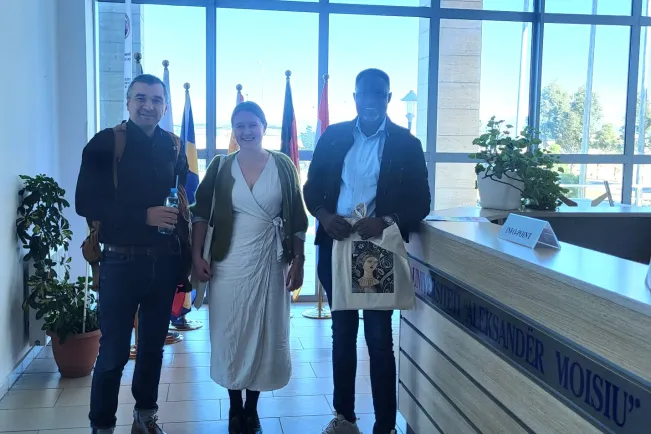
The delegation's activities brought together academic expertise and international partnership development. Prof. Michael Sauer and Allex Semba, from the Department of Social Policy and Social Security Studies, contributed to academic exchange and Erasmus+ cooperation, while Paulina Hinz, Coordinator for Partnerships and Cooperation at the H-BRS International Office, focused on strengthening institutional partnerships and the Get Balkanised internship network.
During the visit, it became clear how closely higher education development is linked to broader societal change. In Albania, the delegation encountered student protests in which young people voiced their dissatisfaction with political and social conditions, as well as their future prospects.
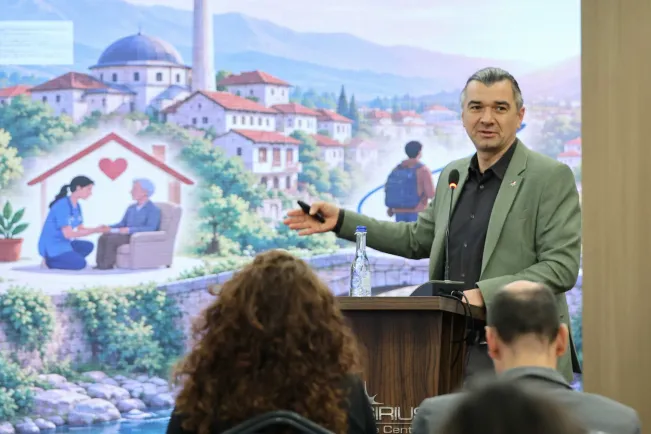
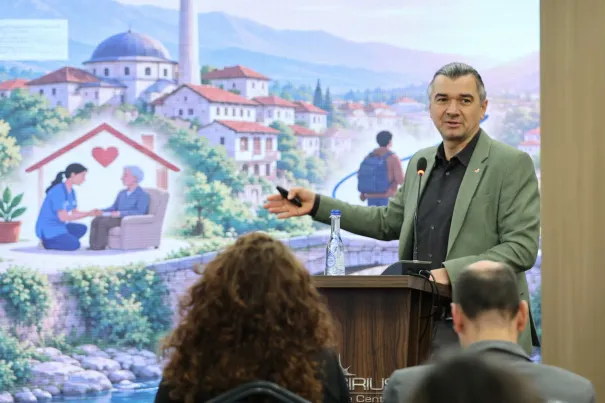
Even before the joint workshop, Prof. Michael Sauer visited Kosovo, where he gave a presentation at the conference "Care Work, Gender Equality and Social Resilience" at University of Prishtina, had discussions with the embassy and was interviewed by the independent media outlet Kosovo 2.0. In the interview, he discussed the effects of labour migration on Kosovo’s labour market, family structures and the care of older people.
His key message was that migration should not necessarily be a one-way loss for the country of origin. Instead, the professional experience, knowledge and international networks of the diaspora can contribute to the country’s development, provided that appropriate structures are established to facilitate and sustain this transfer of knowledge.
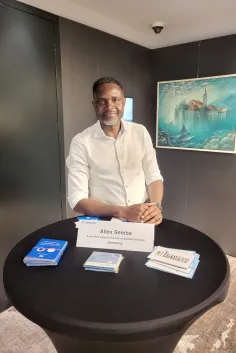
From 13 to 15 October, Allex Semba represented H-BRS at the Erasmus+ Networking Forum, “Western Balkans in the Focus: Promoting and Deepening Cooperations in the Erasmus+ Programme”, in Podgorica, Montenegro. Organised by the German Academic Exchange Service (DAAD), in collaboration with the National Erasmus+ Office in Montenegro, the event brought together representatives of higher education institutions and educational organisations from Germany, Austria, Czechia, Poland and the Western Balkans.
During the forum, Semba presented the Get Balkanised internship programme and invited universities in the region to explore partnerships with H-BRS, particularly by connecting the university with local organisations that could host student interns. His participation also provided opportunities to exchange experiences on Erasmus+ cooperation, consortium development and international higher education partnerships.
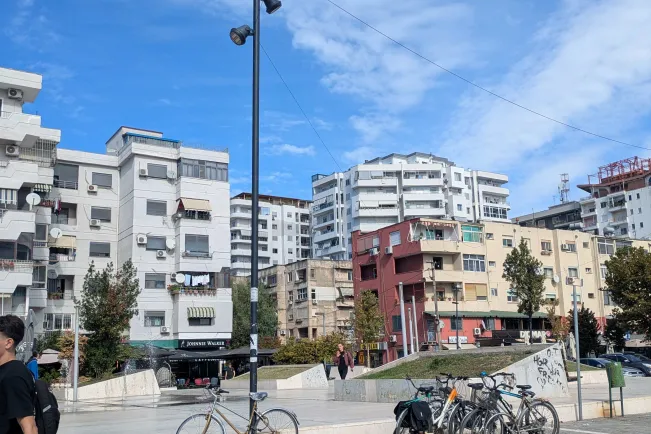
In parallel, Paulina Hinz undertook a programme of meetings and partner visits in Albania from 12 October. Her activities included discussions with representatives at Currila Campus and the Directorate of Projects and Foreign Relations, as well as meetings with existing and prospective Get Balkanised partner organisations.
Together with programme partners, she visited the Center for Services for Persons with Special Needs, CSDC Durrës and RecycAl. These meetings provided opportunities to strengthen existing relationships, explore further cooperation and expand the network of organisations involved in hosting international interns.
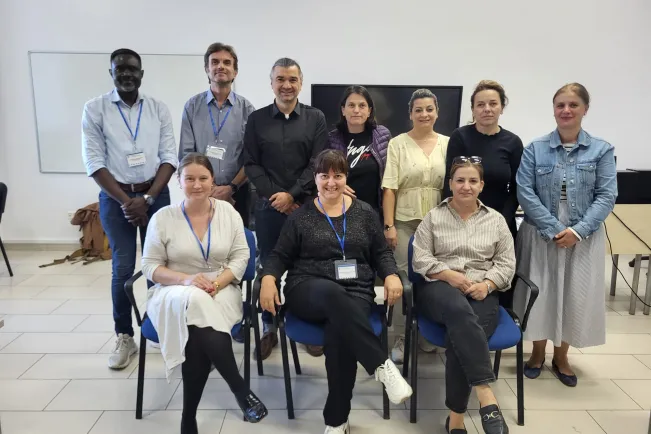
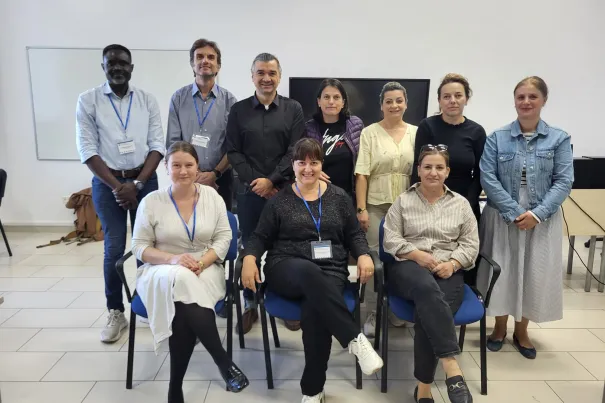
A central element of the visit was the SCOPE-SEE writing workshop at Aleksandër Moisiu University of Durrës, Albania, on 15 and 16 October 2026. The initiative, titled Social Policy, Care, Occupation and Policy Transfer in South-East Europe, brings together university partners to develop an Erasmus+ Capacity Building in Higher Education (CBHE) funding application.
Building on discussions and preparatory work undertaken during previous project meetings, consortium members regrouped to refine and finalise the work packages that will form the pillars of the application. The sessions focused on aligning project objectives with identified regional and institutional needs, clarifying partner roles and responsibilities, strengthening consortium governance, and connecting planned activities with resources, budgets and expected results.
The workshop also addressed the remaining work required to prepare the application, including identifying gaps in the proposal and establishing responsibilities for drafting and reviewing its different sections. The process marked a further step in translating the partners' shared interests in social policy and care into a structured proposal for international cooperation.
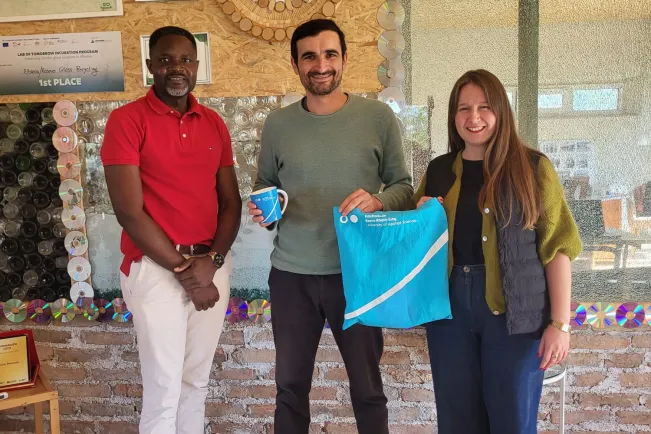
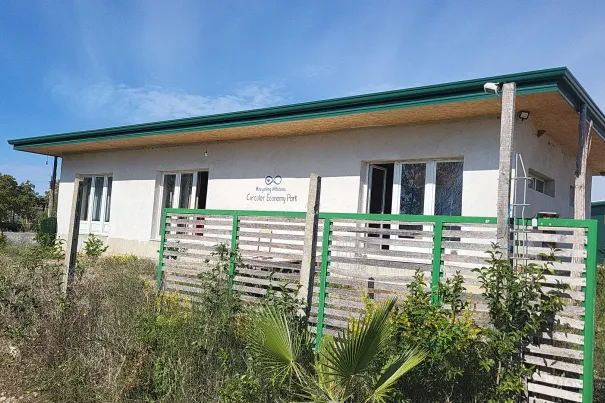
The visit also provided an opportunity to connect H-BRS's international partnership activities with practical workplace experience. As part of the Get Balkanised programme, the team’s itinerary included a visit to RecycAl, alongside other partner organisations in Albania. The SCOPE-SEE workshop programme also included a visit to RecycAl on Saturday, 17 October, where Lulzim Baumann presented the organisation's work in the recycling sector. The team was also accompanied by Antonia Koschny, an alumnus of the Get Balkanised Internship Programme.
The engagement highlighted the importance of local organisations in providing practical learning environments for international interns. By strengthening relationships with universities and potential host organisations, H-BRS aims to broaden opportunities for student mobility and connect international cooperation with experience gained beyond the university classroom.
The visit highlighted how universities can contribute to addressing societal challenges through complementary forms of cooperation: sharing academic expertise, developing joint projects and building partnerships with organisations working on the ground. From discussions on migration and care in Kosovo to Erasmus+ networking in Montenegro and project development and internship partnerships in Albania, the activities demonstrated the value of connecting institutional cooperation with regional needs and practical experience.
For H-BRS, the next step is to build on these relationships, continue developing the SCOPE-SEE funding application and strengthen the Get Balkanised network of universities and internship host organisations. Together, these activities provide a basis for longer-term cooperation that links higher education, applied social policy and practical learning across the Western Balkans.
Kontakt

Location
Sankt Augustin
Room
E 056
Address
Grantham-Allee 20
53757, Sankt Augustin
Telephone
+49 2241 865 9763