Social Protection (MSc)
MSc Social Protection Insights: November 2025
September 2025: Social Protection Insights
📢 Application for the Winter Semester 2026/2027 is now open
Applicants requiring a visa to study in Germany may apply from 15 November, 2025 to 15 January, 2026 exclusively via uni-assist. Detailed information on visa requirements can be found in the overview provided by the Federal Foreign Office. Applicants without a visa requirement, including students from Germany and applicants who already hold a valid visa, may apply until 31 May via the university’s online application portal Apollo
Further information on access requirements and required application documents as well as the links to the application platforms can be found here 👇
----------------------------------------------------------------------------------------------------------------------
📢 Upcoming Presentation of the MSc Social Protection as part of a webinar offered by MyGermanUniversity on Tuesday, 9 December, 2025
If you areinterested in the MSc Social Protection programme, you may join the free webinar “Study Political Science & Sociology in Germany” hosted by MyGermanUniversity on 9 December 2025 from 16:00 to 17:15 (CET). This webinar will be conducted via Zoom. You can join via the following link: https://lnkd.in/eiQGaGsg
Please note that the input on the MSc Social Protection programme is schedule from approx. 16:30 - 16:45 (CET) and a Q&A session for all programmes from approx. 17:00 - 17:15 (CET).
----------------------------------------------------------------------------------------------------------------------
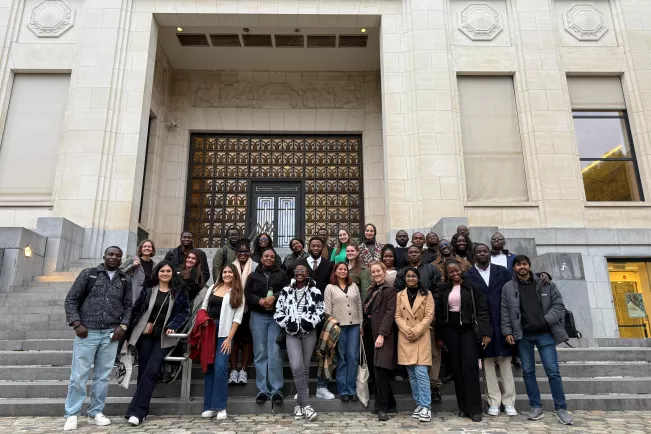
📢 Students Explored EU Institutions in Brussels
As part of the International Social Protection Policy module, students of academic batch 2025/26 visited European Commission and the International Trade Union Confederation - ITUC , in Brussels in October.
At the European Commission Visitors’ Centre, students attended sessions on Shaping Europe’s Future -The European Commission at Work led by Mr. Willy Kokolo, Policy Officer for Culture at the Directorate-General for Education, Youth, Sport and Culture (DG EAC), and on EU Employment Policy delivered by Mr. Jan Behrens Policy Officer for Sectoral Social Dialogue at the Directorate-General for Employment, Social Affairs and Inclusion (DG EMPL). These sessions covered topics such as fair employment, gender equality, and inclusive social policies, providing valuable insight into how the European Union seeks to further advance sustainable and equitable livelihoods.
At ITUC, students engaged with Evelyn Astor, Director of Economic and Social Policy, in an enriching discussion on how social protection enables a just transition to a low-carbon economy, balancing the social costs of climate adaptation with fairness for workers and communities worldwide. The dialogue around gender-responsive systems further highlighted the importance of designing policies that leave no one behind.
The day concluded with a visit to the House of European History , offering a historical perspective that deepened the students’ understanding of today’s EU values and institutional framework. Also students gained a deeper understanding of how the continent evolved -its conflicts, transformations, and the emergence of common European values and institutions, and how history continues to influence our lives today.
This visit offered a unique and practical perspective on how strong social protection systems foster fairness, resilience, and shared prosperity, reinforcing that social protection is a human right, not a privilege.
-----------------------------------------------------------------------------------------------------
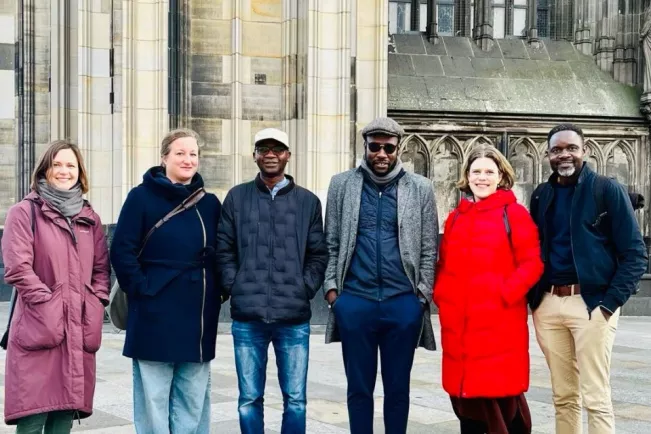
📢 Our Programme Celebrates its 10-year Anniversary 🎉🎉
This year, the MSc Social Protection programme celebrates its 10th anniversary! Established in 2015 as the M.A. in Analysis and Design of Social Protection Systems, the programme equips future leaders from ministries, civil society, and the private sector with the knowledge and skills to design inclusive social protection systems that reduce poverty, foster equality, and strengthen state-citizen relationships.
The interdisciplinary MSc curriculum combines political science, economics, sociology, communication, and management, with strong practical components including internships, field research, and guest lectures from international organizations such as ILO, UNICEF, UNRISD, Oxford Policy Management, and the Red Cross Climate Center. Alumni surveys show that most graduates work in NGOs or government ministries, with more than half returning to their home countries to apply their expertise, demonstrating the programme’s global relevance.
Since 2021, Master in Social Protection programme has proudly partnered with the DAAD German Academic Exchange Service Helmut-Schmidt Programme, attracting exceptional talent from the Global South and providing scholarships and mentoring to support their studies. Over the past decade, the programme has received many applications, increased diversity among students from more than 30 countries, enhanced academic quality, and strengthened alumni networks, amplifying its impact in students’ home countries.
As we celebrate this milestone, the programme continues to build on its experiences, preparing the next generation of leaders to tackle the challenges of social protection worldwide.
---------------------------------------------------------------------------------------
📝 Current Courses: Preparatory courses, Module 1 & 2
Our students are currently engaged in advanced academic content and practical training sessions designed to strengthen their competencies in social protection.
▶️▶️Skills Week (24-28 November 2025)
Skills Week offers students a dedicated opportunity to focus on personal and professional development alongside their intensive course curriculum. This year’s programme includes a Workshops on the topics of Self-Management and Resilience, conducted by SKILLS H-BRS supported by the International Office’s Bridge2Success (B2S) project. Students additionally have the opportunity to complete a self-paced online course,R Basics - Introduction to Statistical Programming taught by Zahras Aitmambet, equipping them with further advanced skillset for their academic and professional growth.
▶️▶️Module 3: Social Protection Policy Instruments
Module provides students with a detailed understanding of the core instruments used in social protection systems. Throughout the module, students explore contributory schemes, tax-financed transfers, social services, and promotional measures, examining their design, impact, and practical challenges. Courses in this module is taught by a distinguished team of experts including Prof. Dr. Markus Loewe , Brian Mathebula , Dr. Deepta Chopra , and Andrea Salvini.
▶️▶️ Module 4: Quantitative Methods in Social Protection
Module 4 introduces students to advanced analytical approaches needed to assess social protection programmes and systems. Students learn to evaluate the social, political, and economic appropriateness of interventions, analyse cost-effectiveness, and understand fiduciary risks. Courses in this module are taught by Dr Albert Opoku Frimpong, PhD and Prof. Dr Simona Helmsmüller, covering submodules on statistics, econometrics, evaluation, and demography. By the end of the module, students gain the ability to determine when and how to conduct rigorous evaluations of both individual programmes and broader social protection systems
--------------------------------------------------------------------------------------------------------------------
Get to Know Our Students, Lecturers, and Alumni
Current student Spotlight
Deniz Demircan
Deniz Demircan , from Turkey, of the 2024/25 academic cohort brings 2.5 years of experience from the Istanbul Planning Agency (IPA), where she worked in the Social Policies Office. Her research interests include climate change, climate movements, and local governance. Ms. Demircan chose the masters programme for its international scope and comprehensive curriculum covering multiple dimensions of social protection. About the programme she says:
„..... The program is helping me because (1) it helps students become aware of the bonds of social protection with various sociopolitical issues, climate change being among prominent issues, and (2) it has a strong focus on long-term planning and encompasses quite a few relevant areas, from actuarial analyses to building the social support for change[....]. This programme helped me realise that without climate action, other struggles lose their impact-and it strengthened my commitment to this path.””
Deniz Demircan - Student, Batch 2024/25 Masters in Social Protection
Meet our Lecturers
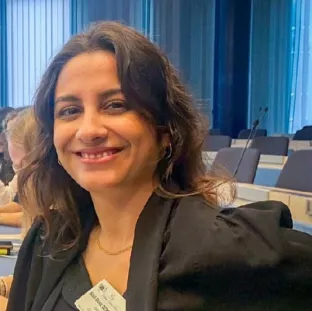
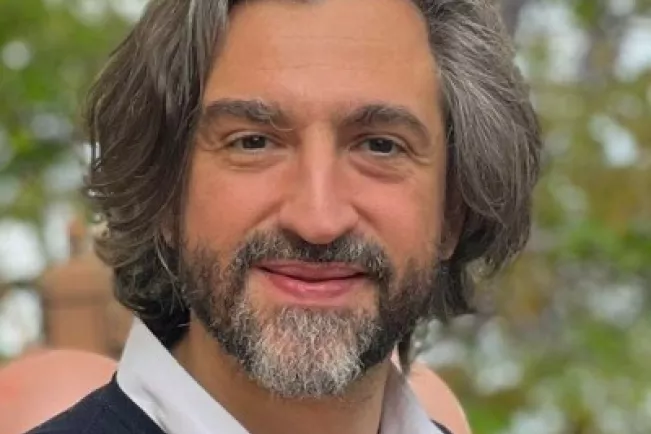
Andrea Salvini , who has been a lecturer in our programme since 2015, is an expert with 18 years of international experience as a labour economist and policy advisor in the areas of employment, skills development, and labour migration. Currently teaching Module 3.4-Promotional Measures Salvini aims to prepare students for both academic rigor and practical exposure in technical assistance.
Resources, Events and Publications
Events
- Register for the Launching event for a new World Bank Approach paper - Planting Roots in Shifting Soil: Building Social Protection and Labor Systems in Fragile, Conflict, and Violence-Affected Settings
- Register for the upcoming event The AI Hub for Social Protection - supporting responsible AI in social protection organized by Digital Convergence Initiative - DCI
Resources
- Read the new publication Protecting Children’s Rights for Displaced Children during our Climate Crisis" Co-authored by Prof. Kerstin Rosenow-Williams, Masauso Chirwa PhD and Gülistan Bayan
- Read the newly published UNICEF Policy Brief "Delivering gender-responsive social protection: Key challenges and lessons learned from the GRASSP research programme" Co-authored by Maria Klara Kuss , Nyasha Tirivayi and Mathilde Van Drooghenbroeck, PhD
- Read the 10 Key Guiding Principles to strengthen gender-responsive social protection published by SPIAC-B Gender Working Group
- Read the article Racism, colonialism, and tax havens: tracing the offshore world’s hidden histories, by Miguel A. Rivera-Quiñones
CONTACT US!
We are always interested in creating partnerships with those of you working in the field! We would love to hear from you if are interested in
- being a #ThesisSupervisor,
- providing #Internship opportunities to our students,
- publishing a paper in our #WorkingPaper series, or
- visiting our university as a #GuestSpeaker
Your feedback and suggestions to improve the newsletter are also very welcome.
📩 msc-socialprotection@h-brs.de
🌐 Master's of Science in Social Protection | Hochschule Bonn-Rhein-Sieg (H-BRS)