Graduate Institute
From data to meaningful services - doctorate for Thomas Neifer
How can companies not only collect data, but also use them sensibly and develop meaningful services?
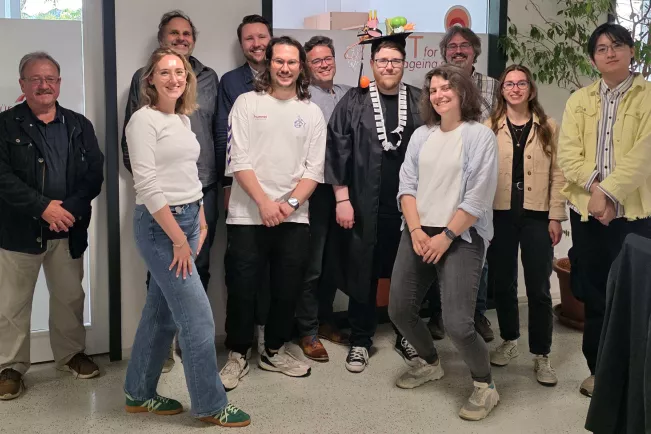
The defence of the doctoral thesis entitled Data-driven value creation from businesses to consumers: aligning strategies to inform development and design of data-driven services took place at the University of Siegen. The defence committee consisted of the two doctoral supervisors Prof. Dr Gunnar Stevens and Prof. Dr Alexander Boden (H-BRS) as well as Prof. Dr Giuseppe Strina (third reviewer and chair of the examination board). Family, colleagues and friends from the Consumer Informatics research group at H-BRS and the University of Siegen were also present.
If you were to explain it to a non-specialist in 3-5 sentences: What was your doctorate about? What were the main findings?
"Data-driven business models and services are increasingly changing the way companies generate value, shape customer relationships and secure competitive advantages. At the same time, they are increasingly penetrating the everyday worlds of consumers, shaping their consumption practices and collecting data about their behaviour.
In my dissertation, I developed a framework that shows how data-driven services can be designed in such a way that corporate strategies, technological possibilities and user needs are meaningfully combined. Based on several case studies, I analysed the company and user perspectives on data-driven business models, derived recommendations for action and design principles and showed how both sides can be brought together in co-design processes. With the Data Science Canvas and the Data Storytelling Process, I have also developed practical tools that support companies in strategically planning data-driven business models and communicating user-centred services in an understandable way.
I would like to take this opportunity to thank my supervisors Prof Dr Gunnar Stevens and Prof Dr Alexander Boden for their support and trust. My special thanks also go to Prof. Dr Andreas Gadatsch, Prof. Dr Dr Franz W. Peren, Prof. Dr Dirk Schreiber and Prof. Dr Johannes Natrop from the H-BRS, whose guidance, impulses and professional exchange have significantly influenced my doctorate."
What are your career plans for the near future?
"At the moment, I'm consciously keeping all my career options open. Firstly, I would like to put my experience into practice and familiarise myself with new work contexts. At the same time, I can also well imagine staying in academia and setting up my own research group in the future, be it through a postdoc position or a professorship. I find the question of how research and application can be combined even more closely in the future particularly exciting."
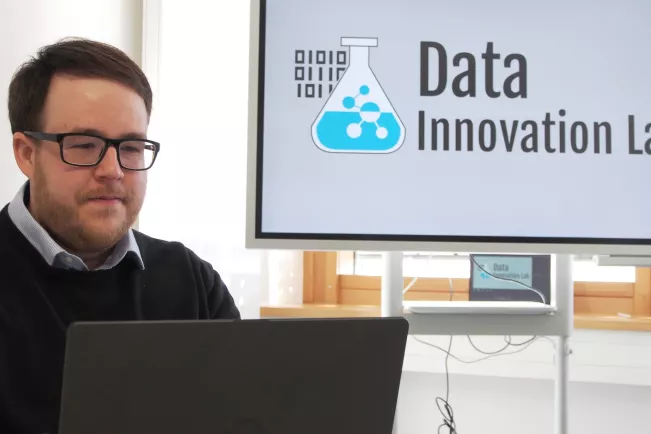
As I myself completed my Bachelor's and Master's degrees at H-BRS, I would like to give a tip to our students: I can only recommend getting involved in research projects early on as a SHK or WHK. This experience not only made my entry into academia easier, but also showed me how valuable it is to be part of a scientific team.
And here's my tip for doctoral candidates:
Academia is sometimes like the mines of Moria - full of hidden depths and challenges that seem bigger than they actually are. Not every obstacle has to be overcome head-on; it is often wiser to pause, reflect and consciously choose a different path. And if you feel trapped between deadlines, buried under mountains of pages or pursued by a metaphorical Balrog (Reviewer 2), remember: even Gandalf had to fall in Moria to return with new perspective and greater knowledge.
Kontakt

Thomas Neifer
Postdoctoral Researcher, Forschungsgruppenleiter Food Informatics
Location
Sankt Augustin
Room
G 123
Address
Grantham-Allee 20
53757, Sankt Augustin
Telephone
+49 2241 / 865-9886
Location
Sankt Augustin
Room
G135
Address
Grantham-Allee 20
53757, Sankt Augustin
Telephone
+49 2241 865
Alexander Boden
Professor for business economics, esp. Software Engineering, Schwerpunktprofessor for economical and social sustainablity, Co-Director of the Institute for Digital Consumption (Consumer Informatics)
Location
Sankt Augustin
Room
E136
Address
Grantham-Allee 20
53757, Sankt Augustin
Telephone
+49 2241 865 119Anlaufstellen
Graduierteninstitut: Contact
Campus
Sankt Augustin
Room
F 427 , F 425, F 423
Opening hours
Mon-Fr 9.00 am-1.00 pm call us, send an e-mail or make an appointment for individual counselingfor