Department of Natural Sciences
Biomedical Sciences (MSc)
Study Facts
Degree
Master's degree
Standard period of study
4 semesters
Lecture language
English
Campus
Rheinbach
Start of study
Winter term
Type of study
Full-time
Admission requirements
Admission to the Master’s programme in Biomedical Sciences requires a Bachelor’s degree comprising at least 180 credit points in one of the following fields:
👉 Biology, Medicine, Pharmacy (or a closely related degree programme) with at least 6 ECTS in each of the following subjects:
Developmental Biology, Human Biology, Immunology, Molecular Biology/Genetics and Physiology;
👉 Forensic Science with at least 6 ECTS in each of the following subjects:
Biochemistry, Cell Biology, Forensic Genetics, Immunology and Physiology.
International applicants from non-EU/non-EEA countries must also pass a programme-specific aptitude test. Applicants who meet all the entry requirements will be invited to sit this online test.
Information on admission, applications and the required documents
Admission type and application deadline
For all applicants with international Bachelor’s degrees:
- 15 December to 15 February for the winter semester of the respective year exclusively via uni-assist.
For applicants with German Bachelor’s degrees:
- 15 December to 15 July for the winter semester of the respective year via the Apollo application portal.
Language skills
The language of instruction is English. A level of English equivalent to B2 (CEFR) is required. The following are accepted as proof: a university entrance qualification that demonstrates English language proficiency at the required level; an English-language secondary school or higher education qualification; or the following English language certificates: English language certificates.
Costs
For this degree programme, only the current term’s tuition fee is payable: Termly tuition fees and charges.
Course content and learning outcomes
Course structure
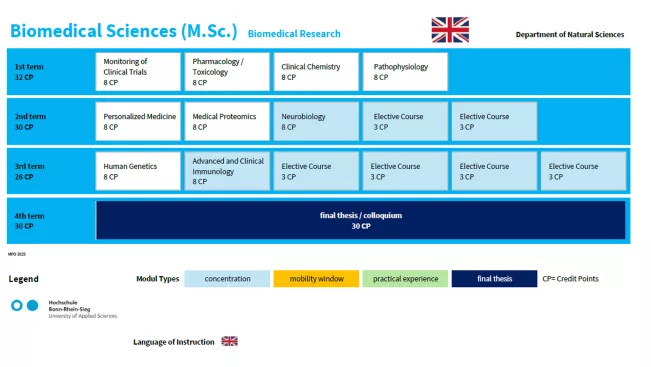
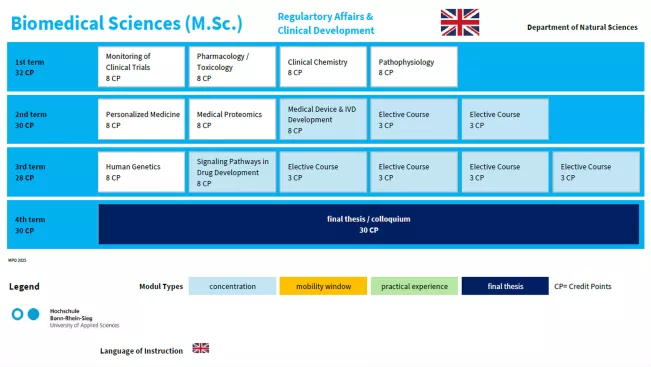
The programme lasts four semesters and, from the second semester onwards, allows you to specialise in either Biomedical Research or Regulatory Affairs & Clinical Development. In addition to core modules on the molecular basis of diseases and therapies, as well as the design of clinical trials, you will choose specialised modules relating to your chosen specialisation in the second and third semesters. You can also set your own individual focus through further optional modules. In the fourth semester, you will undertake your Master’s thesis, applying the skills you have acquired in a real-world research or industrial context.
Career prospects and job opportunities
Depending on your area of specialisation, this broad-based training opens up opportunities for roles across the entire biomedical innovation process:
- Research and PhD studies (universities, research institutes, industry)
- Project and Product Management in Pharmaceuticals, MedTech and Biotechnology
- Medical Writing and Scientific Affairs
- Clinical Research and Trial Management (e.g. Clinical Research Associate, Study Coordinator)
- Regulatory Affairs (e.g. authorisation of medicinal products, medical devices and IVDs)
- Quality management (QM/QA) and liaison roles in development
Practical relevance and teaching formats
The modules combine theory and practice. Lectures, tutorials and seminars impart theoretical knowledge, and students learn how to present their findings and write short research proposals. State-of-the-art methods and equipment are used in the laboratory courses. Lecturers from industry and research teach specialist subjects. Field trips provide insights into industrial companies and research laboratories. These contacts can open up direct career prospects and opportunities for Master’s theses. In addition, research groups within the department enable students to become involved in current projects, for example as part of their Master’s theses.
Study location and learning environment
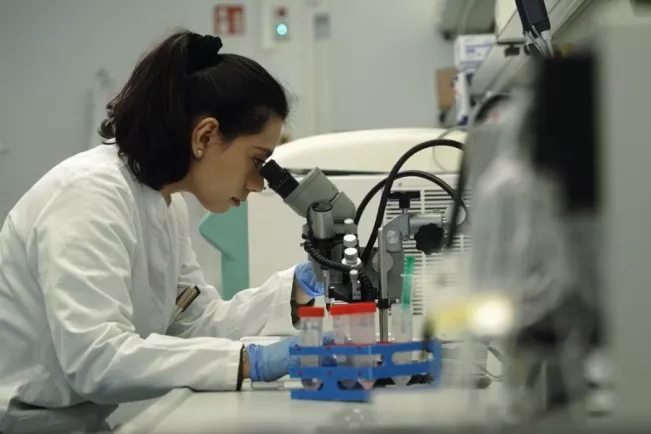
The Rheinbach campus is situated in North Rhine-Westphalia and is easily accessible by public transport from Cologne, Bonn, Düsseldorf or Koblenz. Manageable group sizes and a balanced student-to-staff ratio form the basis for a pleasant learning and working environment. You will work with modern methods from molecular biology, cell biology and biophysics – such as genome editing, sequencing, electrophysiology and flow cytometry – in state-of-the-art, superbly equipped laboratories.
Study plan: Biomedical Research Specialisation
Study plan: Specialisation in Regulatory Affairs & Clinical Development



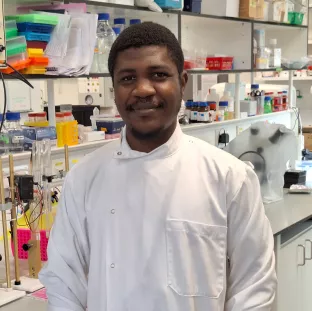
„What did you particularly like about the Master’s programme in Biomedical Sciences at H-BRS? I liked the courses offered on the programme, the way they were delivered, and the lecturers’ commitment to all the students.”
Etang Collins Etang - PhD student at the University of St Andrews in the United Kingdom
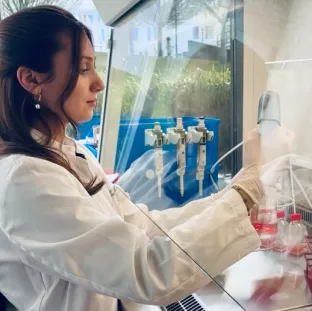
„Overall, the Master’s programme in Biomedical Sciences at H-BRS offered an excellent balance between breadth, depth and practical experience. It provided a solid foundation for my current PhD research and my future career in the biomedical sciences.”
Mihriban Yilmaz (MSc) in Biomedical Sciences, 2025) - PhD student in Dr Monika Scholz’s ‘Neural Information Flow’ research group at the Max Planck Institute for Neurobiology of Behaviour

„I particularly appreciated the programme’s strong practical focus and the many opportunities to get involved in research beyond mere laboratory work. ”
Frederica Ricucci (MSc) in Biomedical Sciences, 2024) - PhD student at Bonn University Hospital in the Department of Paediatric Immunology and Rheumatology
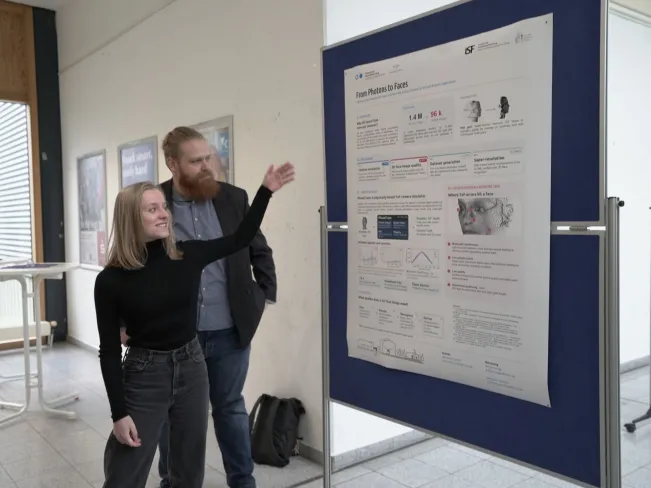
Research, Knowledge Transfer and Start-ups


27. November 2026
18. January 2027
Consultation day for prospective students: "Your path to university"
22. January 2027
Master’s degree at H-BRS: Career, Research, Networking


Accreditation
Contact
Course guidance service Master Biomedical Sciences
Campus
Rheinbach
Room
I 218, I 220
Opening hours
We look forward to hearing from you.
Contact to the Student Services
Opening hours
Telephone consultation hours: Monday - Friday: 10:00 - 12:00
Personal consultations by appointment only
Contact Student Advice Centre
Campus
Sankt Augustin
Room
E029, E031, E034, E035, E041
Opening hours
Telephone hours without appointment
Telephone hours: Monday, Wednesday and Thursday: 10:00-12:00
and Tuesday: 13:00-14:00
International Office - Rheinbach
Campus
Rheinbach
Room
G 005
Opening hours
Please contact us by phone or email for an appointment