Social Protection (M.Sc.)
MSc Social Protection Insights: July 2025
July 2025: Social Protection Insights
📢 DAAD-Helmut Schmidt Programme: Application Deadline Approaching
Applications for the DAAD-Helmut Schmidt program for applicants from developing countries are closing soon! The deadline for the 2026/27 winter semester intake is 30 July 2025. We encourage all interested applicants to ensure all required documents are submitted on time to avoid last-minute technical issues. For more information on the application process, visit DAAD Helmut-Schmidt-Programme Scholarship | Hochschule Bonn-Rhein-Sieg (H-BRS)
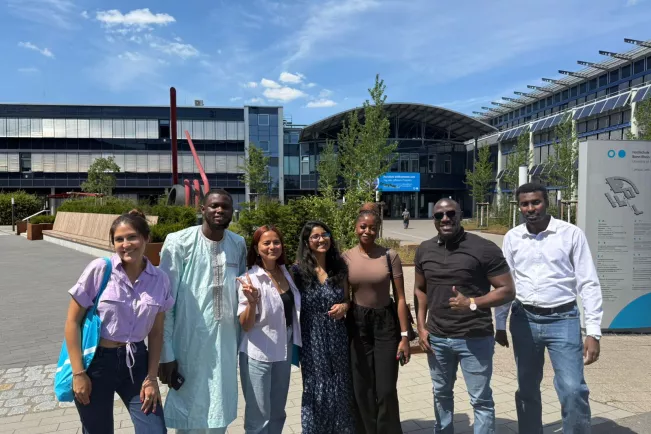
📢 DAAD Scholars’ Orientation Visit to HBRS
From 4-6 July 2025, incoming DAAD Helmut Schmidt scholarship holders for the 2025/26 academic year made their first visit to the HBRS campus in Sankt Augustin. The scholars were warmly welcomed by Prof.Dr. Kerstin Rosenow-Williams, academic head, and Allex (Alex) Semba , DAAD academic coordinator of the MSc program.
The visit included orientation lectures, campus tours, and a city visit to Bonn. Scholars also had the opportunity to engage in a networking event held on 5 July 2025, in association with Malawi Independence Day, organised by Umodzi wa Malawi in Germany e.V. and the Bridge2Success (B2S) programme of HBRS at Steyler Mission.
📝 Current Courses: Module 6 and 8
As students approach the end of the summer semester, they are deepening their knowledge and skills through specialised training in module 6, groups in focus, and module 8, social protection reforms, preparing to tackle complex challenges in social protection.
▶️ Module 6: Groups in Focus (Electives)
Module 6 enables students to analyse the specific needs, risks, and vulnerabilities of key population groups. Among four electives, they choose two to specialise in. They learn to assess and design inclusive, responsive social protection systems by examining how various instruments can be combined and tailored.
▶️▶️Children and Youth // Prof.Dr. Kerstin Rosenow-Williams
This module offers students the opportunity to explore the specific risks and needs of children and youth, as well as develop skills to assess how child-sensitive social protection can improve child protection outcomes. By the end of this submodule, they will design programs that integrate social protection with child protection systems.
▶️▶️Migrants // Shaden Sabouni
Students examine the links between migration and social protection in destination countries. They analyse migrant rights, access to services, and how social protection systems can respond to both forced and voluntary migration through real-world case studies.
▶️▶️Persons with Disabilities // Prof. Dr Masauso Chirwa & Allex Semba
Students gain the ability to critically assess the intersection between disability, inequality, and poverty. They learn how to design inclusive systems that address extra costs, ensure access to services, and promote income security across the life cycle.
▶️▶️Family // Sebrina Brown
In this elective, students will examine the critical challenges families face and explore how social protection systems can address their diverse needs. Students will learn how social protection intersects with family structures, focusing on issues such as access and the quality of benefits for vulnerable groups, including women, children, and the elderly.
▶️ Module 8: Social Protection Reforms
In Module 8, students will learn the need and opportunities for system reform in reaction to socio-economic trends, ecological and technological developments, political influences, and emerging risks. This includes phenomena such as demographic trends, the changing nature of work, climate change, humanitarian crises, and the automation of administrative processes, among others. Additionally, the course will cover how to effectively manage and communicate reforms to minimise obstacles and gain support from both the general public and public policymakers. To achieve this, students will select a current reform idea or topic as part of an interdisciplinary reform project.
▶️▶️Changes in the Working World // Prof. Dr. Anita Tisch
Students will gain the skills to evaluate how changes in labour markets, demographics, and digital innovations shape the future of work. They will understand key drivers of change, assess the impacts of megatrends on employment patterns and job quality, distinguish between macro-, meso-, and micro-level dynamics, and identify emerging forms of work and employment.
▶️▶️Climate Change // Sayanti Sengupta
The course focuses on understanding both conceptual approaches and practical experiences for social protection as an intervention to address climate-related risks arising from climate change. Students will also analyse existing practices and ongoing discourses in this direction as well as challenges and gaps in integrating social protection and climate change in a developmental context, including policy and program design issues.
▶️▶️Reform Communication // Prof. Dr. Derya Gür-Şeker
In this submodule, students learn the skills necessary to design targeted communication strategies for research outcomes, proposals, or policy recommendations. Specifically, they will learn how policy changes and reforms can be more effectively communicated through various media sources, how social media campaigns can be planned, and how social media can be utilised for reform communication.
▶️▶️Reform Process from a Legal Perspective // Prof. Dr. Matthias Meissner
This submodule is designed to equip students with essential skills and insights aligned with the program's goals: to tailor a social protection system that fits the economic, political, legal, cultural, and institutional contexts of each location. IIn three sessions, students will improve their ability to analyse and evaluate legal frameworks, which is an essential skill for social protection specialists.
▶️Reform Management Projects
▶️Disability Inclusive Social Protection // Prof. Dr. Masauso Chirwa
This course is designed to equip students with both the theoretical understanding and practical tools necessary to design, finance, and manage social protection systems that effectively include individuals with disabilities. They will be introduced to a methodological toolbox that supports sound decision-making and resource management in social protection. BBy the end of the course, students will be better prepared to contribute to sustainable and inclusive social protection systems that uphold the rights and dignity of persons with disabilities.
▶️Gender-responsive Social Protection // Prof. Dr. Nyasha Tirivayi
The main goal of this module is to help students understand the importance of gender-responsive social protection programs and policies, including what works and how and why social protection contributes to gender equality. SStudents will learn about gender-responsive social protection, focussing on its conceptualisation, evidence of impacts, the integration of gender in social protection policies, and the design of gender-responsive social protection reforms.
▶️ Social Budgeting // Prof. Dr Krzysztof Hagemejer
TThis module aims to strengthen students' skills in assessing the fiscal feasibility of alternative reform options that are designed to achieve specific reform objectives using a social budgeting methodology. By the end of this module, students will be able to use social budget models to evaluate/simulate future costs of alternative reform options within the countries‘ social, economic, and fiscal environment
Get to Know Our Students, Lecturers, and Alumni
Current student Spotlight
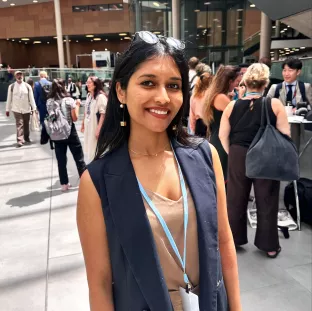
Mahnoor Zubair from Pakistan is a DAAD scholarship holder from our 2024/25 academic cohort. Her research interests focus on migrants, people with disabilities, public health, and social insurance. Her professional experience includes working as a project development assistant on research and evaluation for social protection initiatives in Pakistan, Iraq, and Zimbabwe. She is currently an intern at GIZ, where she supports communications for the social protection & health network of experts. About the programme, Ms. Zubair says,
„The MSc in Social Protection has equipped me with rigorous quantitative and evaluation skills—everything from public‐finance modelling to impact assessment—that translate directly into policy‐analysis and program‐design roles. An expected highlight has been the proactive alumni and faculty network: I didn’t expect seniors to share so many insider tips and job leads, turning classroom connections into real career opportunities. I would recommend this programme for its unique blend of hard-edged data expertise and seamless industry integration, ensuring you graduate both a skilled analyst and a well‑connected professional.”
Mahnoor Zubair - Student, Batch 2024 Masters in Social Protection

Meet our Lecturers
Sayanti Sengupta, an alumna of our programme (2018), teaches the module on Climate Change (M8.1) this summer semester. She brings a wealth of real-world experience to the classroom from her six years as an independent consultant in social protection and climate change. Ms Sengupta has worked on projects with international developmental agencies such as GIZ, UNICEF, WFP, ILO, and the Red Cross, offering students direct insights into the practical applications of their studies.
„Sayanti Sengupta, an alumna of our programme (2018), teaches the module on Climate Change (M8.1) this summer semester. She brings a wealth of real-world experience to the classroom from her six years as an independent consultant in social protection and climate change. Ms Sengupta has worked on projects with international developmental agencies such as GIZ, UNICEF, WFP, ILO, and the Red Cross, offering students direct insights into the practical applications of their studies.”
Sayanti Sengupta - Student, Batch 2024 Masters in Social Protection
Resources, Events and Publications
Events
- Register for the student conference organised by the Centre for Ethics and Responsibility (ZEV) at HBRS on the topic End of the Common Good? by August 15th
- Join IMPULSE Café , an interdisciplinary dialogue session organized by the Bonn Platform Forced Migration Studies, on September 16, 2025
- Attend 7th World Bank/ODI Global/IFS Public Finance Conference from september 25-26 by World Bank virtually.
Resources
- Read Invisible Work, Visible Malnutrition: A Careful Approach to Social Protection and Nutrition co-authored by one of our lecturers, Prof. Dr Deepta Chopra
- Read Global value chain participation and economic growth in Africa, co-authored by one of our alumni Martin Paul Jr. Tabe-Ojong, Ph.D.
- Read A Critical Analysis of Russia's Maternity Capital Program: Demographic Intentions vs. Socioeconomic Realities authored by our student Anna Samodova
- Join the self-paced course on Systems Thinking for Nutrition and Social Protection by World Food Programme , Institute of Development Studies and socialprotection.org
CONTACT US!
We are always interested in creating partnerships with those of you working in the field! We would love to hear from you if are interested in
- being a #ThesisSupervisor,
- providing #Internship opportunities to our students,
- publishing a paper in our #WorkingPaper series, or
- visiting our university as a #GuestSpeaker
Your feedback and suggestions to improve the newsletter are also very welcome.
📩 msc-socialprotection@h-brs.de
🌐 Master's of Science in Social Protection | Hochschule Bonn-Rhein-Sieg (H-BRS)