Biometrics Research
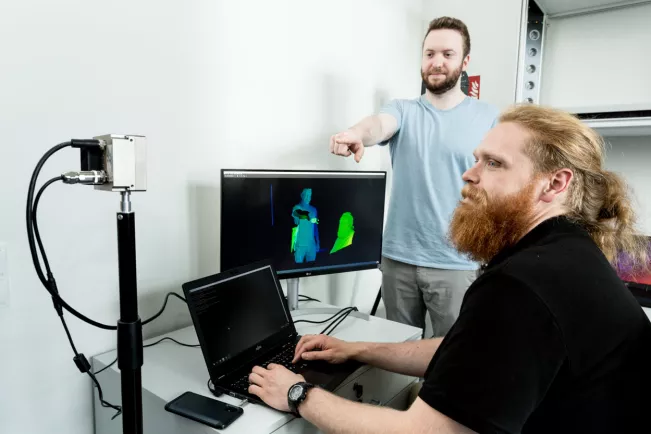
Research project at a glance
Period
01.02.2024 to 31.01.2027


Project Description
For many years, biometric systems have been an essential method of user authentication due to their ease of use and reliability; they are becoming increasingly important as a result of the growing digitalisation and automation of authentication processes.
They have now become an integral part of both the consumer sector (for example, in smartphones) and government applications (for example, in border control systems). However, as the importance of biometric systems grows, so too do the demands placed on their reliability and security. To ensure their effective deployment and thus contribute to the protection of civil society, the continuous and systematic evaluation of biometric systems is of crucial importance.
Objectives
In addition to the evaluation of biometric systems and the development of evaluation tools, the Biolab project’s objectives focus in particular on the development of new biometric security technologies. The evaluation examines the three main criteria for biometric systems:
1. Biometric performance
To this end, practical functional tests are carried out with a large number of test subjects, who are selected to represent as wide a range of diversity as possible.
2. Resistance to attack
Here, verification systems are subjected to various attack scenarios to test their effectiveness. The aim is to assess how well a system recognises when it is being presented with forged biometric features. For example, the resistance to tampering of camera systems can be tested by having test subjects wear masks.
3. Usability
The correct operation of biometric systems by users is also tested as part of extensive studies involving test subjects.