Communications and Marketing
Greener and more sustainable: H-BRS completes campus redesign
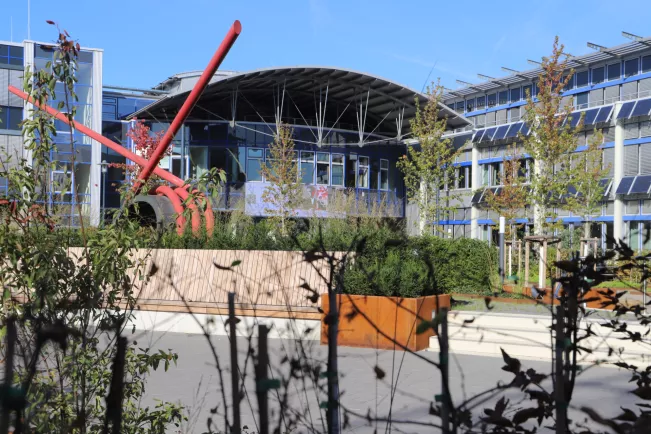
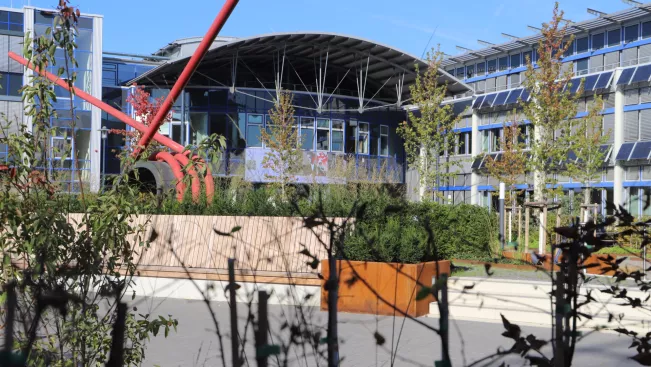
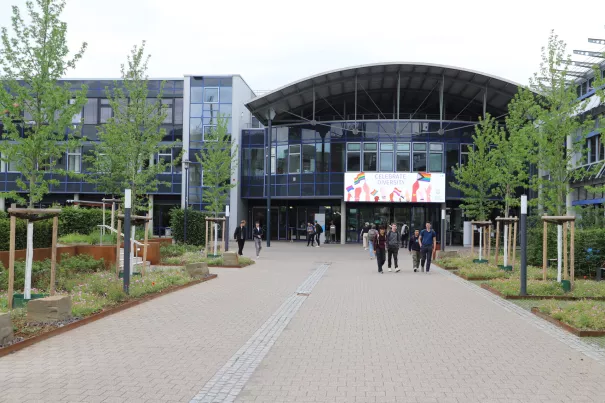
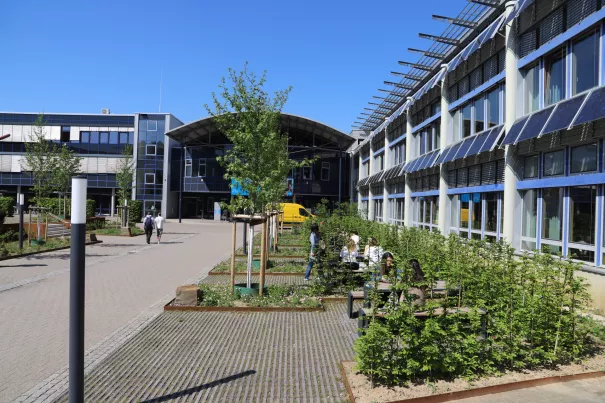
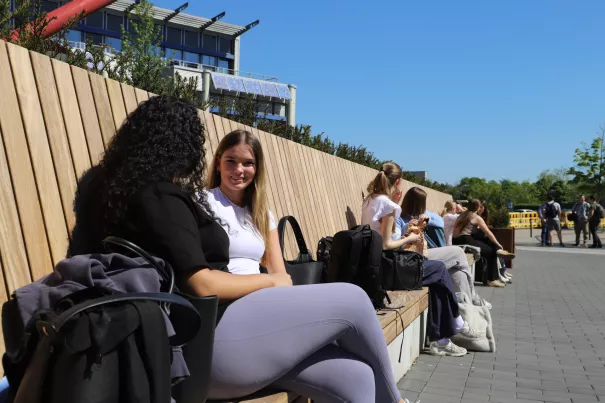
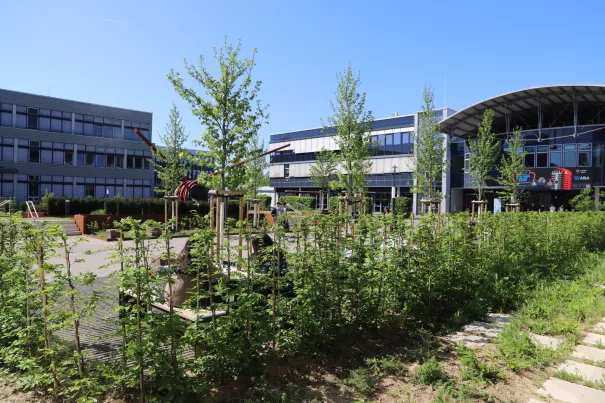
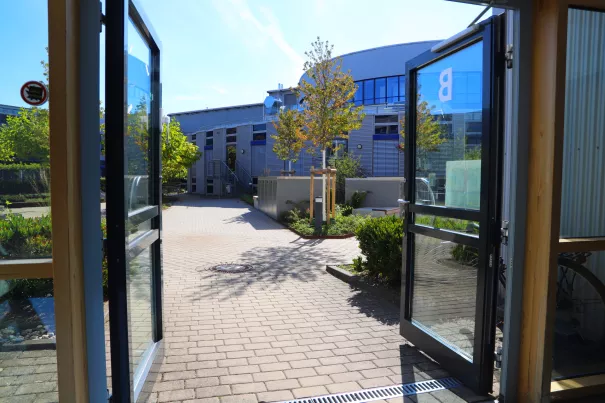
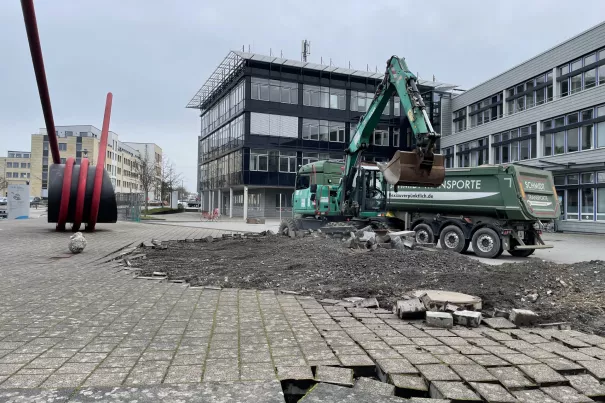
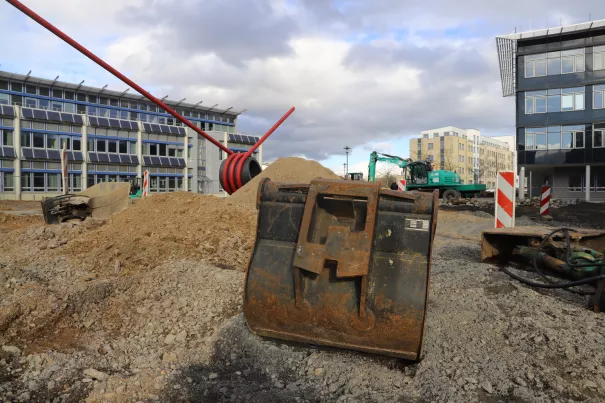
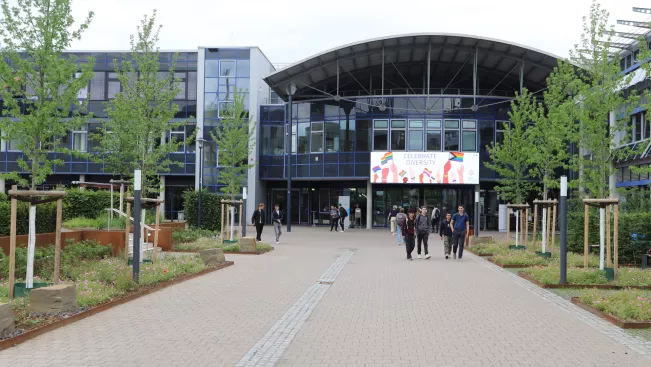
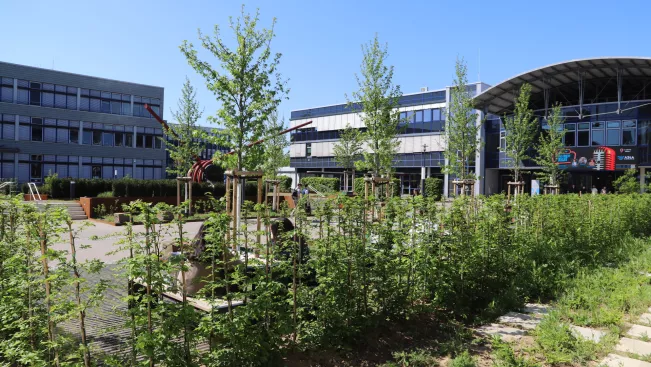
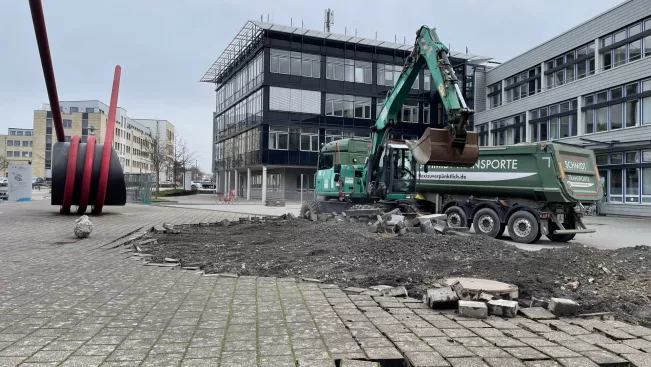
The forecourt of Hochschule Bonn-Rhein-Sieg University of Applied Sciences now looks like a small city park: trees line the path to the main entrance, beech hedges divide up the lines of sight, wooden benches and tables invite you to take a seat. The "Spule", the ten metre high stainless steel work of art and unofficial landmark of the H-BRS, is now also surrounded by hedges and shrubs. The impression before construction work began in February 2024 was very different, with grey cobblestones dominating the central open space and few trees and flowerbeds - good for events, but detrimental to the microclimate and quality of stay.
In order to achieve improvements here, the university management decided to comprehensively redesign the campus grounds. The declared aim was also to apply the requirements of its own sustainability strategy to its own campus.
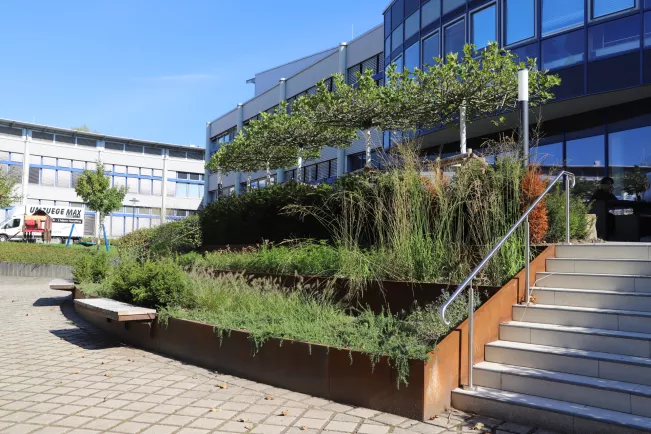
The university's own construction management team spent around two years planning the construction work in collaboration with landscape architect Stephan Muthig. Unlike most universities in the state, Hochschule Bonn-Rhein-Sieg University of Applied Sciences has its own building authority and can therefore also implement such extensive construction measures on its own.
A total of around 2200 square metres of campus space was redesigned. By creating flower beds and laying grass pavers, 530 square metres were unsealed and greened, which had previously been hidden under the paving. The result also means that there are now more trees on the campus than before. In total, 31 solitary trees have found a new home on the campus. These include roof plane trees, mountain cherries and a single magnolia. The most frequently seen species, however, are American gleditschias and ambar trees. An important selection criterion for all trees, hedges and perennials was that they cope well with dry summers, are insect-friendly and display a beautiful colour at any time of year.
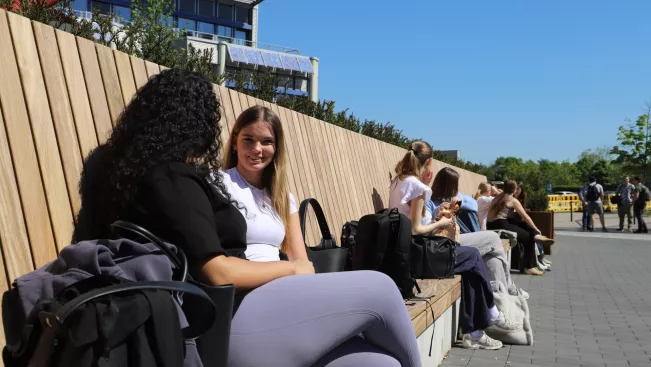
"One of the main aims of the project was to improve the quality of life on campus. It's great to see that the new furnishings, such as the seating and tables, are now being accepted and enjoyed by university members," says Thomas Hümmerich, Team Leader of the Building team. "In addition, the transformation of the former concrete areas into flowerbeds has had a direct impact on the microclimate on campus in terms of sustainability: Whereas before you could barely stand it on campus in the height of summer, you can now linger in the shade of the trees. Another aim was to ensure that rainwater does not simply run off into the sewage system, but seeps away on site as far as possible, thus benefiting the plants and groundwater."
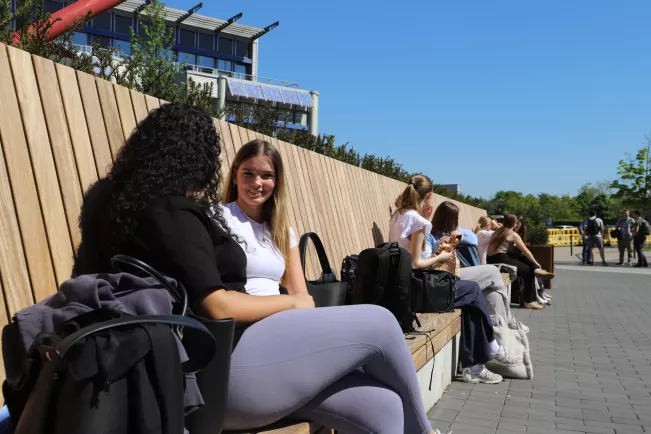
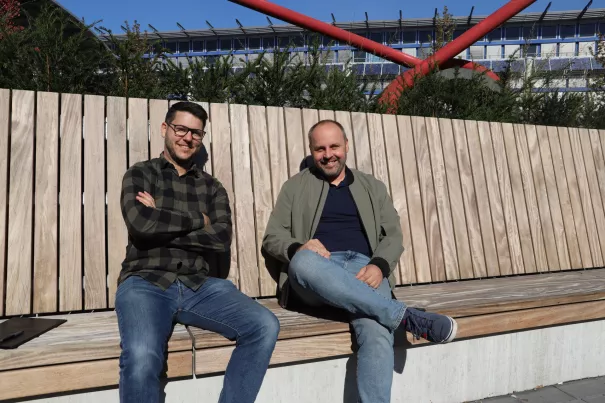
The forecourt, the central open space between the main building and the administration wing, is the largest area to have been given a new design. The idea of communication was at the forefront of the planning. The area is therefore divided into many seating areas with and without tables. The eye-catcher is the 15-metre-long wooden bench on which up to 20 people can sit at the same time.
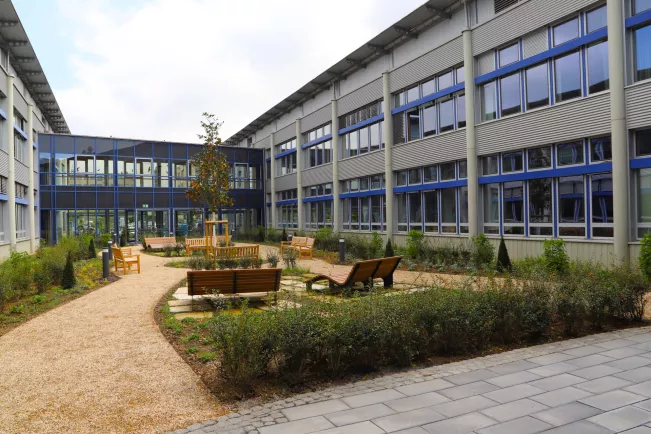
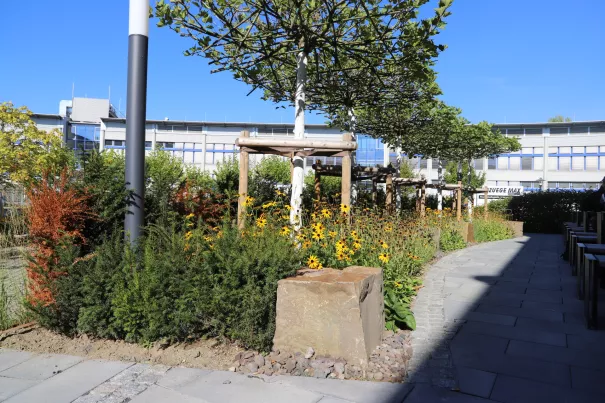
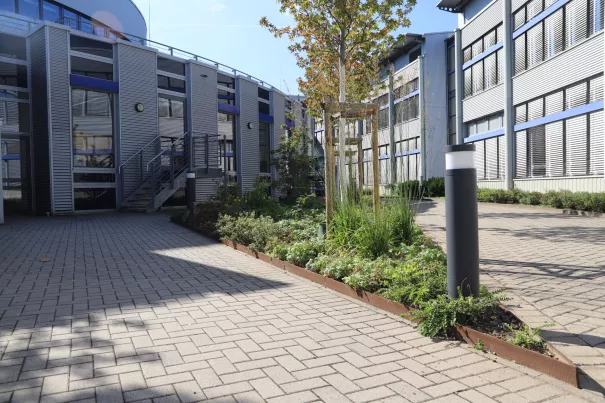
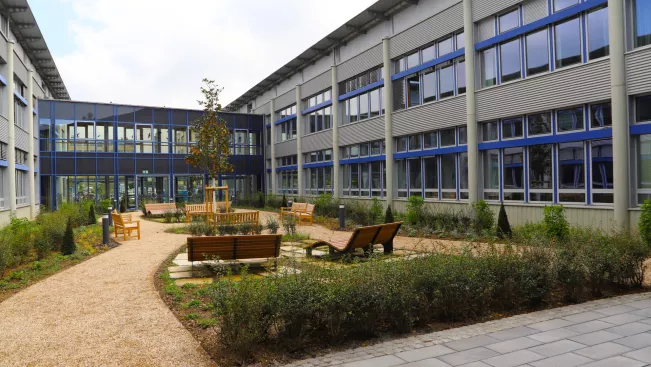
The inner courtyard at the lecture theatre centre is also much greener today. Large parts of the previously paved area have been unsealed and new trees and seating have been added. The inner courtyard in building section "C" has become an oasis of calm. There, away from the main walkways, perennials, grasses and ferns in combination with gravel paths and loungers invite you to relax.
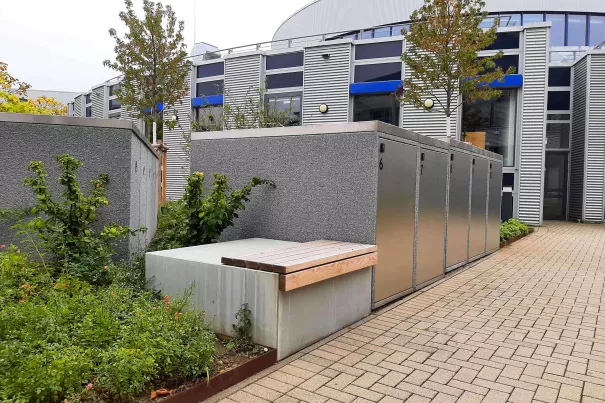
One new feature is the lockable bicycle boxes, which offer secure and weather-protected storage for bicycles. there are 20 of the bicycle garages on campus, which can be used free of charge on a daily basis.
A particular challenge for the university's own construction management team was to reconcile the construction work, which always involved noise and barriers, with ongoing teaching activities. The university's many events also had to be held as usual. This task could only be accomplished thanks to the great flexibility of everyone involved:
"The demolition work at the start of the project in particular was sometimes very noisy. But also during the subsequent construction process, for example when cutting paving stones, the ears and patience of university staff were unfortunately put to the test. We were always aware of this inconvenience and therefore made every effort to keep the noise to a minimum," says Christoph Bormann, who was in charge of the campus remodelling project as a member of the Construction team.
"The company carrying out the work was very considerate and paused the work temporarily during exams, for example, or moved it to other areas as required. Even during the construction phase, members of the university showed a great deal of understanding for the necessary restrictions. In the meantime, we have received a lot of praise and encouragement for the entire project from various quarters, so that in the end the positive impression prevails."
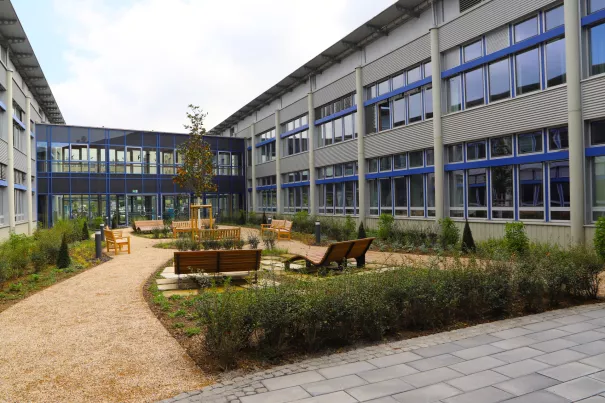
Press photos: Sustainable redesign of the H-BRS Sankt Augustin campus
Contact

Location
Sankt Augustin
Room
G 207
Address
Grantham-Allee 20
Sankt Augustin
Telephone
+49 2241 865 748
Location
Sankt Augustin
Room
E 240
Address
Grantham-Allee 20
53757, Sankt Augustin
Telephone
+49 2241 865 9560