Communications and Marketing
H-BRS bulletin: "It is very important to strengthen healthcare systems worldwide"
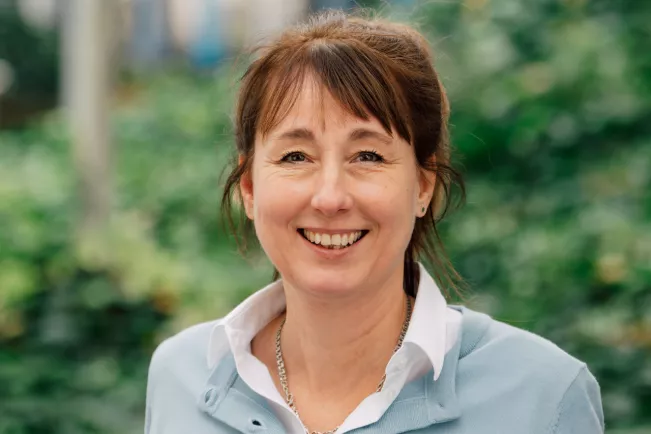
The economist considers it fundamentally important to strengthen healthcare systems, as a lack of access to them for health reasons is one of the greatest risks of impoverishment worldwide.
H-BRS: Professor Bender, what were your thoughts when you first heard the news of the drastic cuts to USAid, the US Agency for International Development, and then of its planned dissolution by July?
Professor Katja Bender: It came as a shock to me. The scale of the cuts to USAid is unprecedented, as is the speed with which they are being implemented. If this goes ahead, it will create a gap, and it is unclear how it can be filled.
H-BRS: Where, for example, will gaps arise?
Bender: The US has so far been the world’s largest donor in the health sector. In particular, they support programmes aimed at combating specific diseases or promoting preventive measures. Most of the funding goes towards the treatment of HIV and AIDS. However, the focus is also on infectious diseases such as malaria, tuberculosis and polio, which have very high mortality rates in many countries. Funding is provided, for example, for medicines as well as vaccinations, mosquito nets and jobs in the health sector. In particular, the success of these programmes can be readily measured and demonstrated.
H-BRS: What is the state of development cooperation worldwide?
Bender: Many European countries have also cut their development cooperation funding in recent years, so one can certainly speak of a trend. France has reduced its budget for this year by 35 per cent to 3.8 billion euros. The British Government has cut it from 0.6 to 0.3 per cent of gross national income in favour of defence spending. As a result, the minister responsible has resigned. And the right-wing Dutch government also announced cuts running into the billions in February.
H-BRS: What is the situation in Germany?
Bender: Germany is one of the countries that at least meets the voluntary commitment within the Organisation for Economic Co-operation and Development (OECD) to spend 0.7 per cent of gross national income on development co-operation. At 0.8 per cent, Germany was actually slightly above this figure most recently. The proportion is even higher in Norway, Luxembourg and Sweden, but most countries fall below this level. It remains to be seen how things will develop in Germany. Development policy is currently the subject of very heated debate in the coalition negotiations between the CDU/CSU and the SPD. The SPD wishes to retain the Federal Ministry for Economic Cooperation and Development (BMZ) and maintain the 0.7 per cent target. The CDU and CSU, on the other hand, are proposing to integrate the BMZ into the Federal Foreign Office. This is a debate that also took place in the United Kingdom five years ago, and the proposal was subsequently implemented there. Incidentally, here in Germany, the integration of the BMZ into the Federal Foreign Office was part of the FDP’s election manifesto during the 2009 federal election campaign. Ultimately, however, the ministry was retained and FDP politician Dirk Niebel even became Federal Minister for Economic Cooperation and Development.
H-BRS: Why does development cooperation have such a hard time?
Bender: There is, in fact, hardly any other policy area that is the subject of such intense debate and where its impact is scrutinised so critically. Yet there is a discrepancy with the relatively small scale of development cooperation. Perhaps a little more sense of proportion would be welcome here. That does not mean completely neglecting its impact.
H-BRS: How much funding is allocated to development cooperation in total?
Bender: It is less than many people think. Public funding from the 32 countries that make up the OECD’s Development Assistance Committee totalled 223 billion euros worldwide in 2023. The US was the largest contributor, with Germany in second place. By way of comparison: the budget of the Federal Ministry of Labour and Social Affairs amounted to 175 billion euros in the same year. There is a significant information gap, as the public often greatly overestimates global funding levels. In surveys in the US, respondents estimated that development co-operation accounted for 25 per cent of the US budget, even though it was just one per cent. In Germany, according to the ‘Meinungsmotor Entwicklungspolitik’ survey published by the German Evaluation Institute for Development Cooperation, respondents estimated the share of gross national income at between 9.5 and 10.7 per cent. As I said, the figure is 0.8 per cent. This phenomenon is not new, but in recent years the proportion of people who are critical of development cooperation has increased.
H-BRS: Why is that?
Bender: Development cooperation is under particularly intense pressure to justify itself. It is accused of being ineffective and of supporting autocratic regimes. This is partly because national taxpayers’ money is involved, yet many people do not know how the funds are actually used. In Germany, for example, 35 billion euros were earmarked for development cooperation in 2023. However, this does not mean that all the money goes to other countries. Around a fifth of it was used to provide accommodation and food for refugees in Germany.
H-BRS: What are the different areas of development cooperation?
Bender: Essentially, the aim is to redress global imbalances and improve living conditions worldwide. Some of the funds go to poorer countries. Support is also provided to multinational organisations such as the United Nations, which distribute the funds further. Funding is provided for projects in a wide range of thematic areas, including, for example, health, economic development, education, gender equality and the fight against climate change. Aid is provided to local people during conflicts or in the wake of natural disasters. A further portion is earmarked for refugee assistance within the OECD countries themselves.
H-BRS: You research social security and healthcare systems from a global perspective and are Director of the International Centre for Sustainable Development (IZNE) at H-BRS. Which aspect of development cooperation is particularly important to you?
Bender: I believe it is very important to strengthen healthcare systems. Health problems and a lack of access to healthcare systems are among the greatest risks of impoverishment worldwide. People therefore have to pay for healthcare out of their own pockets; there is no social security. The success of measures to strengthen healthcare systems cannot be measured immediately, but these long-term investments are very important.
H-BRS: Which projects at the H-BRS address such issues?
Bender: Using Ghana and Kenya as examples, we have examined social protection as a factor in economic development and poverty reduction. Poverty and illness are strongly correlated and reinforce one another: high direct and indirect costs of accessing treatment lead to poverty or exacerbate existing poverty. Another project, for example, looks at the factors that contribute to countries expanding their social security systems and the barriers that exist. A healthcare system can only function if there is a stable energy supply. Through our interdisciplinary Enershelf project, we have worked with local partners in Ghana to identify potential solutions using solar energy. We were also given the opportunity to present this project at the 2023 UN Climate Change Conference.
About the author: Katja Bender is a development economist and Professor of Economics, specialising in economic and social development, at Hochschule Bonn-Rhein-Sieg (HBRS). Her research focuses on the political economy of health system reforms, governance and the relationship between technological and institutional change, with a particular focus on the energy-health nexus. More recently, her research – partly inspired by her own experiences – has centred on (international) collaboration between research, practice and policy. She is Director of the International Centre for Sustainable Development (IZNE) at the H-BRS and Vice-President of the European Association for Development Research and Training Institutes (EADI).
Interview: Daniela Greulich
Press image available for download
Contact

Katja Bender
Professor of Economics, esp. Economic & Social Development, Vice Dean for Research, Transfer and Internationalization, Director International Center for Sustainable Development
Research fields
Location
Sankt Augustin
Room
F 306
Address
Grantham-Allee 20
53757, Sankt Augustin
Telephone
+49 2241 865 9660
Daniela Greulich
Deputy Head of executive department Communications and Marketing/Press and Public Relations, Press Officer
Location
Sankt Augustin
Room
E 237
Address
Grantham-Allee 20
53757, Sankt Augustin
Telephone
+49 2241 865 641