Department of Natural Sciences
16 participants were thrilled by the MINT-EC camp ‘Campus Crime Lab – Hands-on Forensics’
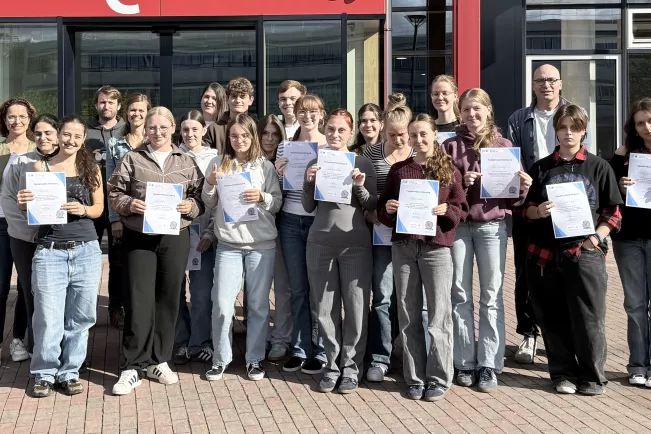
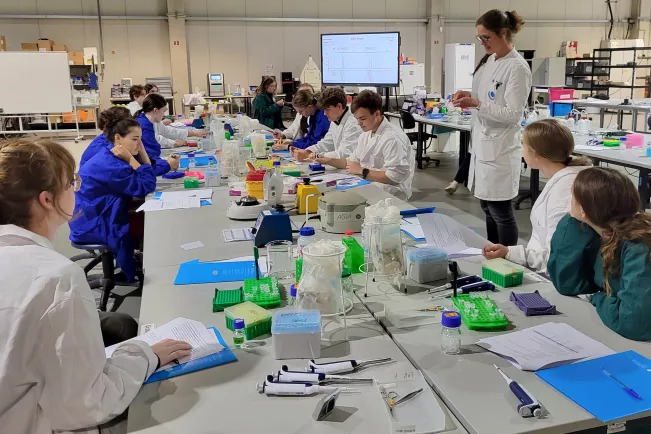
The first day of the camp began with an introduction and an opportunity to get to know students from the department. This was followed by a lecture on materials science: ‘Forensische Schadensanalyse im Personenverkehr’ by Prof. Dr Johannes Steinhaus. Afterwards, participants had the opportunity to examine traces and materials themselves in the laboratories under the guidance of Daniela Bornstein, in order to develop an understanding of how materials science methods can be of use in forensics.
On the second day, the focus was on biology. Here too, laboratory exercises led by Nicole Strauß were designed to demonstrate what modern biological forensic methods can involve. A particular highlight was the hands-on work with biological samples and carrying out DNA analyses. These left a lasting impression on the participants.
On the final day, the focus was on analytical chemistry. First, there was a lecture by Prof. Dr Jürgen Pomp entitled ‘Ein Prof auf Koks’. The pupils then worked on a forensic case with the help of Assal Moghadarian and chemical analysis techniques to evaluate evidence and draw conclusions. It was exciting and enlightening to understand, both in theory and in practice, the extent to which materials science, biology and chemistry are used in forensics and how they interact.
In addition to the academic programme, a sense of community was also fostered. For example, through an evening crime dinner, which provided a welcome change of pace. This allowed participants from the various schools to chat with one another in a relaxed atmosphere.
Prof. Dr Mandy Gieler-Großgarten, who led the camp on behalf of the university, was delighted with the successful organisation of the MINT-EC camp, as were her colleagues. The pupils all agreed that they would recommend the camp to others and that they had benefited greatly from it in terms of their study and career choices within the MINT fields.