Beyond Words: Vocal Affect Dynamics in the Coaching Process
Doctoral project at a glance
Departments and Instituts
Funding type
Period
01.05.2026 to 31.12.2029


Project Description
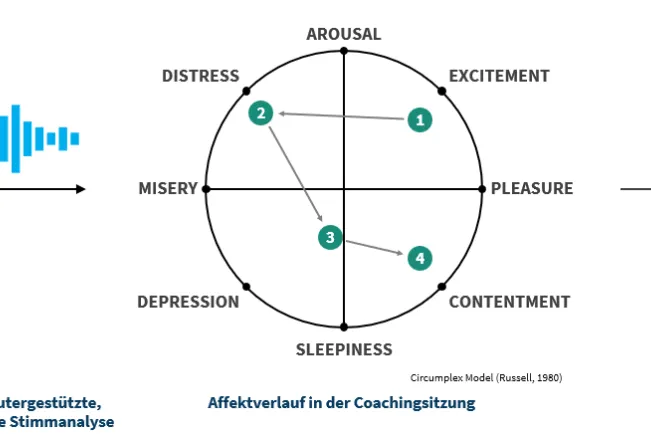
Through my work, emotions are given a voice in coaching. Coaching is intended to support people in achieving their personal and professional goals. For a long time, the focus has been primarily on the cognitive level. The role played by emotional states has, to date, been little researched. My PhD research therefore focuses directly on the coaching conversation: using real coaching sessions and computer-assisted voice analysis, I am investigating how the affective expression of coachees changes within a single session and across several sessions. Three studies will examine how changes in affective state affect the coachee, what triggers such changes, and how affect develops over the course of the entire coaching process. LEONIE SEYNSCHE’s project combines psychology, linguistics and computer science. The findings are intended to contribute to a better understanding of affective processes in coaching and to enable more targeted support.
Cooperation partners
Institute of Psychology, University of Hamburg