Equal Opportunity
Project days for schools
Our offers:
The topics described here can be expanded or adapted thematically. For example, they are also suitable for a project week at your school. Feel free to contact us with your ideas!
CAD - from your own drawing to the model
Duration: 4 h, from grade 5
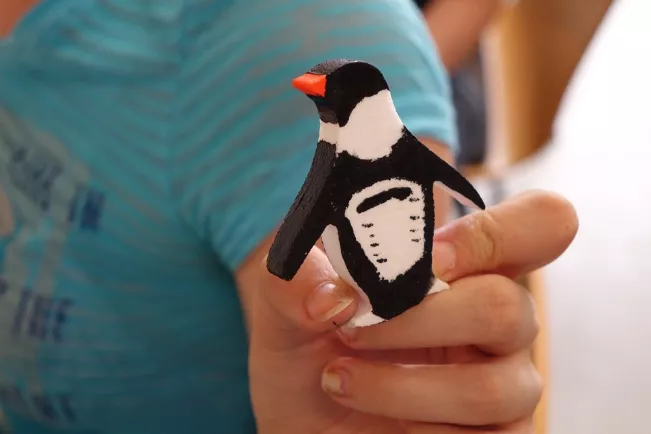
CAD is the abbreviation for computer-aided design. The students gain their first experience with this and implement their own creative design in a model made of Styrofoam. To do this, they use a drawing program on the computer to design their own lettering or a silhouette. The design is sent to a Styrofoam cutting machine, which automatically cuts exactly the model designed by the students from a piece of Styrofoam. The Styrofoam models may be taken home. This program is suitable for a group size of up to 15 students.
Soldering course
Duration: 4 h, from class 5
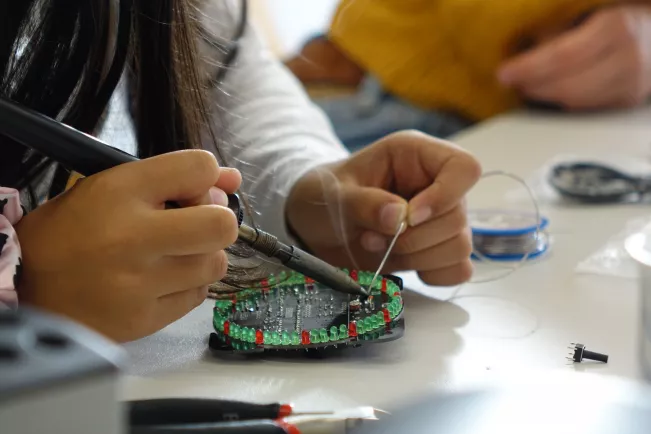
Soldering involves joining two metal parts with molten solder. In electrical engineering, soldering is fundamental to connecting two components so that current can flow through them. Students learn the basics of soldering and get their first hands-on experience. This program is suitable for a group size of up to 14 students.
Microcontroller course
Duration 4h, from class 5
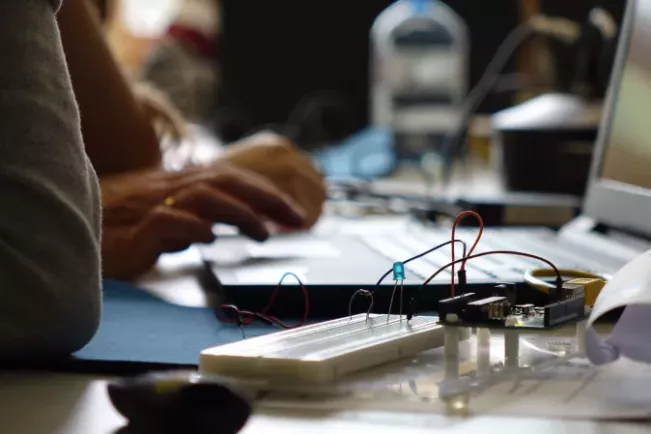
Microcontrollers are small computers that can be programmed. Nowadays they are found in almost all technical devices. Therefore, students come into contact with them every day without realizing it (for example, through their cell phones, microwave ovens or toys). In this course, students get their first insights into the world of electrical engineering. They learn how to build electronic circuits and take their first steps in programming Arduino microcontrollers. Construction is done on small breadboards with electrical components that could also be used in traditional industrial circuits. This program is suitable for a group size of up to 14 students.
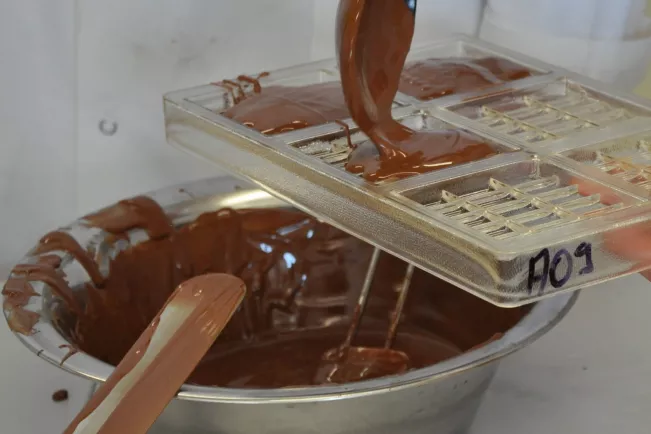
Chocolate- really the most tender temptation
Duration: two days (2x 4h), from 8th grade upwards
Why has chocolate been so popular for thousands of years? What distinguishes good chocolate? This and much more, the students will learn in this two-day workshop. By making their own chocolate, students learn the entire chocolate-making process: from roasting the raw cacao bean to pouring their own chocolate. There will also be a tour of the Department of Engineering and Communication. And, of course, the opportunity to ask questions. This course cannot be booked between May and September and is suitable for a group size of up to 20 students.
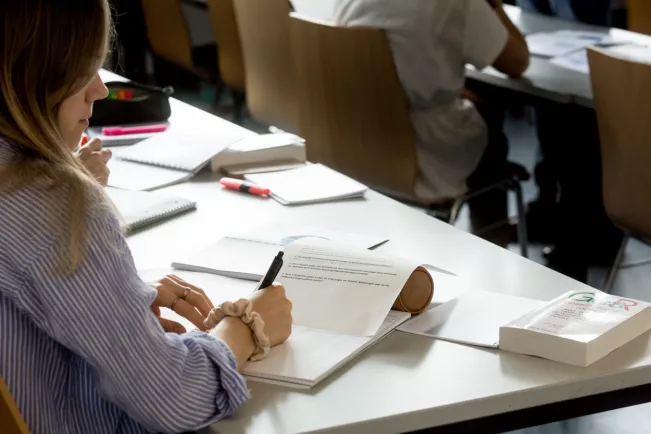
Recognizing Socio-Emotional Manipulation
Duration: max. 5 hours, starting in 8th grade
This workshop is designed for students ages 14 and older and provides a practical understanding of how disinformation works on social media. The focus is not on distinguishing between “true” and “false” information, but rather on how posts—through their emotional language, images, and so on— create a sense of credibility and pressure to act.
During the workshop, students analyze a sample social media post, compare different representations of the same information, and reflect on the impact of eight key emotional response patterns on their perception of the information. Particular emphasis is placed on social validation cues, such as the number of likes and supportive comments.
Participants will also complete a short questionnaire during the workshop. This is not intended for performance evaluation but rather to provide deeper insight into the methods of qualitative social research.
The goal of the workshop is to promote media literacy, reflective thinking, and an understanding of social media platforms. At the end, students will receive a simple screening tool to help them better recognize various manipulation strategies. The workshop is suitable for up to 24 students and can be adapted in a modular fashion to the respective skill level.
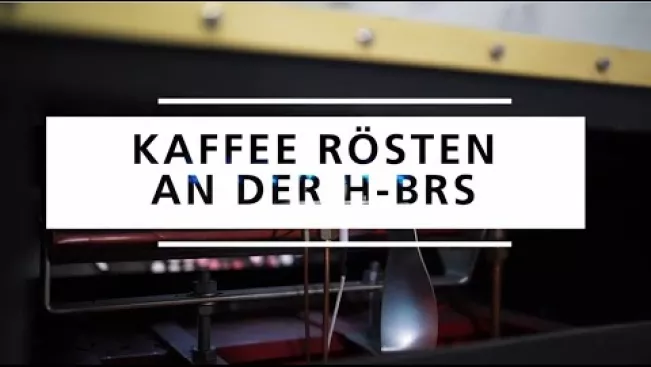
Coffee - a chemical delicacy
Duration: from 6 h, from grade 8
The pupils* roast coffee on a standard roasting machine. Samples are regularly taken and examined to determine the chemical and physical changes in the bean. The changes in the bean values (volume, weight), the pH value and the development of exhaust air are analyzed and explained. Finally, the pupils* give a short presentation on the subject of coffee. This is followed by a taste test of the roasted coffee. A commercially available coffee is used for comparison. There is also a tour of the Department of Engineering and Communication. And, of course, the opportunity to ask questions. This program is suitable for groups of up to 20 students*.

Do you have any questions?

Gesche Neusel
Equality office, promotion of girls in computer science and technology, vacation projects for girls, projects with schools
Location
Sankt Augustin
Room
C005.2
Address
Grantham-Allee 20
53757 Sankt Augustin
Telephone
+49 2241 865 795Links
related links