Department of Computer Science
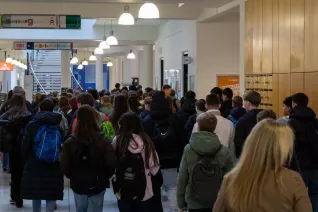
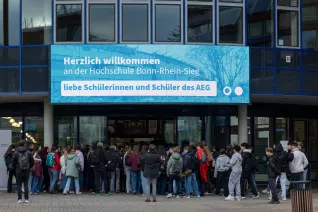
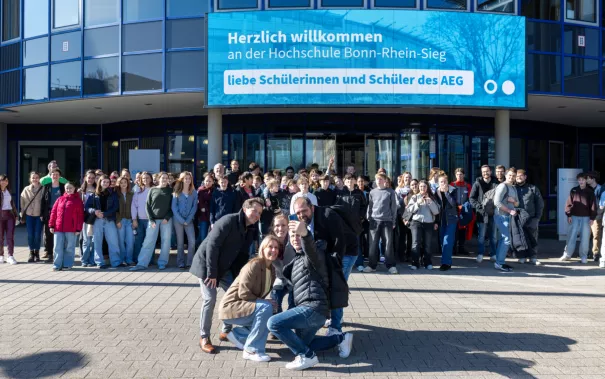
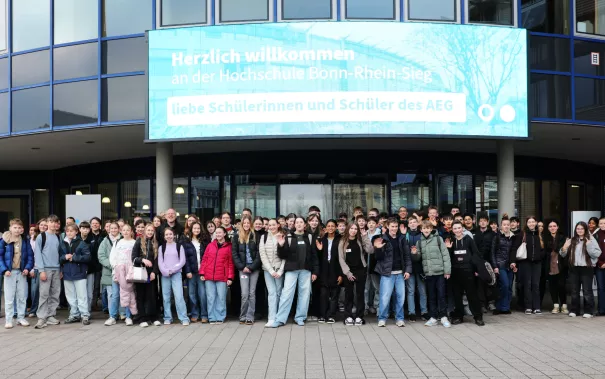
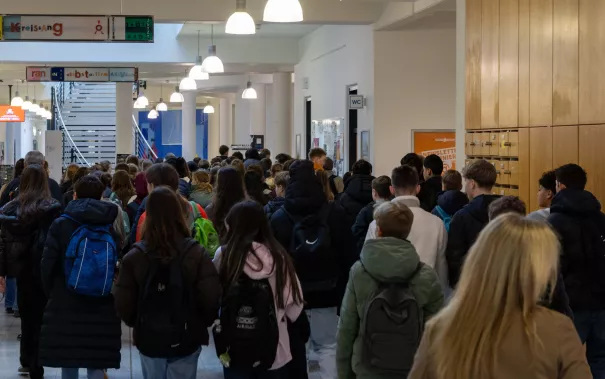
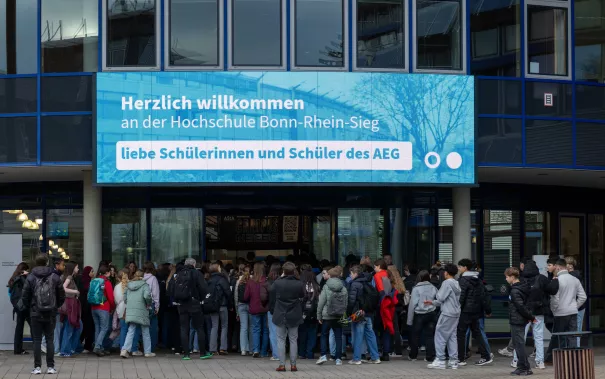
130 pupils from AEG Grammar School discover the world of computer science at H-BRS
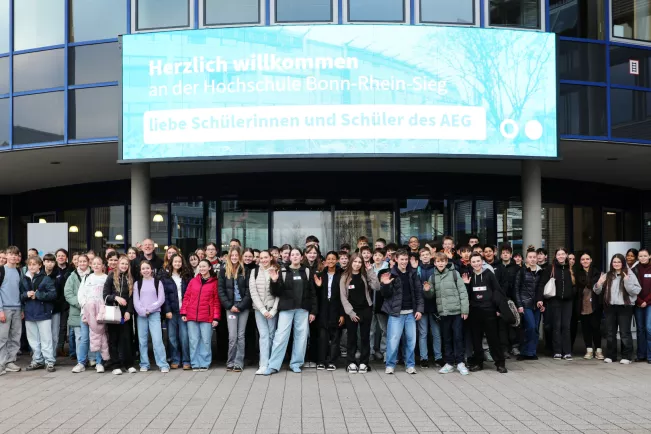
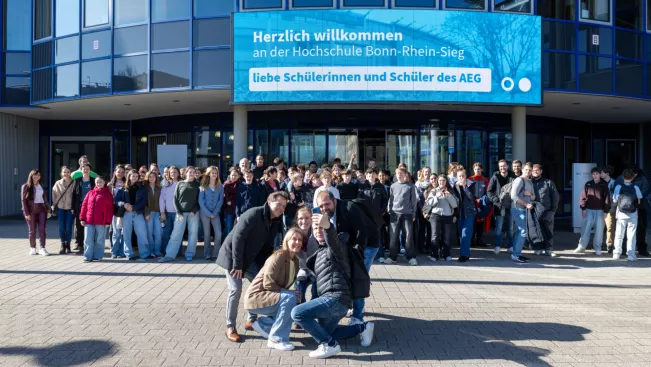
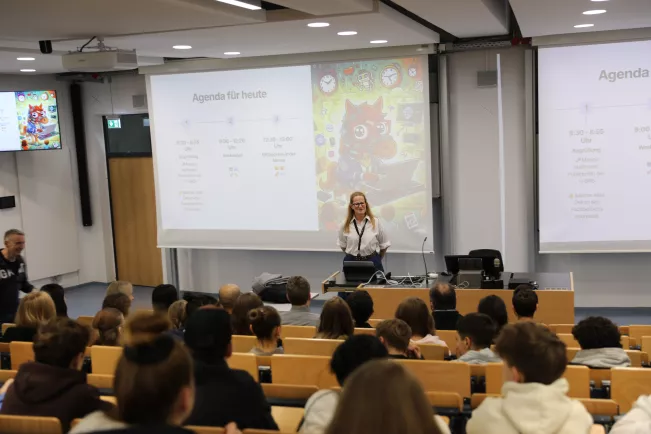
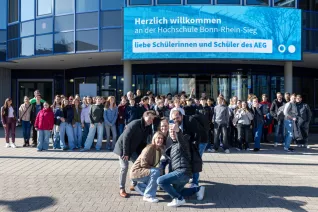
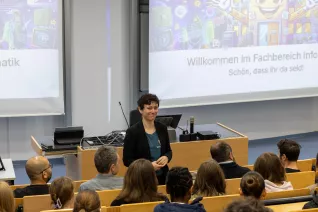
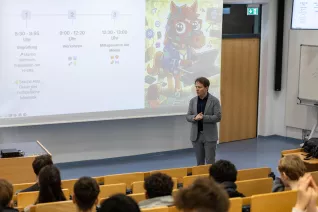
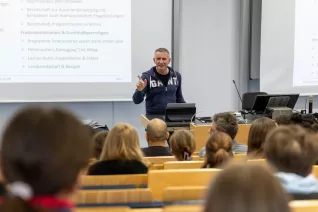
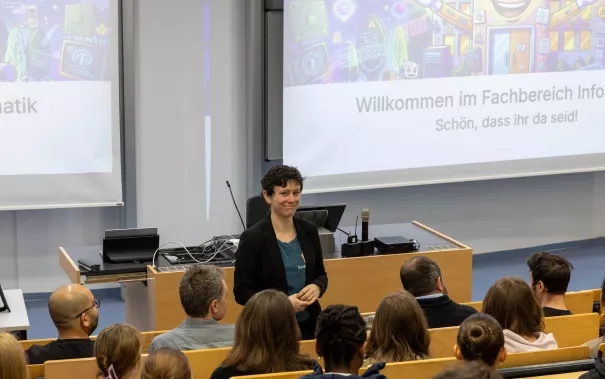
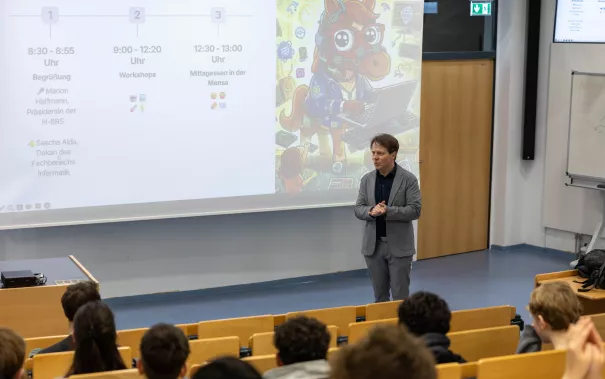
In the lecture hall, they were warmly welcomed by the President, Prof. Dr. Marion Halfmann, the Dean of the Department of Computer Science, Prof. Dr. Sascha Alda, and Prof. Dr. Thorsten Bonne. In their welcoming speeches, they emphasised the wide range and social relevance of computer science and encouraged the young people to discover the diverse opportunities offered by studying in this field.
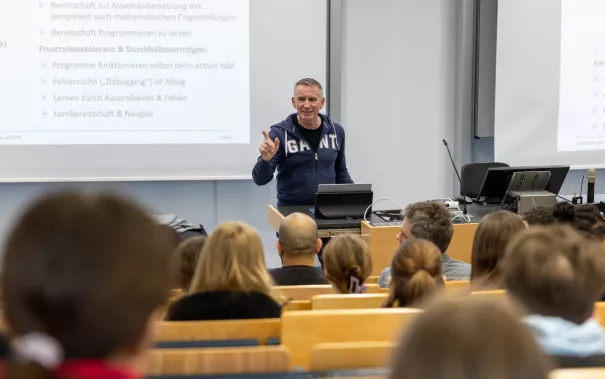
Computer science is much more than just programming: it combines creativity with analytical thinking, technology with social responsibility, and opens up perspectives in research, business and public institutions. Whether cyber security, artificial intelligence, data analysis, robotics or game development, the discipline offers numerous ways to actively shape the digital future.
Experience computer science in a practical way – four workshops, two laboratory tours and a wide range of perspectives
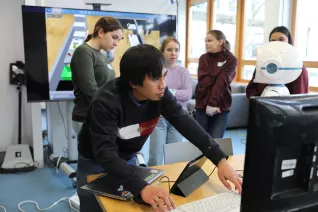
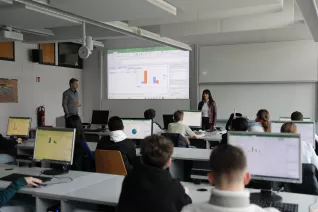
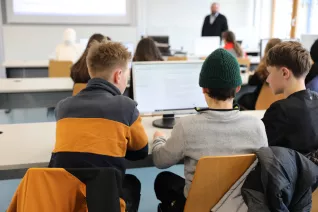
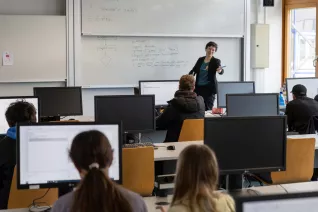
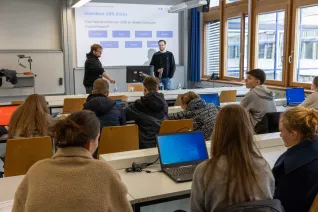
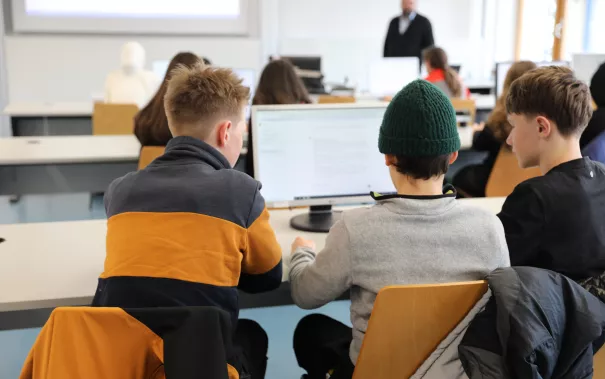
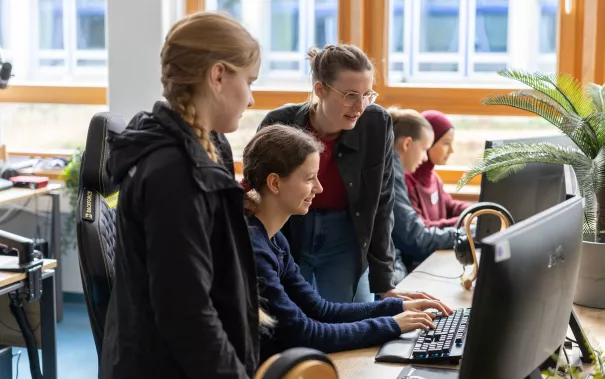
Following the welcome, the students took part in six interactive workshops. The aim was to bring science to life, provide insights into current fields of research and highlight possible study and career paths.
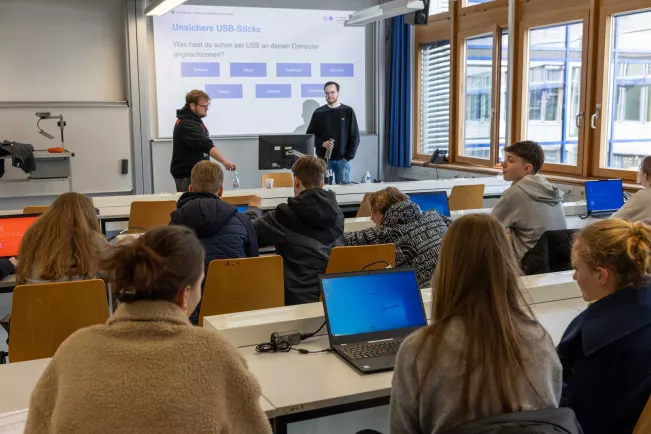
1. CyberSecurity – Introduction to the world of IT security
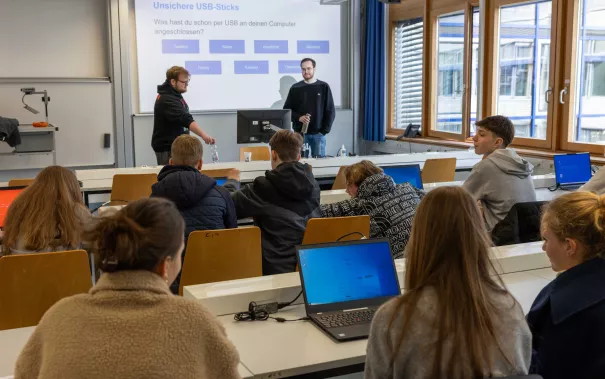
Under the guidance of Felix Klör, participants were given an introduction to key IT security risks such as insecure passwords, phishing emails and inadequate data protection settings. Clear examples were used to explain how attacks work and what protective measures can be taken. Interactive exercises deepened participants' understanding of digital threat scenarios.
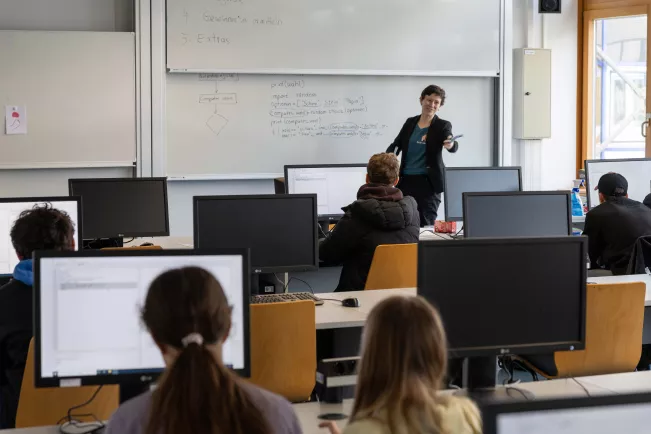
2. ‘Rock, paper, scissors’ meets Python
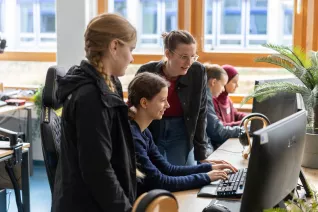
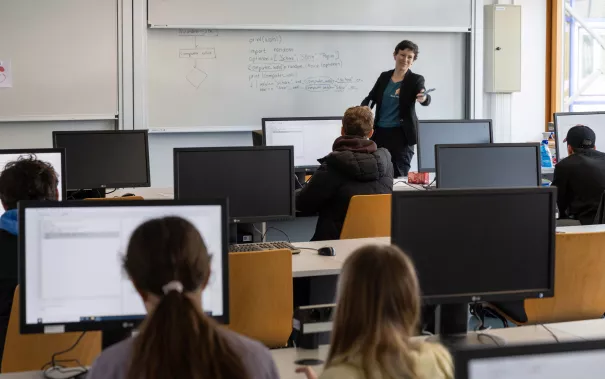
In Prof. Dr. Marie Bergmann's workshop, the pupils learned the basics of the Python programming language and quickly developed their own ‘rock, paper, scissors’ game. The event combined creativity with logical thinking and showed how programming can transform concrete ideas into functioning applications. At the same time, links were made to digitalisation and sustainability.
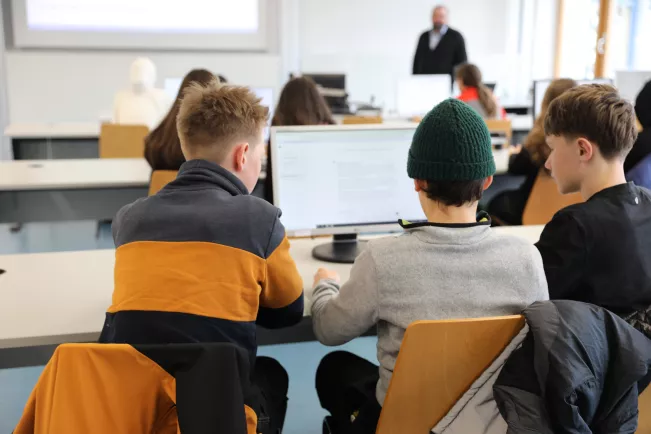
3. Prompt Engineering – Level Up with AI: Using Words Purposefully
Prof. Dr. Matthias Bertram introduced the basics of prompt engineering. The topic was how to formulate queries to AI systems precisely in order to support creative projects, structure content or develop solutions to problems. In addition to technical aspects, the focus was also on a reflective approach to artificial intelligence: critically evaluating results, developing them further and using them responsibly.
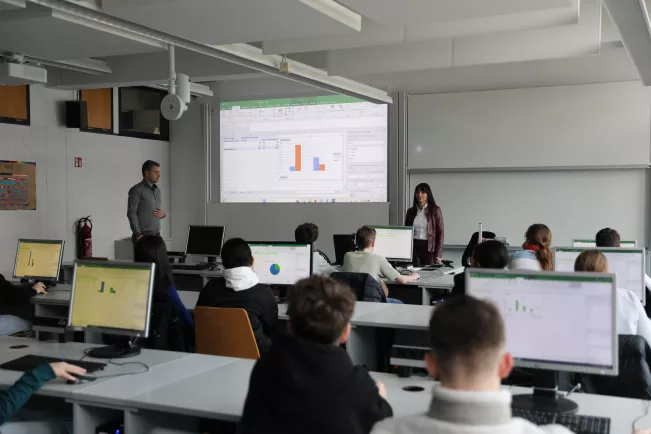
4. Decoding data secrets – fundamentals of data analysis
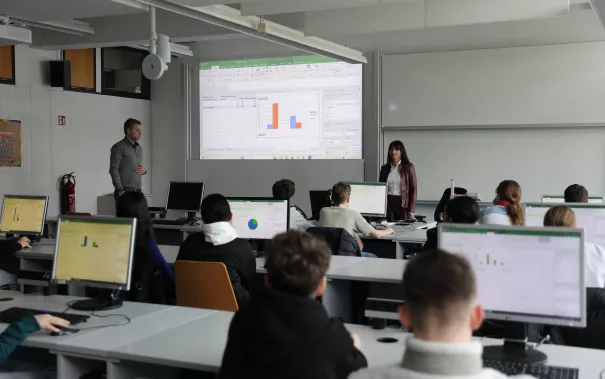
Together with Masoumeh Tavakoligargari, Prof. Dr. Raoul Könsgen illustrated how data analysis reveals hidden patterns and correlations. Using examples from everyday life and business, they showed how data can help answer complex questions. Visualisation tools were also used to clearly present the findings in diagrams and graphs. This highlighted the central role that data science plays in many professional fields.
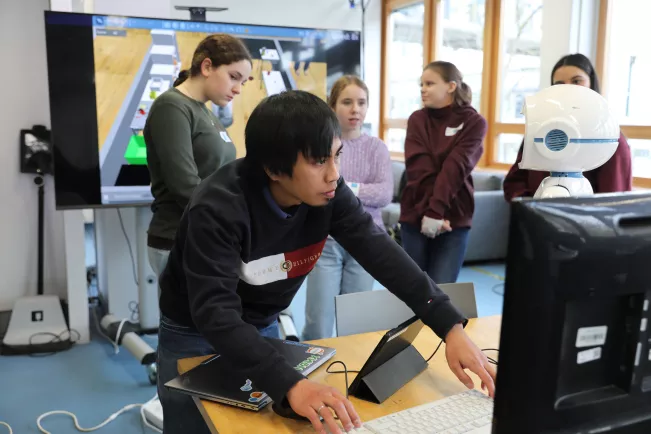
5. Laboratories
Autonomous Systems
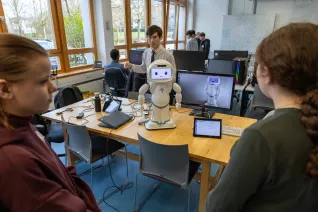
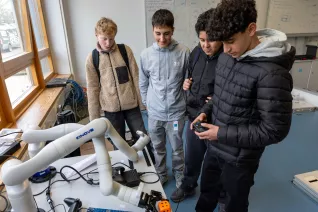
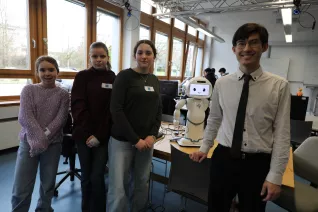
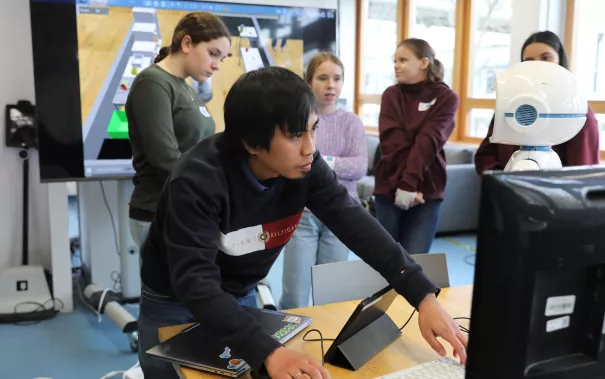
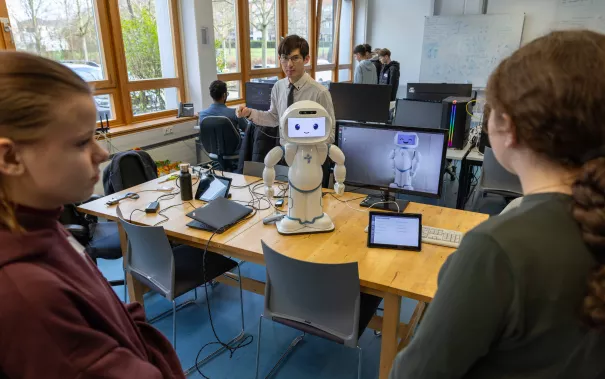
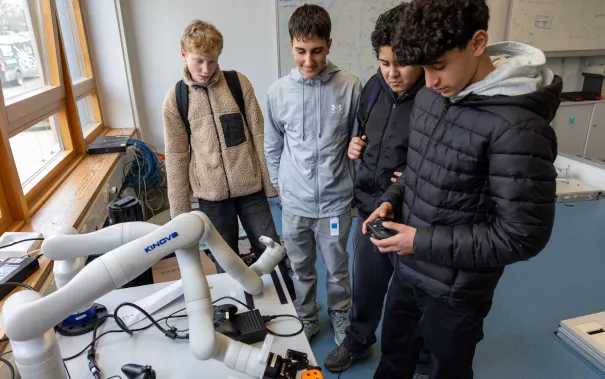
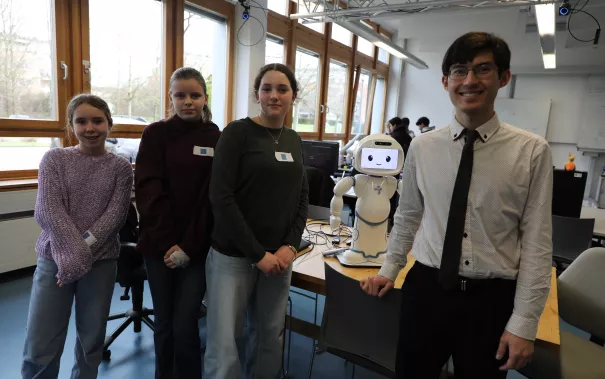
In the Autonomous Systems Lab, Youssef M. Youssef and Jordan Schneider presented current research projects in the fields of robotics and artificial intelligence. Among other things, humanoid robots such as NAO, QT and Pepper, mobile platforms and precision robot arms were on display.
A particular highlight was the opportunity to view the robots of the university's world champion team b-it-bots from the RoboCup League @Work as part of the international RoboCup. Members of the successful World Cup team were there in person to talk about their experiences at the competition and provide insights into the development, programming and preparation of the autonomous systems. This clearly demonstrated how research, teamwork and practical application interact at the highest international level.
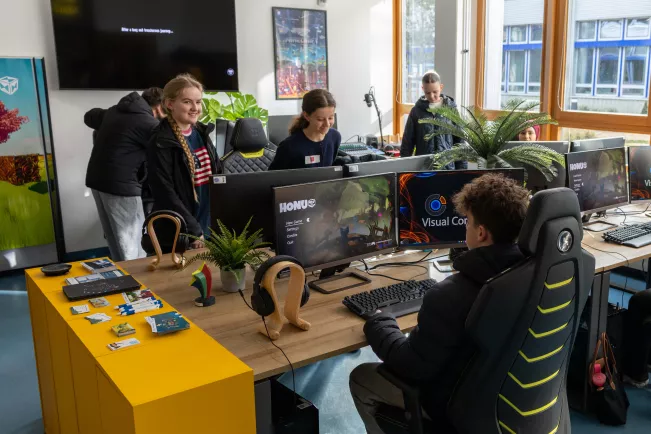
Game Studio & Visual Computing
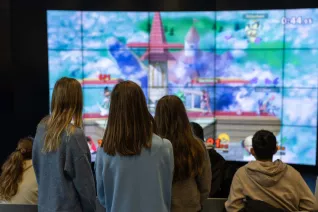
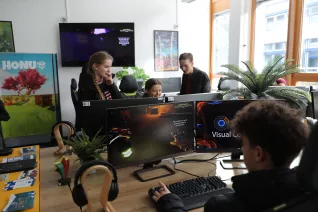
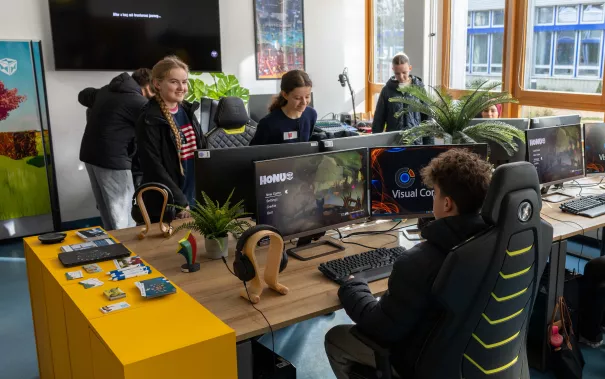
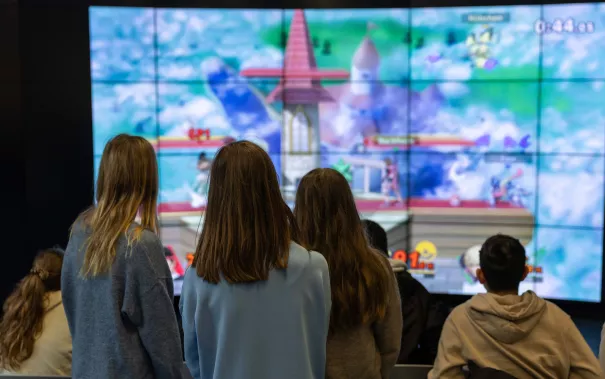
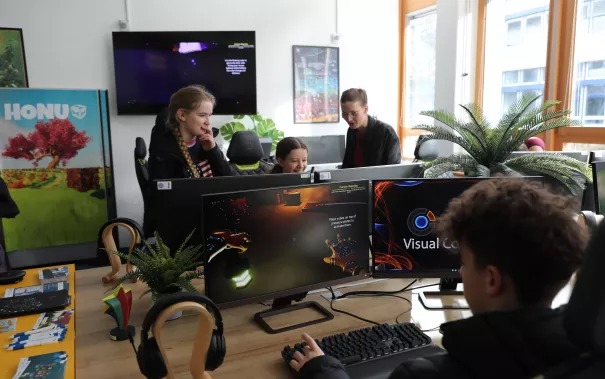
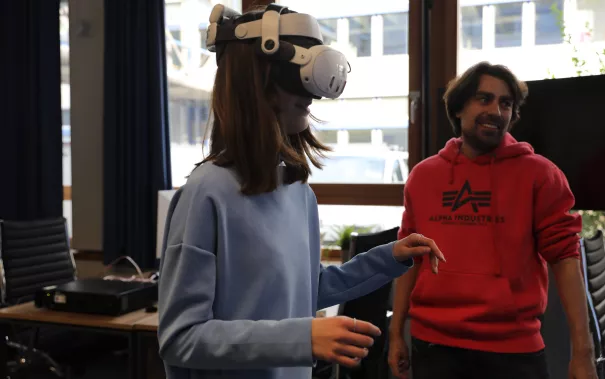
Supervised by game developers Tobias Bromberg and David Bernhard, the students gained insights into game development and current research in the field of visual computing in the Visual Computing Laboratory & Games Studio.
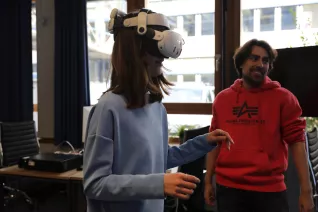
They tested the game ‘Honu,’ developed and published by students, tried out a virtual reality project on the topic of fear of heights, and learned about other projects in the field of interactive media. This made it clear how closely creativity, teamwork, and technical know-how are linked and how diverse the opportunities are in computer science studies, including in the field of games and visual computing.
Early orientation and sustainable cooperation
With formats such as this, the university aims to provide even more intensive support to secondary schools in the future with tailor-made offerings. The aim is to introduce pupils to scientific work at an early stage and to assist them in choosing a suitable degree programme.
The visit to AEG Gymnasium, initiated by Christin Voß (H-BRS) and course instructor Jens Canzler (AEG), impressively demonstrated the great interest in digital topics of the future. The practical workshops opened up exciting perspectives for a possible degree in computer science and left participants wanting more.
Kontakt

Location
Sankt Augustin
Room
C 218 / Dean's office C 101
Address
Grantham-Allee 20
53757, Sankt Augustin

Location
Sankt Augustin
Room
F 214
Address
Grantham-Allee 20
53757 Sankt Augustin
Telephone
+49 2241 865 449
Location
Sankt Augustin
Room
C 105
Address
Grantham-Allee 20
53757, Sankt Augustin
Telephone
+49 2241 865 230