Digital Journalism and Technology (BSc)
Study programme
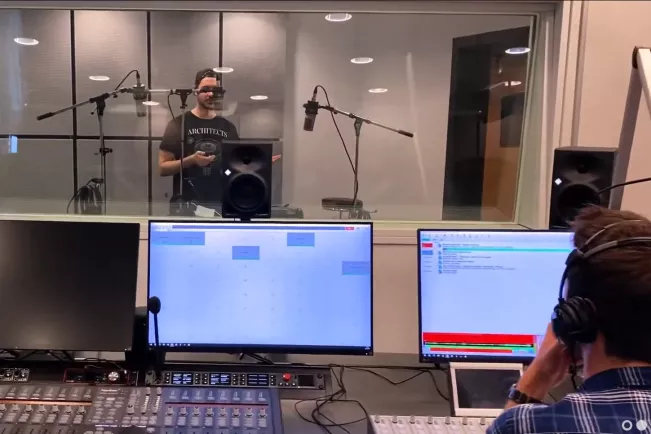

In the first and second semesters (foundation year), students learn about various aspects of the media system, develop the basics of journalistic practice and communication sciences and gain an overview of the professional field. This content of the foundation year is supplemented by the STEM track (mathematics, computer science, natural sciences, technology), which extends over the entire degree programme.
In the third and fourth semesters (focus year), the journalistic content is deepened and expanded to include knowledge of corporate and market communication. The timetable also includes research policy and technology ethics, as well as improving English skills.
In the fifth semester, students put the knowledge they have learnt so far to the test in practice. During a twenty-week practical semester, they get to know the day-to-day work in an editorial office, the communications department of a company or in an agency. Alternatively, students can also spend a semester abroad.
The sixth and seventh semesters focus on specialisation (specialist journalism), know-how for management tasks (leadership and law), preparation for starting a career or setting up a business and the acquisition of interdisciplinary, personality-building skills. Students demonstrate their skills as communication professionals with a practical media project before completing the programme with a Bachelor's thesis and colloquium.
Perspectives
There is a great demand for specialists who can communicate complex scientific and technical issues. On the one hand, there are job opportunities in journalism: in special interest and specialised media, but also in media that appeal to a broad audience. In online magazines, magazines and newspapers, radio and television or at research organisations and scientific institutes
There are also excellent career prospects in corporate and product communication, in press offices and PR agencies: wherever high-tech products or technical services need to be communicated - to experts or laypeople.
Further qualification
Building on the Bachelor's degree programme in Digital Journalism and Technology (formerly Technical Journalism), the university offers offers the Master's degree programme Digital Communication and Media Innovation (M.A.) an.