International Centre for Sustainable Development (IZNE)
Reflections on my journey through an international study programme at H-BRS - by Etheldreda D. Nanfa
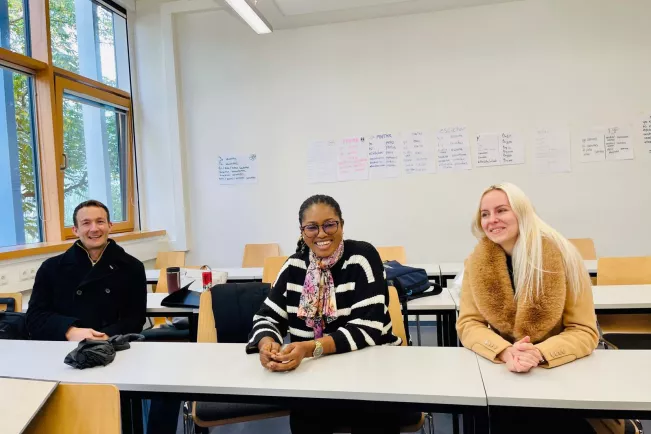
An experience report about the MBA programme in CSR and NGO Management

My own journey started on a quiet Sunday morning, jogging through Caffarella Park in Rome. I was speaking with my mentor, trying to figure out my next step professionally. At the time, I thought a certification in CSR might be the path forward, at least, that’s what I thought. I discussed possibilities and limitations, while my mentor listened and then asked one of those deceptively simple questions that shift everything: “Why not look for a programme that fits you, rather than one you have to bend yourself around?”.
That question led me down a rabbit hole of research into universities across Europe. So I began scouring the internet, diving into CSR-related degree programmes: MIP Politecnico di Milano (4), University of London (3), Aberystwyth University (2), and Bonn-Rhein-Sieg University of Applied Sciences (1). I proceeded by elimination based on admission requirements, curriculum relevance, and overall fit. After weeks of filtering requirements and evaluating options, H-BRS rose to the top. The fit was clear. What followed was swift: application submitted, mind refocused, excitement building for what was to come. Before long, I was heading into a series of blocked classes and immersing myself in a completely new environment.
The programme promised a lot: academic rigour, real-world experience, and an international cohort. And it delivered. The learning started fast. The MBA was a blend of business theory humanitarian work and practical frameworks; it was about pushing limits. From day one, it was clear that this programme had been intentionally crafted to stretch, challenge, and equip us. Academics were demanding, but the value came from how learning was applied.
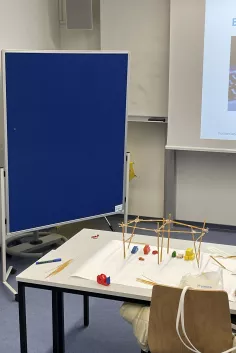
I found myself drawn into deep case analysis, ad hoc presentations, role play in a class in (External Environment: Politics and Ethics), endless group work, and startup pitches. Lecturers didn’t want memorized answers, they wanted critical thought. We didn’t just study startups; we built them. We had to lead, decide, compromise, and deliver quickly. In that exercise, I saw what leadership under pressure really looks like. It’s not clean. It’s not hierarchical. It’s urgent, collaborative, and intensely humane. These ween’t simulations in the abstract. We pitched read ideas, built real business plan.
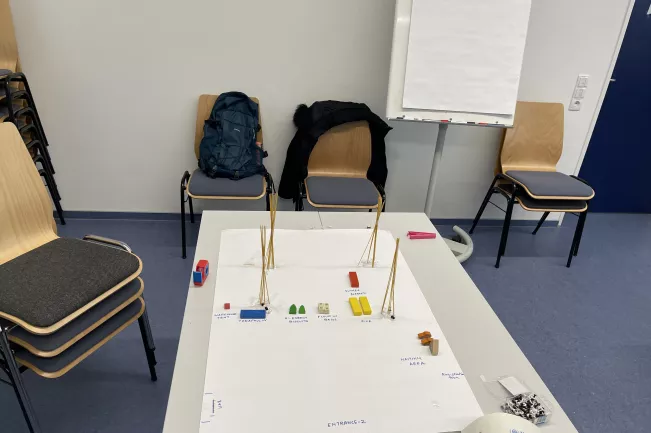
One of the most formative experiences came in a class: Logistics and Quality Management. Our team was tasked with building a temporary warehouse, using spaghetti sticks (interesting!). What started and seemed straightforward became complex under pressure. It was a simulation of how to respond during a humanitarian crisis. We had to triage and prioritize supplies, sort perishables, manage and motivate a team, and make fast decisions, all while considering the real human impact behind every logistical choice. That was defintely a crash course in leadership, accountability, and empathy. When you’re simulating aid delivery in a disaster zone, it becomes clear: there is no room for ego or indecision. There is only the work, the people relying on you, the urgency, and the consequences of your choices.
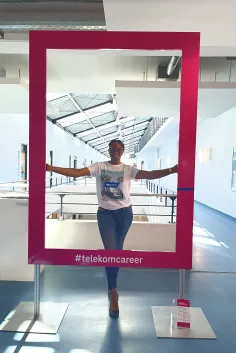
And yet, it wasn’t only the crisis scenarios or business pitches or presentations that left a mark. It was also the quieter, more reflective moments. In one General Management class, Professor Harald Meier asked us a question I’ll never forget: “Where is your desk?” It wasn’t about furniture, it was about focus. It was meant to provoke reflection on the nature of work and ambition. We get so caught up in titles, office spaces, company names. But at the end of the day, it’s just a desk, a screen, and the problems you’re trying to solve. The real question is: What are you doing there?
That reframing hit me hard. It shifted how I think about my career- not as a ladder to climb, but as a series of challenges to solve. A call to align my skills with actual needs. A mindset I carry every day. I now keep (laughing) an audit trail of observations from projects: penning down small details, inefficiencies, opportunities for refelction. A habit nutured throughout my MBA Programme: look deeper, question more, and never stop optimising.
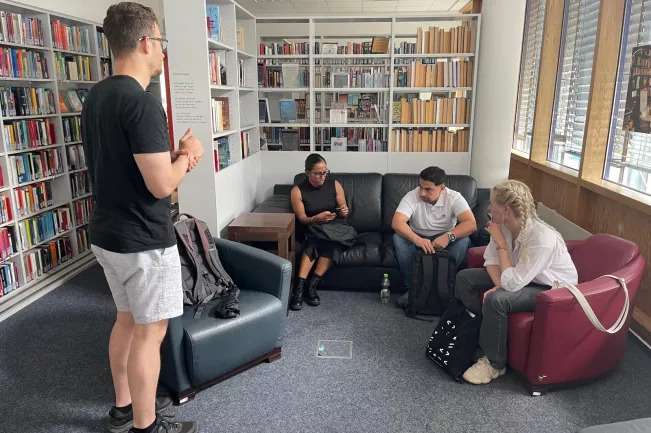
Of course, none of this would have been possible without the people. Huge thanks to Max Bolz and Isabella Kern for being resourceful throughout my study period. Those one-on-one conversations mattered; that kind of presence of being heard. It grounded me. To Romein Van Staden and David Elema, both alumni, for guidance on career transitions and job hunting. Their approach was all about precision and strategy. “Opportunities are fleeting,”. “People give jobs through referrals. Join small communities,” Romein said. Be curious. Be smart. Identify opportunities and be flexible. That advice stuck. Throughout it all, my classmates were more than peers; they were co-builders- Sulaiman Salehi, sounding boards- Chris Holmes (thank you for your patience in guiding me through Investment and Finance exam prep), support systems; Daniela Curcubet, and Dishani Misra. We shared long nights of preparation, WhatsApp calls, candid feedback sessions, and the occasional bout of self-doubt. But we got through it together.
Culturally, moving to Germany brought its own set of challenges. Its own kind of growth. The kind that says, I’ve been here before. I’ve figured out harder things. Let’s begin. The pace, the precision, the expectations- it was an adjustment. But I found connection in difference, and that diversity became a real strength, both socially and intellectually.
Now, looking back at where I started, the change is undeniable. The person who applied to the MBA Programme in CSR & NGO Management was curious and determined. The person walking away is confident in a quieter, deeper way. The kind of confidence that doesn’t announce itself, but shows up in action. The confidence to commit fully, to tackle the unknown, to adapt fast, and to lead thoughtfully.
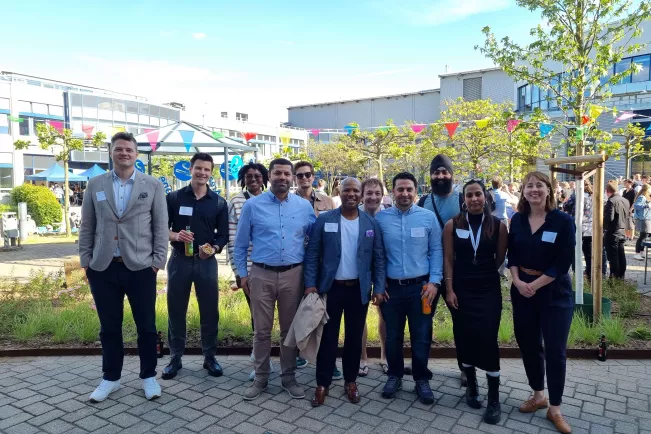
My MBA journey through H-BRS is a sentiment of career progression: reimagining what’s possible. Every concept I learned, every case I tackled, every conversation I had added another layer to how I now see the world myself. The programme might be phasing out, but its impact is not. For those of us who went through it, the MBA wasn’t a finish line. It is a turning point. A way of thinking. A lens for decision-making. A call to act with purpose.
And so, with gratitude and a readiness for whatever comes next, I carry this experience forward. Projecting confidence, not to impress, but to impact. Not just to close deals, but to open possibilities.
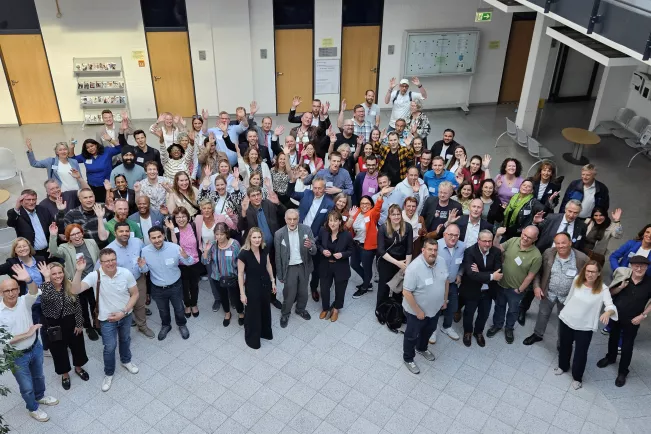
An article by Etheldreda D. Nanfa (Alumna of the MBA programme CSR & NGO Management)
Discontinuing of the MBA programme CSR & NGO Management
Anlaufstellen
Kontakt: Internationales Zentrum für Nachhaltige Entwicklung (IZNE)
Campus
Sankt Augustin