Department of Computer Science
Ho Ho Hackathon @ H-BRS

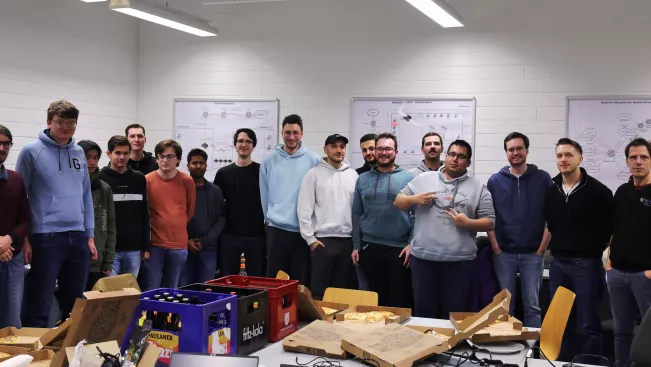
IETF hackathons are collaborative development formats within the Internet Engineering Task Force (IETF) environment, in which participants implement, test and further develop Internet standards in practice. The focus is on collaboration, professional exchange and the transfer of standards into functioning prototypes – not competition.
The projects at a glance
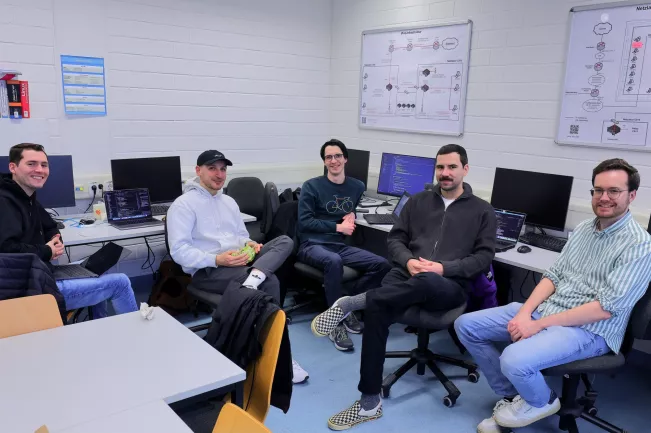
Project 1: Secure Paste Bin "PastaPaste"
The first project resulted in a secure, access-restricted paste bin system. The application used OAuth 2.0 for authentication and enabled logins via external identity providers such as GitHub, Google or a locally operated Keycloak server. A key design principle was end-to-end encryption: all content was encrypted and decrypted exclusively on the client side, so that the server had no access to plain text data. The backend component was implemented as a zero-knowledge service using Flask and was put into productive operation during the hackathon.
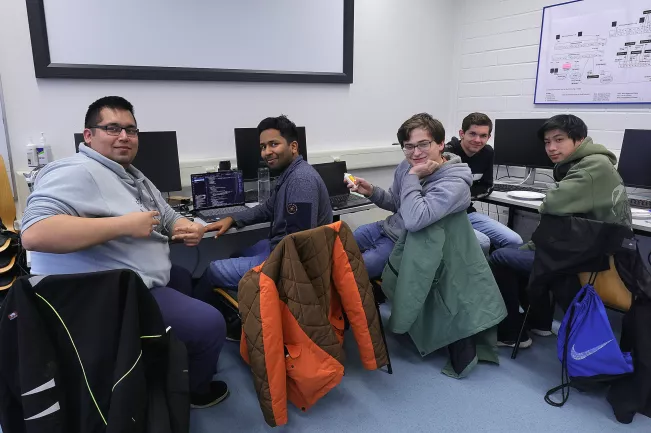
Project 2: Bluetooth-Low-Energy-Sniffer
The second project group implemented a Bluetooth Low Energy sniffer using Scapy in combination with Ubertooth hardware. A graphical user interface was developed to analyse the recorded BLE frames, enabling structured evaluation of the packets. The high number of BLE frames recorded was remarkable: despite it being a weekend shortly before the Christmas holidays, there was unexpectedly high radio activity on campus.
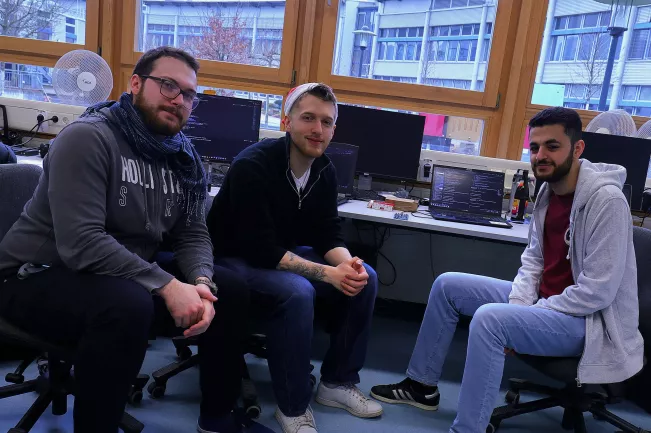
Project 3: Post-Quantum-Schlüsselaustausch für ShockBurst
The third project group implemented a post-quantum key exchange for the 2.4 GHz ShockBurst radio technology. ML-KEM was used as the cryptographic basis. The demonstration was carried out on the nRF52832-DK hardware platform. Despite the platform's limited resources, the PQC algorithms were successfully executed. The project provided valuable insights into the practical feasibility and performance limits of post-quantum secure cryptography on embedded systems.
Exchange and Organisation
In addition to the intensive technical work, the participants also used the hackathon for numerous discussions and personal exchanges. For many, conversations about study experiences, research interests and ongoing projects proved to be a particular added value of the event.
The Department of Computer Science and the student council supported the organisation and provided catering. The relaxed atmosphere, far removed from the usual teaching environment, promoted open, productive interaction and contributed significantly to the success of the hackathon.

Conclusion
The hackathon combined practical implementations with current topics such as zero-knowledge systems, radio analysis and post-quantum cryptography, while also strengthening professional and personal exchange. The format was also convincing across the board in terms of organisation.
A similar event was held in July of this year as part of a course in the Master's programme in Cybersecurity & Privacy. We would like to express our sincere thanks to everyone involved in making this hackathon possible and helping to organise it.
Kontakt

Hannes Tschofenig
Former professor in Computer Science, in particular Network Security
Location
Sankt Augustin
Address
n.n.
n.n.