International Centre for Sustainable Development (IZNE)
How urban gardens help rebalance carbon: Q&A with PhD student Atefeh Movassagh
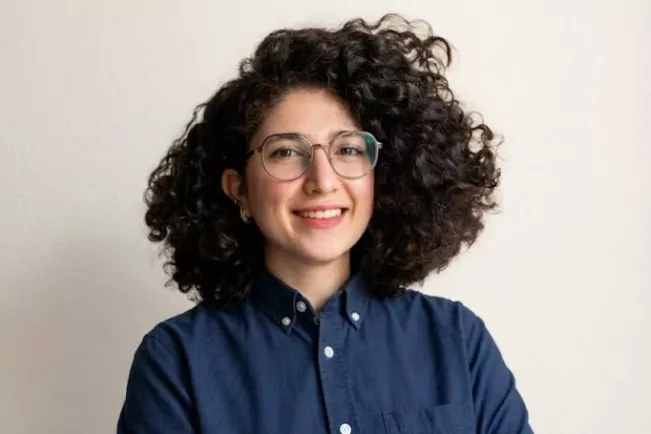
IZNE: What is the focus of your research?
Atefeh Movassagh: My research question is: How do land use and management practices in urban green spaces in the Bonn-Rhein-Sieg area influence soil organic carbon stocks (SOC), soil nutrients, and the potential to provide soil ecosystem services?
The aim is to assess how different land use and management practices affect SOC storage and nutrients in urban green spaces, with a focus on the Bonn and Rhein-Sieg districts.
„What fascinates me most about this research is its holistic perspective on environmental and health challenges. It shows that every small action matters—even a home garden can have a significant environmental impact. Soil is not just a thin layer covering the Earth; it’s a solution to many of the challenges we face.”
Atefeh Movassagh - PhD Student in Soils and Biomass
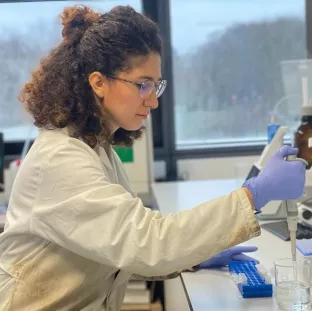
IZNE: In a presentation last year, you said, “It’s not always about reducing carbon, but about rebalancing it.” Could you explain that?
Atefeh Movassagh: The total amount of carbon in Earth’s system remains nearly constant, but it continuously cycles between the atmosphere, oceans, and land. Climate change is not about having more carbon overall; rather, it’s about an imbalance in these carbon flows. Urbanization—through construction, industrial activities, and unsustainable soil management—exacerbates this imbalance. Restoring soil carbon and rebalancing these natural flows are essential for creating more sustainable and resilient urban environments.
IZNE: What are the most important findings so far?
Atefeh Movassagh: Our results indicate that urban green spaces in the Bonn–Rhein-Sieg district—such as house gardens, allotment gardens, and public green spaces—exhibit relatively high soil organic carbon (SOC) stocks and nutrients compared to global urban averages. We also found that vegetation type is a key factor influencing SOC storage, highlighting the importance of plant selection in enhancing carbon sequestration in urban soils.
„Soil is a complex and dynamic ecosystem, rich in biodiversity and essential for the ecosystem services that support our life and well-being. One of the most rewarding aspects of my PhD was collaborating with gardeners. Engaging with individuals who are genuinely committed to addressing environmental issues was truly inspiring.”
Atefeh Movassagh - PhD Student in Soils and Biomass
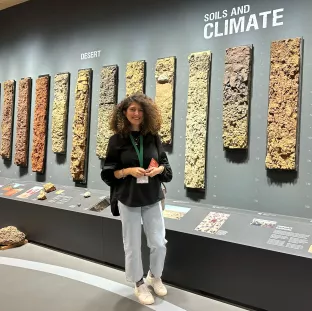
IZNE: What practical recommendations do you have for gardeners?
Atefeh Movassagh:
- Grow more, not less: Increase biomass by planting diverse vegetation instead of leaving areas bare or dominated by lawn.
- Keep organic matter on site: Leave grass clippings and plant residues in your garden or turn them into compost.
- Support life below ground: Healthy soils depend on biodiversity—protect soil organisms by increasing plant diversity and managing irrigation and fertilization carefully.
IZNE: Thank you for these fascinating insights into your research. We wish you all the best for completing your PhD thesis!
Insights into Field Research
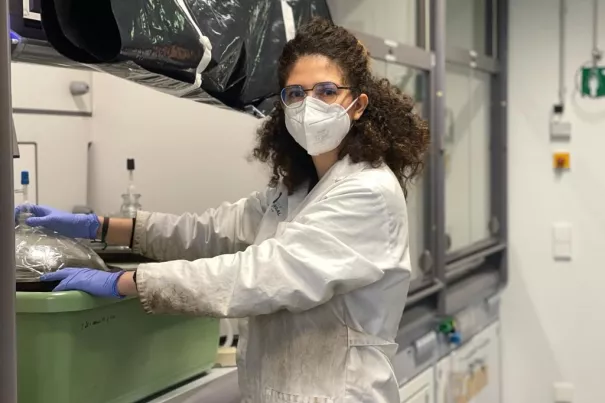
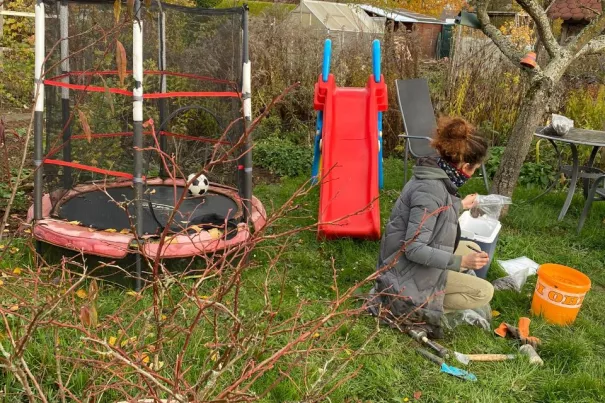
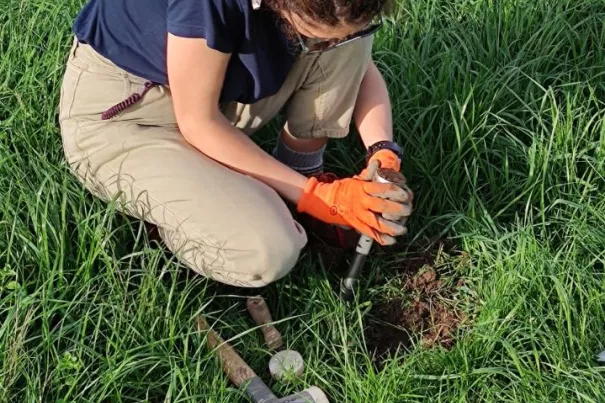
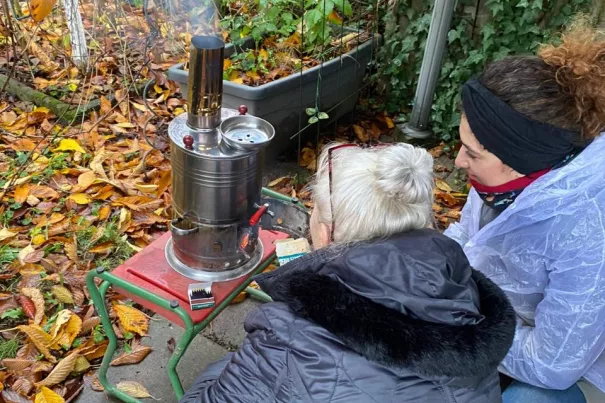
The PhD project is supervisoned by: Prof. Dr. Martin Hamer (H-BRS, IZNE), Prof. Dr. Thomas Döring (University of Bonn), Prof. Dr. Florian Wichern (Hochschule Rhein-Waal) and Dr. Bibiana Betancur Corredor (Center for Development Research (ZEF) – University of Bonn).
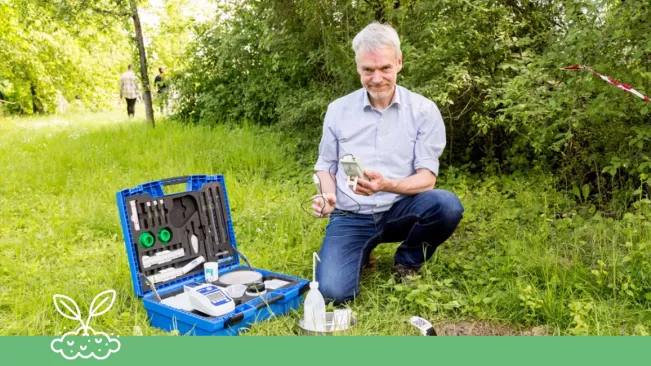
About Atefeh Movassagh

Contact

Martin Hamer
Professor for soils and biomass, Director of the International Centre for Sustainable Development (IZNE), Department of Applied Natural Sciences
Research fields
Location
Sankt Augustin
Room
F 311
Address
Grantham-Allee 20
53757, Sankt Augustin
Telephone
+49 2241 865 774Contact Point
Contact International Centre for Sustainable Development (IZNE)