30 years Hochschule Bonn-Rhein-Sieg
Exhibition Visionary Female Researchers: Katalin Karikó
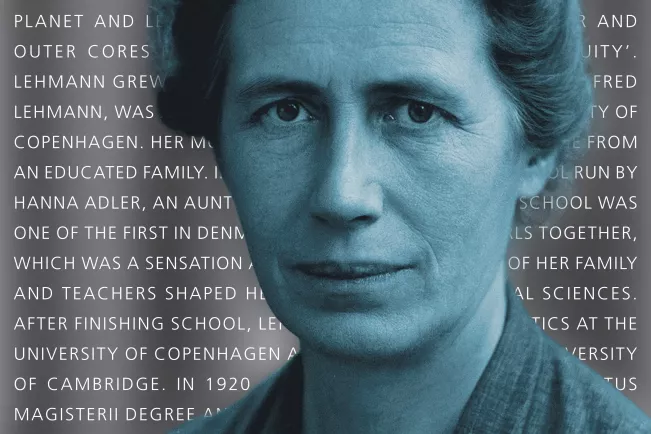
Biography Katalin Karikó (1955)
Dr Katalin Karikó, born on 17 January 1955 in Szolnok (Hungary), is a Hungarian American biochemist whose groundbreaking research on mRNA technology formed the basis for the development of COVID-19 vaccines, saving millions of lives.
Born on 17 January 1955 in Szolnok, Hungary, Karikó grew up in modest circumstances in the small town of Kisújszállás. She was the daughter of a butcher and an accountant and developed an interest in nature and biology at an early age. After graduating from high school, she began studying biology at the University of Szeged in 1973, graduating in 1978. She earned her doctorate in biochemistry from the same university in 1982. While still a student, she worked on the synthesis of RNA, which laid the foundation for her later research.
After obtaining her doctorate, Karikó continued her postdoctoral research at the Institute of Biochemistry at the Biological Research Centre of the Hungarian Academy of Sciences. However, in 1985, her laboratory lost its funding, prompting her to leave Hungary with her husband and two-year-old daughter and move to the United States. When they immigrated, they smuggled 900 British pund in a teddy bear, money they had obtained by selling their car and buying British pounds on the black market. Karikó was hired at Temple University in Philadelphia, where she worked for three years before moving to the University of Health Science in Bethesda. From 1989, she worked at the University of Pennsylvania School of Medicine. There, in 1998, she met immunologist Drew Weissman, with whom she conducted research on the development of mRNA-based drugs.
Karikó and Weissman discovered how nucleoside modification can suppress the immunogenicity of RNA. This discovery was crucial for the therapeutic use of mRNA and formed the basis for the development of mRNA-based vaccines, particularly against COVID-19. The great therapeutic potential of mRNA lies in its function as a messenger molecule that transports genetic information from DNA to ribosomes, where proteins are synthesised. By introducing modified mRNA into the body, it can be stimulated to produce specific proteins that can then trigger an immune response or achieve therapeutic effects. This technology opens up new possibilities in vaccine development and disease treatment, as it enables a rapid and flexible response to emerging pathogens.
Despite her significant contributions, Karikó received limited financial support in the early years of her career and was not considered valuable by the University of Pennsylvania. Her position as an assistant professor was not renewed, and she was demoted to a temporary postdoctoral position. Despite these setbacks, Karikó remained committed to RNA research. She succeeded in modifying viral RNA molecules so that the immune defence of human cells no longer destroyed them. These results were published in high-ranking journals and led to a patent that was later sold by the university. In 2013, Karikó was dismissed from the University of Pennsylvania, which initially seemed like the end of her scientific career.
After her dismissal, Karikó received an offer from the founders of the German company BioNTech, Özlem Türeci and Uğur Şahin. Since 2013, she has been Senior Vice President at BioNTech, where she made crucial contributions to the development of COVID-19 vaccines. Her work led to mRNA technologies being used not only for vaccines, but also for therapeutic applications in cancer medicine and other fields. For this, she and Drew Weissman were finally awarded the Nobel Prize in Physiology or Medicine in 2023. They were honoured for their discoveries on nucleoside base modifications, which enabled the development of effective mRNA vaccines against COVID-19. Karikó announced that she would donate her prize money of around half a million Euro to her alma mater, the University of Szeged.
Karikó is married to engineer Béla Francia, and their daughter, Susan Francia, is a two-time Olympic champion and multiple world champion in rowing. Karikó emphasises the importance of finding a balance between career and family: ‘Women should have a career and a happy family.’ She believes that the responsibility for raising children should not lie solely with women. In interviews, she has emphasised the importance of reliable childcare – both in Hungary and in the United States. She has often heard the phrase ‘I sacrifice my life for my children,’ but considers it wrong: ‘You shouldn't use your children to end your career. They are just as much the responsibility of the husband.’ Her advice to women: choose a partner who recognises this.
With this attitude, Karikó succeeded in achieving extraordinary things in various areas of life – and her research made a decisive contribution to overcoming one of the greatest crises of the 21st century.
Contact points
Centre for Science and Technology Transfer (ZWT)
Campus
Sankt Augustin