Department of Engineering and Communication

Prof. Dr Marco Jung
Professorship for Electromobility and Electrical Infrastructure with a focus on Power Electronics
Unit
Department of Engineering and Communication, Graduate Institute, Institute of Technology, Resource and Energy-efficient Engineering (TREE)
Research fields
- Bidirektionale Batterieladegeräte (AC, induktiv und DC) Elektrofahrzeuge
- Stationäre Speichersysteme
- PV-Wechselrichter und deren Netzintegration
- DC/DC-Wandler für die unterschiedlichsten Applikationen
- Einsatz von SiC- und GaN-Halbleitern
- Magnetische Bauteile
- Gleichrichterkonzepte für die Elektrolyse
- Inselnetze/MicroGrids und stromrichterdominierte Netze
- Power Hardware in the Loop
- Netzbildene Stromrichter für Inselnetze und das Verbundnetz
Location
Sankt Augustin
Room
B213
Address
Grantham-Allee 20
53757 Sankt Augustin
Telephone
+ 49 2241 865 316Location
Sankt Augustin
Room
B213
Address
Grantham-Allee 20
53757 Sankt Augustin
Telephone
+ 49 2241 865 316Profile
Lehre:
- Grundlagen der Elektrotechnik
- Vertiefung Elektrotechnik
- Netzanbindung und Smart Grids
- Effiziente Verkehrssysteme / Leistungselektronik
- Elektrische Energiesysteme
- Innovative Development Chain Lab Course (Digital Twins, Rapid Prototyping and Hardware-in-the-Loop)
- Control of grid-connected power inverters

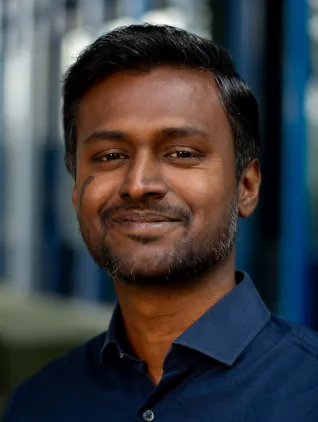
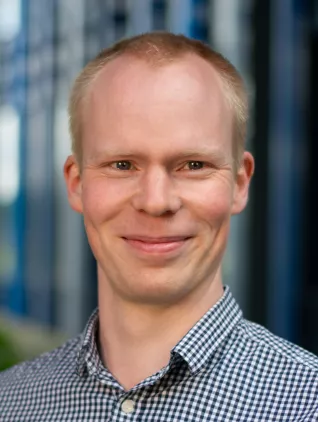
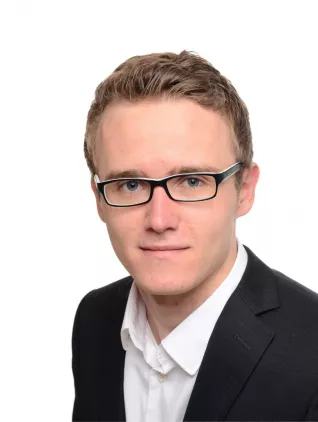


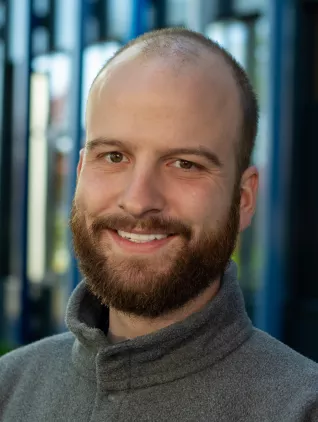


Lehrbeauftragte:
Dr. Ron Brandl
Prof. Dr. Jean Patrick Da Costa
Curriculum vitae
Berufliche Laufbahn:
Ausbildung:
Titel der Arbeit: Optimiertes multifunktionales bidirektionales Ladegerät für Elektrofahrzeuge
Abschluss: Dr.-Ing.
Titel der Arbeit: Inselnetzwechselrichter für USA-Netze
Abschluss: Dipl.-Ing., M.Sc.
Titel der Arbeit: 24 V-Versorgung als Bestandteil eines Brennstoffzellen-Wechselrichters
Abschluss: Dipl.-Ing. (FH)
Abschluss: Facharbeiter
Memberships
Research Projects
The EMV-Wind project is developing open-source software that analyses and predicts the high-frequency effects resulting from modern, high-speed-switching converters and the associated EMC effects in the drive train of wind turbines. To this end, converters, supply cables and generators are being thoroughly investigated, whilst calculation and simulation models are being developed and tested on test benches. The software is intended to help address EMC-related issues as early as the initial development phase, with a view to improving the operational reliability and service life of the turbines.
Project management at the H-BRS
Prof. Dr Marco Jung
The BiSS project aims to balance unpredictable and expensive peak loads using battery storage or bidirectional charging electric vehicles.
Project management at the H-BRS
Prof. Dr Marco Jung
In the PVCharge project, a consortium comprising two research institutions and three industrial companies is investigating how synergies between industrial photovoltaic systems and electric vehicles can be better utilised. The focus is on larger PV systems, such as those that can be installed above or near supermarket or company car parks. The project has three key objectives: To reduce energy conversion losses when charging electric vehicles with PV electricity, in order to utilise renewable energy more efficiently To increase the proportion of PV power in the vehicle battery by setting PV-dependent target values during charging, in order to replace the fossil-fuel-generated portion of grid electricity with locally generated PV power To integrate vehicle batteries for grid-stabilisation services Charging electric vehicles (EVs) directly from a photovoltaic (PV) system offers both environmental and economic benefits. In times of rising energy costs and growing environmental awareness, the use of renewable energy is becoming increasingly important. The combination of EVs and a PV system makes it possible to use the solar power generated directly and efficiently to charge the vehicles. Current technologies rely on AC coupling between PV systems and charging points.
Project management at the H-BRS
Prof. Dr Marco Jung
In SupraGenSys 2, a fully superconducting 10 MW generator design will be demonstrated at scale. This requires extensive calculations and numerous analyses of the relevant subsystems. Electromagnetics and power electronics with superconducting technology and cryogenics are consistently considered in the design. For this reason, SupraGenSys 2 brings together a broad consortium with outstanding expertise that works closely together. The fully superconducting demonstrator will be designed, constructed and put into operation as part of the project. The demonstrator thus shows the feasibility of this technology.
Project management at the H-BRS
Prof. Dr Marco Jung
The BMWK-funded joint research project “F-HiL Reloaded” is dedicated to the research and development of a holistic Power Hardware-in-the-Loop test, inspection and validation system for the integration of grid-forming power converters into the energy utility system as well as intelligent test procedures..
Project management at the H-BRS
Prof. Dr Marco Jung
The “CombiPower” project involves the design of a prototype for a novel, multifunctional, bidirectional charging and propulsion unit based on SiC semiconductors and active EMC filtering. The aim of the project is to develop the prototype to a Technology Readiness Level (TRL) of 6. The prototype will be used to evaluate the expected benefits in terms of weight and cost reduction, as well as its grid-forming functions. Power hardware-in-the-loop (P-HiL) methods are used for this evaluation; these enable realistic testing under various boundary conditions at an early stage, thereby contributing to an accelerated development process. The aim is to integrate the prototype into a test vehicle.
Project management at the H-BRS
Prof. Dr Marco Jung
The MarrakEsH project brings together Proton Motor Fuel Cell GmbH, Hochschule Bonn-Rhein-Sieg (H-BRS), the Fraunhofer Institute for Energy Economics and Energy System Technology (IEE), Würth Elektronik eiSos GmbH & Co. KG and Infineon Technologies AG are working on a self-sufficient hydrogen-based energy supply.
Project management at the H-BRS
Prof. Dr Marco Jung Prof. Dr Tanja Clees
The PV4Life project is investigating the service life of photovoltaic power converters with a view to developing a digital twin of the power converter incorporating service life parameters. This model of the power converter is to be incorporated into the development of an artificial intelligence (AI)-supported operating strategy. This strategy optimises the utilisation and service life of PV power converter systems by adjusting the operating parameters as the system ages.
Project management at the H-BRS
Prof. Dr Marco Jung
The GREATER project aims at supporting Rwandan country in the energy transition which is needed for sustaining its social and economic growth. In order to fill the energy gap and to enable equal access of the Rwandan population to electricity, widespread exploitation of renewable energy sources is planned. According to Governmental strategies for energy development, low-power, off-grid, distributed power generation will play a key role, this calling for both the training of a new generation of skilled professionals and for the widest diffusion of green awareness in the national community.
Project management at the H-BRS
Prof. Dr Marco Jung Prof. Dr Stefanie Meilinger Prof. Dr Tanja Clees Derk Gonschor
Wire or ribbon connections made of aluminum are usually used to transmit electrical power in control units and power electronics modules. Since the connection points of the wires and ribbons are usually located on substrates made of different materials and the components are frequently exposed to external temperature differences, cracks can form in the material during operation and lead to complete failure of the component, which cannot be remedied by simple design modifications.
Project management at the H-BRS
Prof. Dr Christian Dresbach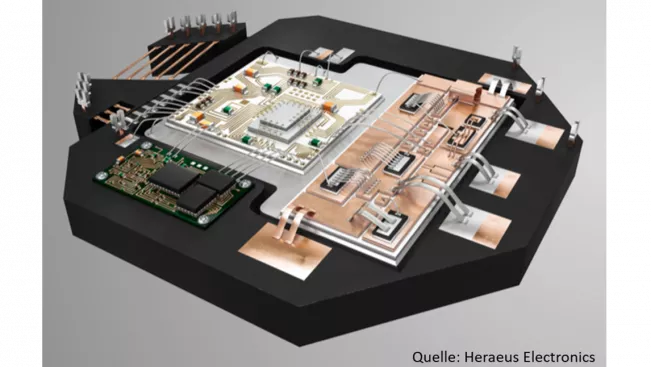
The field of photovoltaics has been subject to enormous price pressure for many years, as falling feed-in tariffs worldwide make low component prices necessary to be able to manufacture and operate a PV system economically. At the same time, the demands on the functional diversity of the devices continue to increase (e.g. universal use in PV and battery applications, grid feeding, self-consumption and island operation, provision of grid services).
Project management at the H-BRS
Prof. Dr Marco Jung
In the HyLeiT joint project, research is being conducted into a new generation of electrolysis converters and electrical system technology for the energy supply of hydrogen electrolysis. The aim is to halve the system costs of electrical engineering from the grid connection point to the DC connection at the electrolyzer, taking into account associated operating costs and effects on H2 generation costs.
Project management at the H-BRS
Prof. Dr Marco Jung
The potentials and effects of digitalisation today encompass all areas of human and social activity. Universities are therefore responsible for enabling their students to develop competences that not only include the competent use of digital technologies, but also the ability to assess the potential and effects of digitisation in society and the world of work, to actively and reflexively shape digitisation processes and to keep pace with the rapid dynamics of change. In 2019/2020, the state of North Rhine-Westphalia developed the Curriculum 4.0.nrw funding line, which is intended to support the Hochschule Bonn-Rhein-Sieg in exploiting the opportunities of digital teaching, among other things. In the Department of Electrical Engineering, Mechanical Engineering and Technical Journalism, this funding line will be used to further develop the Master's programme in Sustainable Engineering Sciences, which addresses the funding line's thematic areas such as technical innovation and digitalisation.
Project management at the H-BRS
Prof. Dr Marco Jung
In the LEITNING project, a novel battery inverter with high mass power density is being researched and field tested to provide a highly-available and modular AC grid and grid-supporting functions using advanced circuit topologies based on innovative SiC MOSFET power modules, magnetic devices and control strategies.
Project management at the H-BRS
Prof. Dr Marco Jung
Publications
Further Information
Masterprojekte 2021:
- Power Electronics (https://www.h-brs.de/de/emt/power-electronics-2021)
- Power Systems (https://www.h-brs.de/de/emt/power-systems-2021)
Masterprojekte 2022:
-Entwicklung eines Schaltzellen-Prüfstandes zur Charakterisierung von Hochstrom-Halbleiter-Modulen (https://www.h-brs.de/de/masterprojekt-2022-entwicklung-eines-schaltzell…)
-Konzeptentwicklung und Spezifikation eines Stromrichters für die Wasserstoffelektrolyse (https://www.h-brs.de/de/masterprojekt-2020-konzeptentwicklung-und-spezi…)
-Konzept und Realisierung einer niederinduktiven Prüflings-Anbindung (https://www.h-brs.de/de/masterprojekt-2022-konzept-und-realisierung-ein…)
-Entwicklung und Aufbau eines Kalorimeters zur Verlustleistungsbestimmung der magnetischen Komponenten im Projekt HyLeiT (https://www.h-brs.de/de/masterprojet-2022-entwicklung-und-aufbau-eines-…)
-Entwicklung einer Bestromungseinheit für ein Kalorimeter zur Charakterisierung von Drosselverlusten (https://www.h-brs.de/de/masterprojekte-2020-entwicklung-einer-bestromun…)
Links
Further links