International Centre for Sustainable Development (IZNE)
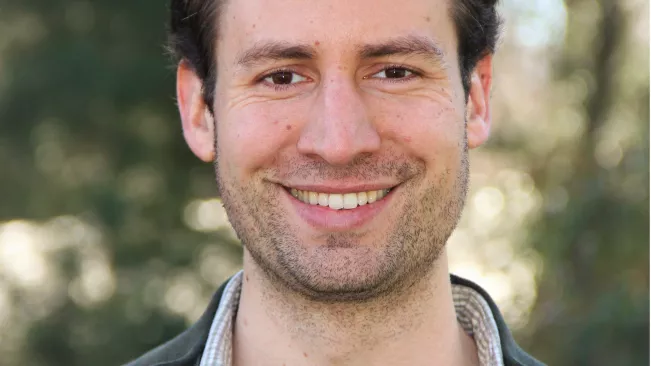
"Many elements of your meal today come from rocks." Interview with Philipp Swoboda, guest scientist at H-BRS
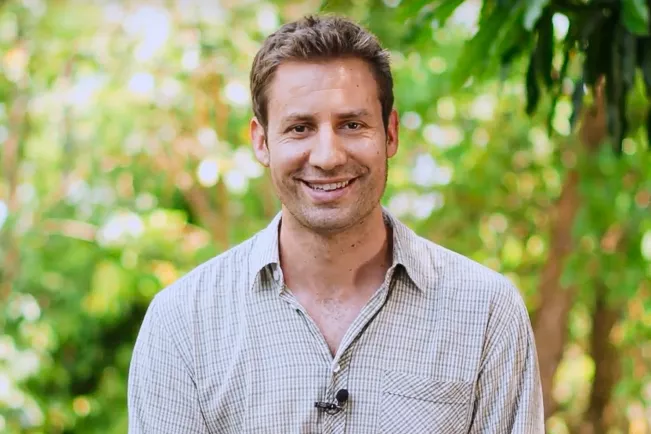
His doctorate on rock powder quickly caught the attention of the founders of the start-up at the time. The innovative approach of using rocks to save CO2 is set to bring about lasting change in agriculture, particularly in tropical regions such as Brazil.
We wanted to find out more about Philipp's successful journey, his work and the background, so we asked him.
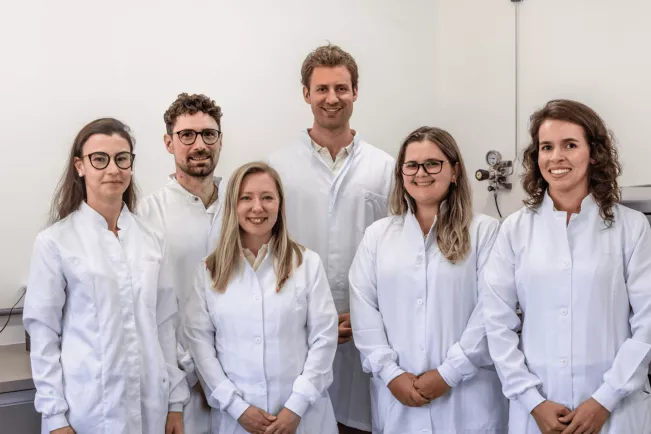
IZNE: Hello Philipp. You are an alumnus of H-BRS and a founding member of InPlanet. Why don't you briefly tell us what exactly you do and how it relates to your studies?
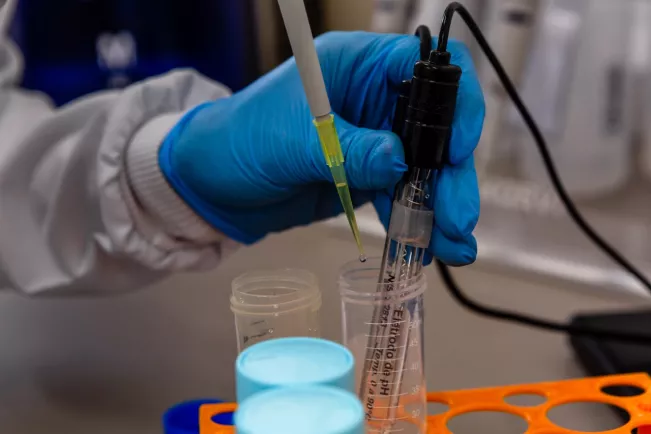
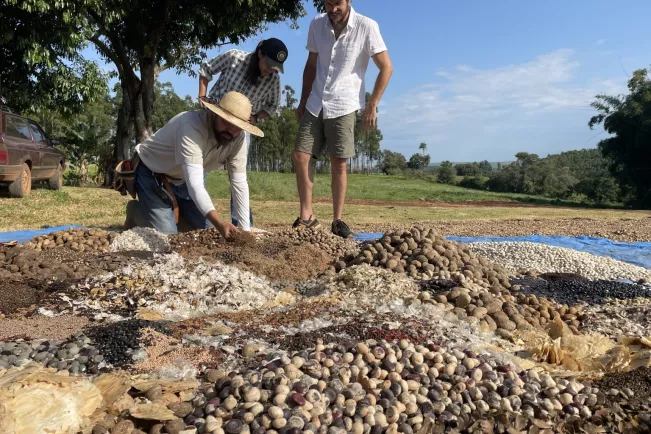
Philipp Swoboda: We regenerate tropical soils using silicate rock powders (such as basalt) and sequester CO2 at the same time. Soil regeneration occurs through an increase in pH and macro- and micronutrients, as well as the addition of silicon, which can make plants more resistant to biotic (pests) and abiotic (water scarcity) stresses. The mineral surfaces can also potentially make organic carbon more stable. At the same time, CO2 is sequestered by rainwater during the weathering of the rock powder. How does this work? The carbonic acid in the rainwater reacts with the rocks (weathering) and is thereby converted to dissolved inorganic carbon species (namely bicarbonate and carbonate), which are transported away via the soil, and consequently can remain stable in water bodies for centuries to millenia.
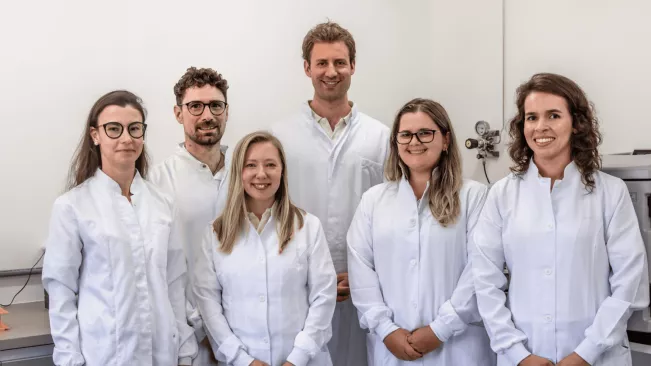
I was lucky enough to pursue my PhD in this field with Professor Martin Hamer, and a main publication then brought me together with the founders, the rest is history. I have and have had various activities, from trial design and execution, to coordinating collaborations with various stakeholders (farmers, mines, analyser manufacturers....), to calculations of life cycle assessments.
IZNE: What makes your approach to CO2 removal so special?
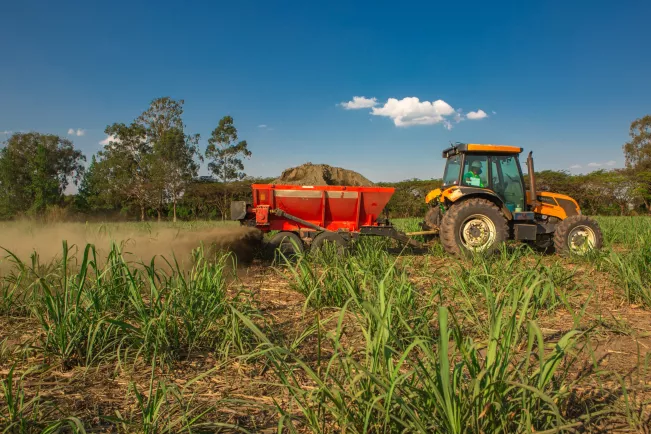
Swoboda: First of all, we are simply accelerating the natural process of silicate weathering, which binds CO2 and has regulated the climate over geological time scales. In addition, our technology is highly scalable: basalts are one of the most common rock types, the infrastructure already exists such as for liming in agriculture, there is no land competition such as for other carbon capture technologies, the extent of infertile soils in the tropics is enormous, and the mining industry with its global quantities of by-products such as rock flour is gigantic. In addition, conventional fertilisers are becoming increasingly expensive and often have to be imported from far away.
IZNE: Can the technology also be applied in Europe?
Swoboda: Yes, but we are focusing on the tropics because the original minerals that made these soils fertile have already largely weathered away and the geogenic nutrients have therefore largely disappeared. It therefore makes more sense (in my opinion) to regenerate these soils geologically, whereby targeted applications in Europe can also be expedient.
IZNE: You have been back at H-BRS / IZNE as a guest scientist since May. How did this come about and what do you expect to gain from it?
Swoboda: I have been in contact with Martin Hamer time and again because the exchange with him as a soil scientist and sustainability scientist with a practical focus has always been very valuable. I expect to gain further valuable insights as well as joint research projects and knowledge.
IZNE: What are the tasks of a visiting scientist?
Swoboda: The planning of joint projects and publications.
IZNE: What should everyone know about rock flour?
Swoboda: ...many of the elements in your meal today come from rocks (because the rocks in the soil release the elements that plants absorb and we eat, or the animals that eat those plants).
IZNE: What does sustainability actually mean to you?
Swoboda: When we manage to achieve a healthy life for all with the resources we are given.
IZNE: What are your professional goals for the future?
Swoboda: Further successful results with InPlanet, and in the medium-term future to do science communication that conveys not only facts, but also the fascinating and essential nature of a scientific mindset.
IZNE: What does your everyday life look like? And what do you do when you're not in a field in Brazil?
Swoboda: I currently work a lot remotely and in co-working spaces. It's a mixture of different work packages in the morning and mostly meetings in the afternoon (Brazilian time difference). I also spend a lot of time travelling with friends, like to experiment with culinary delights with my girlfriend, do sports in nature and am currently writing a small book of poetry.
IZNE: That sounds creative and varied. Is there anything else you would like to say?
Swoboda: Especially in times of multiple crises, I like to remember the quote: “It is better to light a candle than to curse the darkness.”
That's how we see it too.
Thank you Philipp! We are very happy that you are back and wish you continued success!
„I am very pleased to see how a scientific question can be turned into a practical application for sustainable land use. Guest research at the IZNE is a good opportunity for our further collaboration.”
Prof Dr Martin Hamer - Professor of Soils and Biomass / Managing Director of the International Centre for Sustainable Development (IZNE)

Contact us

Martin Hamer
Professor for soils and biomass, Director of the International Centre for Sustainable Development (IZNE), Department of Applied Natural Sciences
Research fields
Location
Sankt Augustin
Room
F 311
Address
Grantham-Allee 20
53757, Sankt Augustin
Telephone
+49 2241 865 774Contact points
Kontakt: Internationales Zentrum für Nachhaltige Entwicklung (IZNE)
Campus
Sankt Augustin