🎓Investigating the Interactions between the Ion Channel Epithelial Sodium Channel (ENaC) and Cytoskeleton Proteins
Doctoral project at a glance
Departments and Instituts
Period
01.11.2024 to 31.10.2029


Project Description
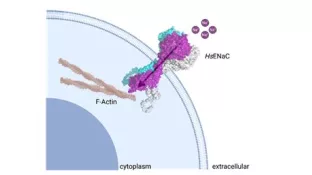
The epithelial sodium channel (ENaC), composed of α or δ, β, and γ subunits, is a constitutively active, sodium-selective ion channel essential for maintaining fluid and electrolyte homeostasis. Dysregulation of ENaC function is associated with diseases, including hypertension and cystic fibrosis. ENaC activity is tightly controlled by intracellular proteins, which regulate both its ion transport function and membrane abundance. Among these, the actin cytoskeleton plays a critical role. Studies have shown that short actin filaments can enhance ENaC open probability, emphasizing the impact of cytoskeletal dynamics on channel activity. This PhD project aims to investigate the structural and functional interplay between ENaC and the actin cytoskeleton, using a combination of in vitro biochemical techniques and molecular dynamics-based computational modeling.