Research at the university
Research Database: Projects
Forschungsprojekte (264)
The project “ESD – Am I already doing it!?” investigates how Education for Sustainable Development (ESD) is understood and implemented in teaching at higher education institutions in North Rhine-Westphalia. Its aim is to systematically capture the perspective of Universities of Applied Sciences for the first time and to expand the existing data basis from universities. The project supports the integration of Education for Sustainable Development (ESD) into higher education teaching and learning and promotes exchange across higher education institutions.
Project management at the H-BRS
Prof. Dr Wiltrud Terlau
The EMV-Wind project is developing open-source software that analyses and predicts the high-frequency effects resulting from modern, high-speed-switching converters and the associated EMC effects in the drive train of wind turbines. To this end, converters, supply cables and generators are being thoroughly investigated, whilst calculation and simulation models are being developed and tested on test benches. The software is intended to help address EMC-related issues as early as the initial development phase, with a view to improving the operational reliability and service life of the turbines.
Project management at the H-BRS
Prof. Dr Marco Jung
The German Research Foundation funded research cluster "CytoTransport" combines expertise in biomedicine, computational modelling, structural biology, chemistry and materials science to investigate cellular transport mechanisms in health and disease. To this end, 9 working groups from two university research focuses are working together, represented by the two research institutes IFGA and TREE. An overarching goal is to bundle the institutes' overlapping interests and expertise in the long term.
Project management at the H-BRS
Prof. Dr Mike Althaus Dr Karl Kirschner Prof. Dr Matthias Preller Prof. Dr Dirk Reith Prof. Dr Jörn Oliver Sass Prof. Dr Margit Schulze Prof. Dr Christopher Volk Prof. Dr Steffen Witzleben Dr Katrin Richter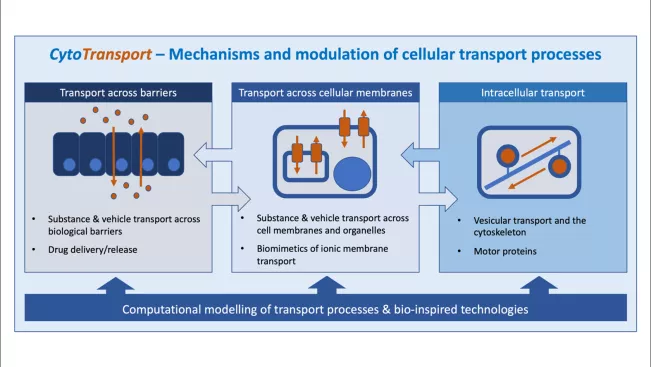
The participation of people with disabilities is an important societal concern; however, in the regular labour market their labour-force participation and employment rates are comparatively low. There appear to be multi-layered barriers that impede the realisation of an inclusive labour market. The role and significance that employer advisory structures - particularly the Einheitliche Ansprechstellen für Arbeitgeber (EAA; Single Points of Contact for Employers) - can play in promoting a more inclusive labour market are being examined within the framework of a project funded by the Federal Ministry of Labour and Social Affairs (BMAS).
Project management at the H-BRS
Prof. Dr Christian Rexrodt
MARIA LUISA ESPINEL RAMOS's doctoral thesis focuses on the transmission of infectious diseases from animals to humans. This is facilitated by natural evolutionary processes of pathogens, which adapt to environmental conditions altered by humans, such as land use, intensive animal husbandry, climate change and biodiversity loss. In urban areas in particular, high densities of humans and animals interact frequently, increasing the risk of spillover events. The nature and frequency of these contacts, as well as human behaviour, which is influenced by social and economic factors, have a significant impact on exposure. As these complex relationships are not yet fully understood, the prediction and prevention of emerging zoonoses requires an integrative "One Health" approach that considers environmental, animal and health aspects together.
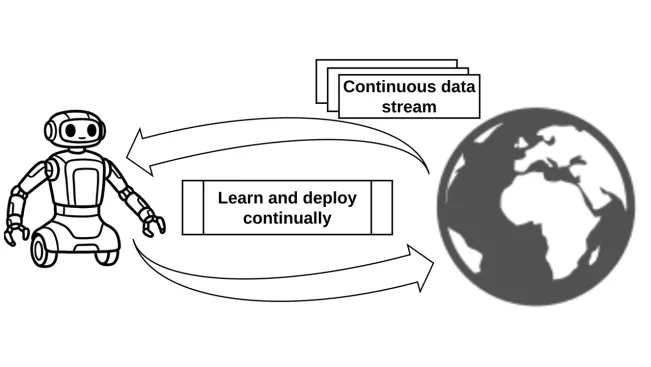
Autonomous systems and robots operate in dynamic environments that change gradually or radically over time. To perform tasks in such ever-changing environments, the robot should continuously learn and adapt its capabilities. Continual learning (CL) is a machine learning method that learns from continuous streams of data. CL aims to balance the trade-off between the capabilities to be maintained and those to be enhanced, a characteristic that current machine learning struggles with. The PhD thesis of MOHAMMAD WASIL focuses on using the physical interaction of a robot, such as exploiting spatio-temporal information about the environment, to obtain more robust data for addressing the continual learning problem.
Dynamic pricing models have long been commonplace in some industries, particularly in travel and flight bookings. Prices for identical products are adjusted dynamically and now in real time due to changing market conditions over time. Doctoral student LENA RECKI's research focuses on the effects of this pricing policy on consumer behaviour. With her findings, she aims to show the extent to which customers perceive and accept dynamic prices and the potential this model offers in industries such as food retail.
Due to the ongoing advance of digitalisation, it can generally be observed that all kinds of products are increasingly developing into services with fixed-term contracts (subscriptions). In this context, the term "Everything-as-a-Service" (XaaS) is often used. As a result, consumers are entering into more and more (fixed-term) contracts, which they need to keep track of (e.g. comparing, monitoring terms, etc.) and interact with providers (e.g. cancelling). To support this, there are already many apps, service providers and emerging start-ups. PhD student ERIK DETHIER is investigating how information technology can support consumers in managing their contracts, finances and thus their providers. Together with his colleagues from the Consumer Informatics Research Group, he is conducting research on consumers and their acceptance and integration of such IT into their everyday practices, as well as on the developers of such IT/apps.
Thanks to their highly sensitive sense of smell, sniffer dogs have the special ability to detect drugs, explosives, people or animals by their scent. But how sensitive are dogs and how reliable are their detections? To get to the bottom of this, doctoral student JENNIFER BRAUN is investigating methods for the quality-assured quantification of VOCs, primarily using instrumental analysis but also involving detection dogs.
N-nitrosamines are partly volatile compounds that can be produced in many different industrial processes and are classified as carcinogenic. Due to their high health risk, there is an urgent need to develop reliable, sensitive and mobile systems for the detection and quantification of N-nitrosamines. As part of her doctoral studies, PhD student JANA HINZ is working on the development of a GC-FAIMS system, a measuring device for the rapid analysis of N-nitrosamines. This system is intended for use in various branches of industry. Compared to conventional methods, GC-FAIMS offers the advantage of being fast, portable and cost-effective.
Contact Points
Centre for Science and Technology Transfer (ZWT)
Room
F 405
Vice President Research and Transfer
Campus
Sankt Augustin