Communications and Marketing
H-BRS News: Professor Tanja Köhler on classism in journalism
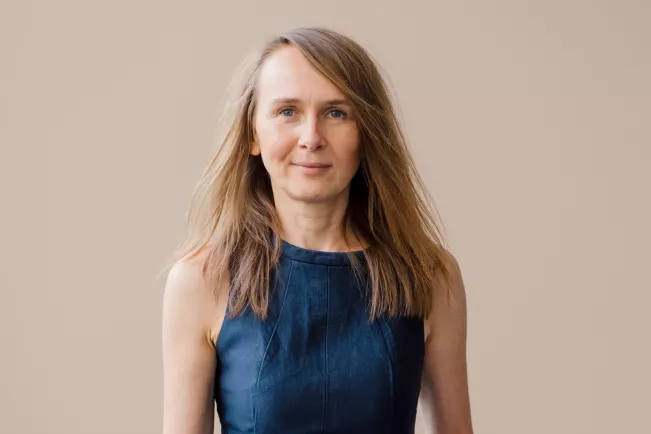
In this interview, she discusses the findings of her study, its socio-political implications and the challenges it poses for media practice.
H-BRS: Professor Köhler, you have authored a study on the topic of ‘classism in journalism’. What is meant by classism?
Professor Tanja Köhler: Classism refers to the discrimination against people on the basis of their social background or social status. Classism is therefore a form of discrimination, just like sexism or racism, but relating to social background. Classism manifests itself in all areas of society. The education system is a good example of this. In Germany, the chances of obtaining a school-leaving certificate and going on to university still depend heavily on the family background a person comes from. Such inequalities continue later on in the labour market and, as our study shows, also in access to journalism. In journalism, classism manifests itself on two levels: firstly, in who is even granted access to the profession, and secondly, in the reporting itself – for example, when people from less privileged backgrounds are scarcely represented, or when the realities of their lives are predominantly portrayed in a stereotypical or derogatory manner.
H-BRS: How did you go about conducting your study?
Köhler: We first asked ourselves which social background groups journalism trainees and journalism students in Germany come from. We deliberately chose to examine the next generation of journalists because traineeships and journalism schools are among the most important training pathways into journalism, and it is precisely here that it is decided who will gain long-term access to the profession.
As a first step, we undertook extensive research to determine exactly how many aspiring journalists are currently being trained in major German media organisations and journalism schools. This revealed a total population of 979 individuals. We then carried out a standardised online survey in autumn 2024. A total of 250 aspiring journalists took part, including 180 trainees and 70 journalism students.
The survey covered various aspects, including resources that may be important for entering the journalism profession, the understanding of the journalist’s role and, of course, social background. We assessed these using various indicators, including the parents’ educational background. We distinguish between children of academics – where at least one parent holds a university degree – and children of non-academics.

H-BRS: What are the findings of the study?
Köhler: The key finding is that there is little social mobility in access to journalism. In other words, social background is a determining factor in who gains access to journalism. More than half of trainee journalists and around two-thirds of journalism students come from families with a university background. Whilst 72 per cent of the comparable young population as a whole come from non-academic households, the figure is only 47.7 per cent among trainee journalists and as low as 34.8 per cent among journalism students.
At the same time, we also examined the educational background of the respondents. This reveals a strong educational selection process. Almost all respondents have a school-leaving certificate and over 90 per cent have attended a university. Only a very small proportion did not go to university. This means that the social selection inherent in the education system extends right into the field of journalism. We know from numerous studies that taking up a degree course is closely linked to the parents’ educational background. To illustrate: out of 100 children of academics, 78 go on to university; in families where neither parent has a university degree, the figure is just 25. And in families where neither parent has completed vocational training, the figure is as low as eight.
Aspiring journalists from non-academic families are also less likely to have supportive networks, are less likely to be able to rely on financial support from their parents, and cite financial constraints more frequently as an obstacle to journalism placements.
H-BRS: How do you explain this lack of diversity, and what does it mean for journalism?
Köhler: Diversity has been an important issue in journalism for many years. Media organisations and journalism schools are committed to diversity and, increasingly, to social diversity as well. They have specifically adapted their recruitment processes in response to calls for greater diversity. As a result, in many cases, a university degree is no longer a formal entry requirement at all. And yet, ultimately, it is primarily those who have studied themselves and who also come from academic families who make it into journalism training programmes. Our findings therefore reveal a clear discrepancy between aspiration and reality.
H-BRS: Why is this the case?
Köhler: There are various explanations for this. Firstly, our findings show that the starting conditions for entering the profession are distributed unequally across social groups. Aspiring journalists from non-academic backgrounds are less likely to have access to financial support and helpful professional networks.
Another problem could be that social background has so far hardly been systematically taken into account in the recruitment process. My guess is that many media organisations are unsure which criteria are even suitable for this.
We also know from other studies that selection processes often reward social similarities, for example in terms of linguistic expression or a middle-class, educated demeanour. Such a habitus is largely shaped by family and social environment. If selection processes unconsciously favour those who resemble existing staff, even supposedly neutral selection criteria can reproduce social inequalities.
This is not only problematic in terms of equal opportunities, but can also have an impact on the diversity of perspectives in journalism.
H-BRS: So the question of who shapes the media also has a socio-political dimension …
Köhler: Absolutely. Journalism is meant to reflect social reality in all its diversity, bring different perspectives to light and enable people to form their own opinions. In doing so, it fulfils a central democratic function. Social background shapes our experiences and our view of the world. If editorial teams are predominantly made up of people with similar background experiences, there is a risk that certain realities of life, topics and viewpoints will be given less attention or treated differently. And that also touches on the issue of trust. We know from other studies that a section of the population feels that the media’s choice of topics and range of opinions are unsatisfactory, and that trust in the media tends to decline as educational attainment falls. That is why, for me, social diversity in journalism is not just a question of fairness and participation, but also of a diversity of perspectives and social representation.

H-BRS: What recommendations do you draw from your study?
Köhler: Our findings show that social background is a blind spot in the recruitment process. The first step must therefore be to make this blind spot visible. That is why I believe it is important to systematically record social background during the application process. After all, as long as media organisations do not know which social groups their applicants and employees come from, they cannot identify at which stage in the recruitment process people are being lost.
At the same time, the specific barriers to entry must be examined. We therefore recommend adequately paid work placements, scholarships and support programmes for people from less privileged backgrounds. Furthermore, staff responsible for hiring decisions and allocating training places should be made more aware of classism, for example through compulsory training.
And we recommend considering the introduction of temporary quotas for people from less privileged social backgrounds. After all, structural disadvantage does not disappear simply by committing to diversity.
H-BRS: At the H-BRS, you conduct research into social inequality in journalism, as well as diversity and participation in media-shaped public spheres. How do you perceive the debate on classism?
Köhler: I have the impression that awareness of classism is growing, albeit very slowly. Social background is discussed more today than it was a few years ago. In journalism, however, it continues to receive less attention than other dimensions of diversity.
H-BRS: Where is there a need for further research?
Köhler: First and foremost, we need regular data on the social composition of the journalism profession. Our study is a snapshot of the next generation of journalists, which does not allow us to demonstrate trends over time. We also know too little about the current social background of journalists who are already working in the profession. The available findings on this are, in some cases, over 20 years old.
Perhaps the most intriguing question, however, goes one step further: what does the social composition of an editorial team actually mean for the journalism produced there? Does a more socially diverse newsroom influence the choice of topics? Are different sources and protagonists featured? Are social inequality and poverty portrayed differently? And might such content also better reach sections of the population who have so far felt under-represented by the established media?
About the person
The study
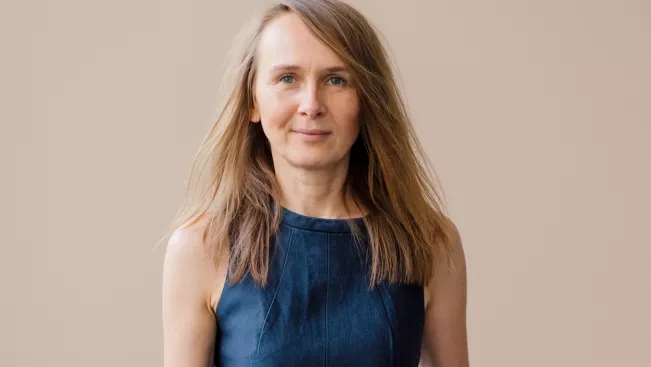
Press photo available for download




Contact

Location
Sankt Augustin
Room
B 287
Address
Grantham-Allee 20
53757 Sankt Augustin
Telephone
+49 2241 865 9627
Daniela Greulich
Deputy Head of executive department Communications and Marketing/Press and Public Relations, Press Officer
Location
Sankt Augustin
Room
E 237
Address
Grantham-Allee 20
53757, Sankt Augustin
Telephone
+49 2241 865 641