Institute of Visual Computing (IVC)

Through the Eyes of a Butterfly: Exploring Biodiversity with Game Technologies
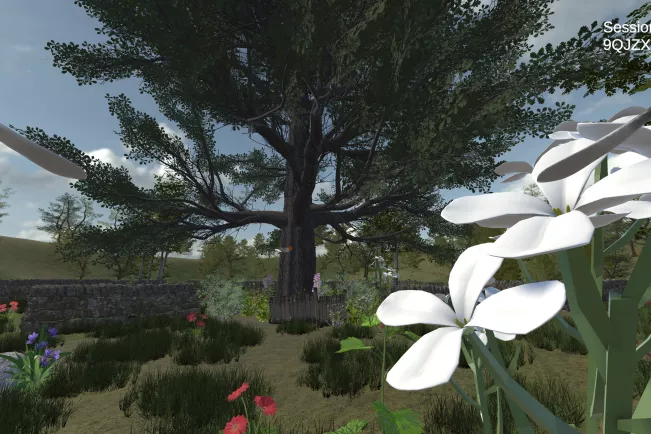
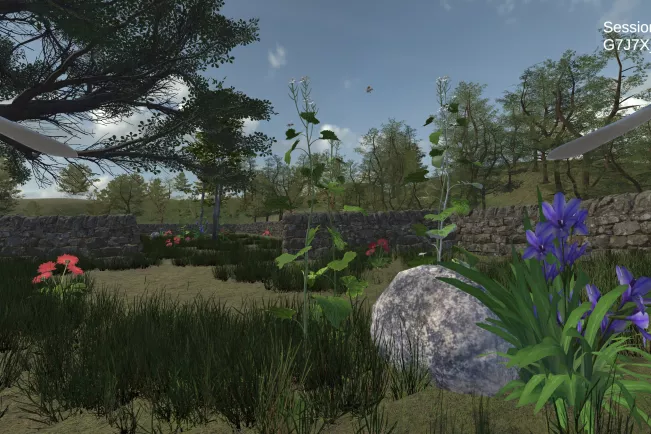
The aim of the project was to create awareness of the importance and vulnerability of insects in their natural habitat through an interactive gaming experience. Players slip into the role of an aurora butterfly and explore a meadow from the butterfly's perspective. They can move freely through the virtual environment and observe aspects of this insect's life cycle at various stations - from laying eggs to feeding. Garlic rocket plays a central role here, serving as both a food plant and an egg-laying site for the aurora butterfly.
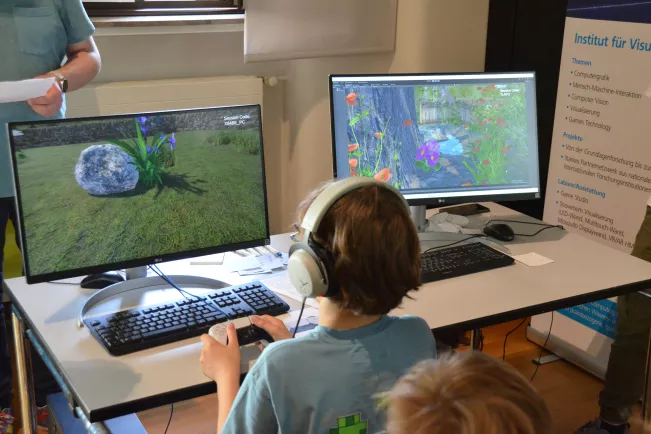
The project was realised in two versions: as a classic desktop application with a game controller and as an immersive VR application. Both versions offer an insight into the life of the butterfly, but differ in terms of the quality of perception. The VR version allows players to physically experience the environment - the feeling of flying, the size of the meadow from an insect's perspective and the immediate proximity to plants and threats such as a lawnmower.
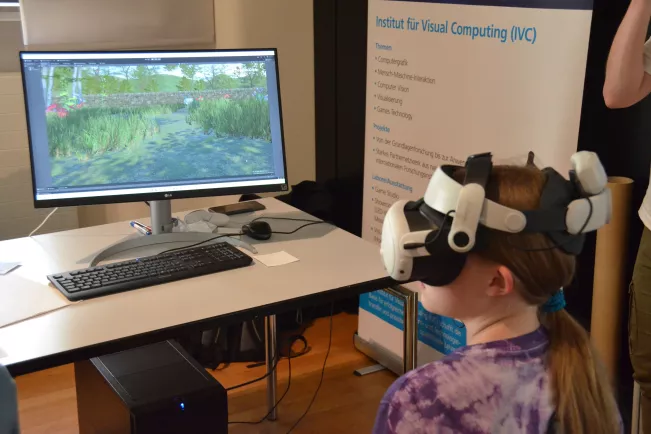
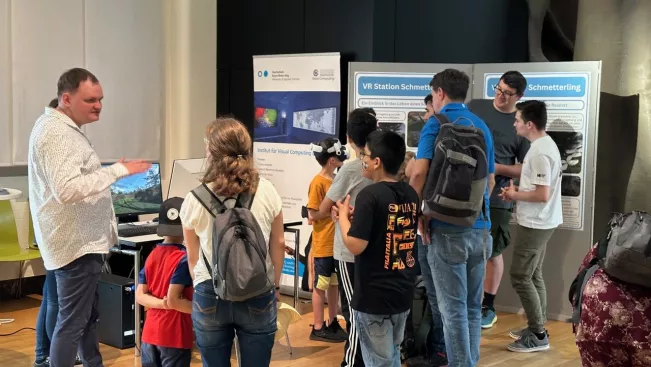
As part of the Museumsmeilenfest, a study was conducted to examine how these two approaches affect the subjective experience of nature. After engaging with the applications, visitors participated in a brief study in which they shared their impressions. The central research questions were: Is it possible to adopt the perspective of a butterfly? and How does nature affect us in virtual reality? Initial evaluations indicated that the VR version tended to evoke a stronger sense of connectedness with nature than the desktop version.
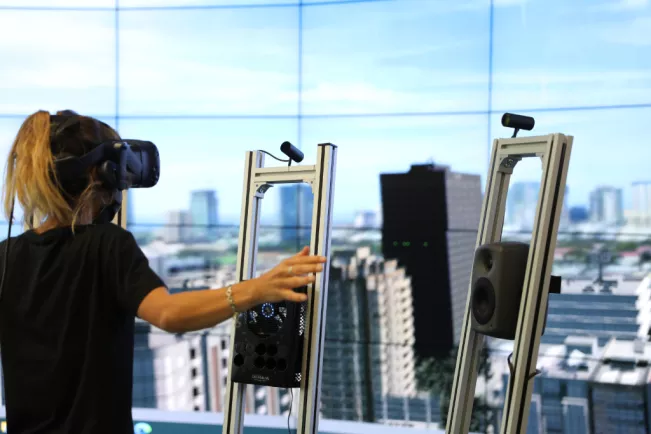
The project exemplifies the research-oriented approach of the Visual Computing & Games Technology degree programme. With their work, Alina Becker, Kevin Ehlen, Lennart Gillberg and Dennis Okkel demonstrated how theoretical knowledge can be combined with the practical development of interactive systems and how game technologies can open up new approaches to socially relevant topics such as biodiversity. The programme focuses on current technologies such as virtual and augmented reality, artificial intelligence, scientific visualisation, game engine optimisation and interactive design. A central element is the continuous group project work over three semesters, complemented by workshops, lectures from industry partners and a mobility window in the third semester.
Please note
We would like to thank all visitors who tried out our interactive application at the Museumsmeilenfest and shared their impressions with us!
Visual computing in biodiversity research
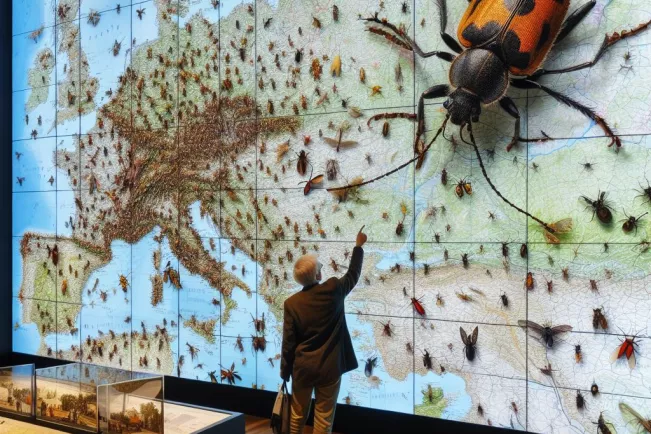
The collaboration between the IVC and Museum Koenig also extends to joint scientific projects outside of teaching. Since 2023, the IVC has been involved in the research project Participatory Insect Research through Creative Citizen Participation in Museums (PInBiM), which is funded by the NRW Future Fund. The aim of the project is to actively involve citizens - especially children, young people and families - in recording and researching insects. PInBiM pursues an innovative approach to science communication that combines traditional methods of biodiversity research with creative and interactive communication formats. Among other things, 3D scanning, digital visualisations and low-threshold interaction offers in the museum space are used. The IVC contributes its expertise in the development of digital applications and visual presentation concepts and thus supports the design of target group-specific formats for the participatory communication of biological diversity.
Institute of Visual Computing
Contact Institute of Visual Computing (IVC)
Campus
Sankt Augustin
Room
C163