Institute of Technology, Resource and Energy-efficient Engineering (TREE)
Modelling and simulation
„No modelling and simulation - no technical innovation. In this field of research, we deal with the backbone of system development and look in all directions: technical innovations, sustainability, scalability and cost optimisation.”
Prof Dr Anna-Lena Menn - Head of Research Field Modelling and Simulation (Image: @ Phil Dera)
Working groups
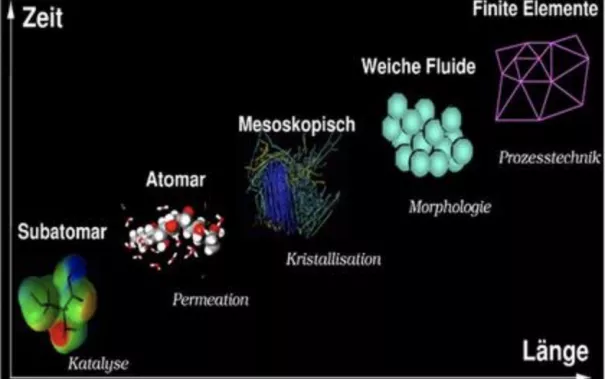
Computational Chemistry working group
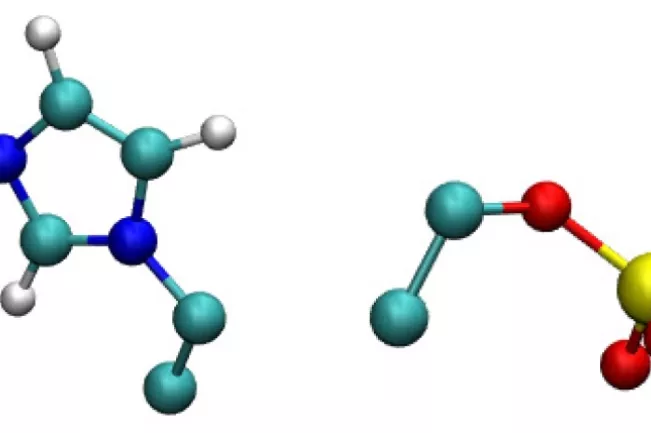
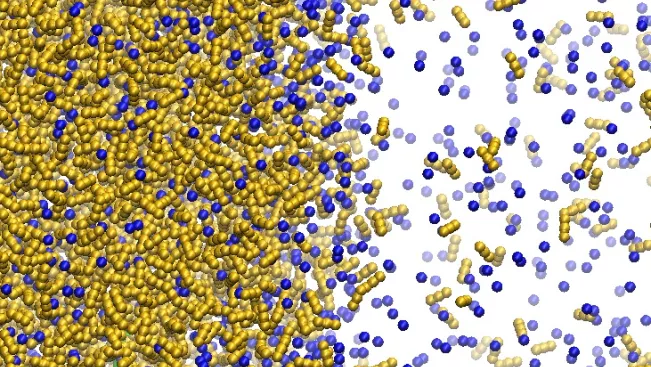
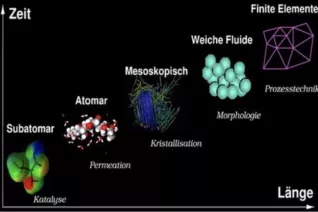
Scientific computer simulations are able to significantly expand our understanding of the relationship between theories and experimental observations. Especially when macroscopic observations need to be explained, simulations at the micro level provide an insight into the actual causal relationships that often remain hidden from the experiment.
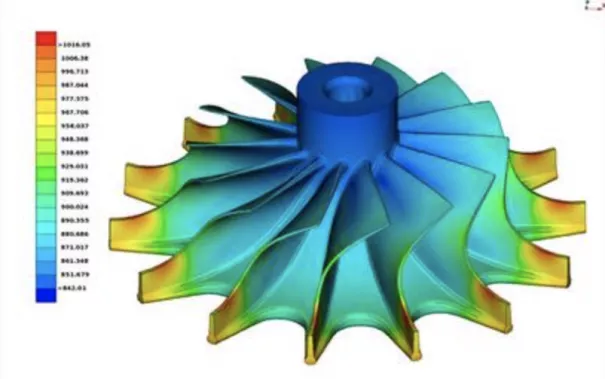
Structural analysis and optimisation working group
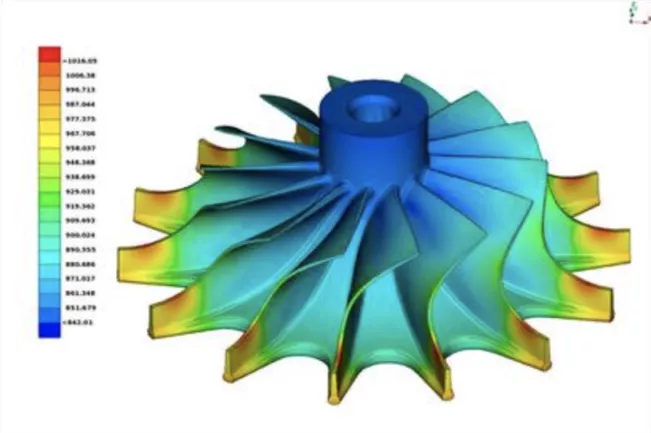
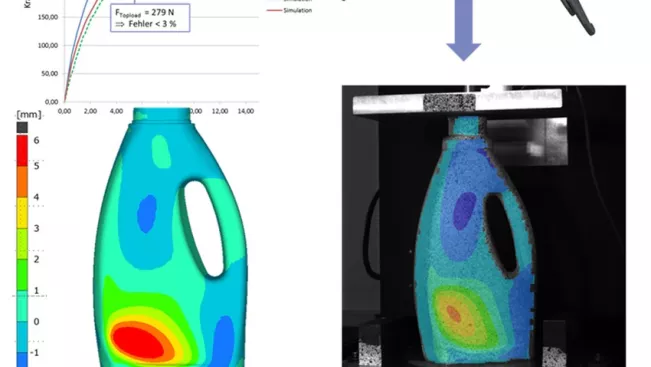
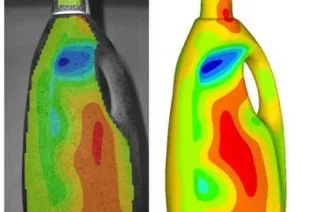
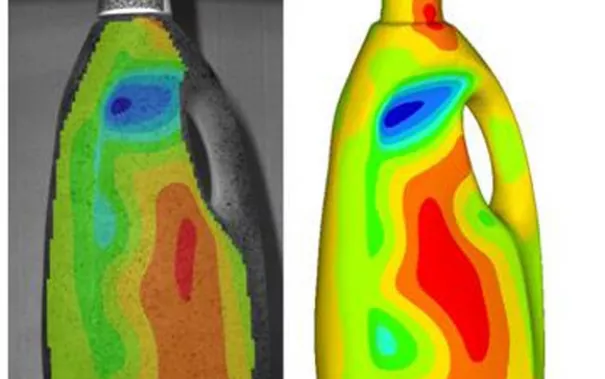
The working group deals with the simulation and mathematical optimisation of structural components based on the finite element method (FEM). In addition to modelling, the focus here is also on experimental and numerical methods for identifying the required material parameters. For thermoplastic materials in particular, such as those used in the extrusion blow moulding of hollow plastic bodies, it is necessary to consider and model the (manufacturing) process-related changes in material properties.
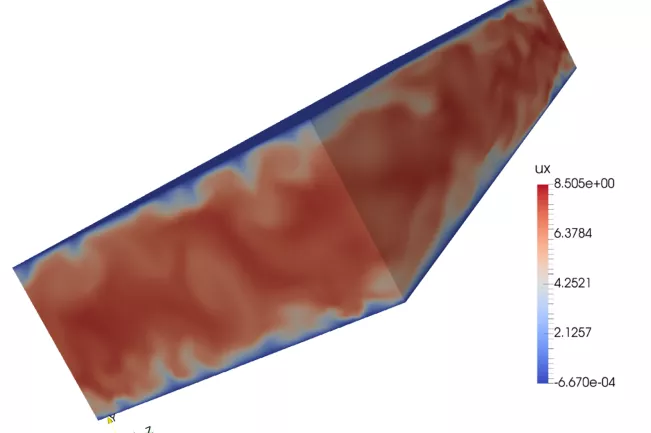
Lattice-Boltzmann Methods Working Group
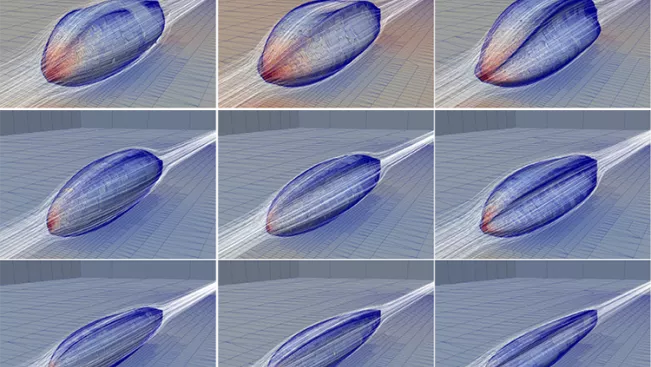
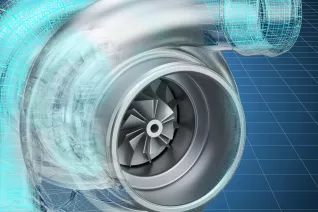
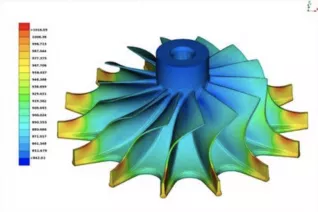
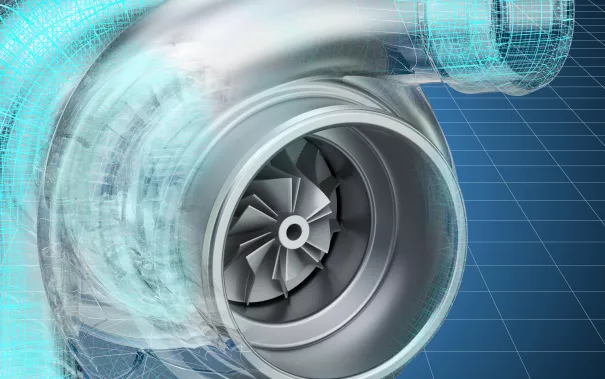
In recent years, the Lattice-Boltzmann method has proven to be a sophisticated tool for flow simulations. Compared to existing Navier-Stokes solvers, the Lattice-Boltzmann method enables efficient methods for calculating turbulent, thermal or multiphase flows.
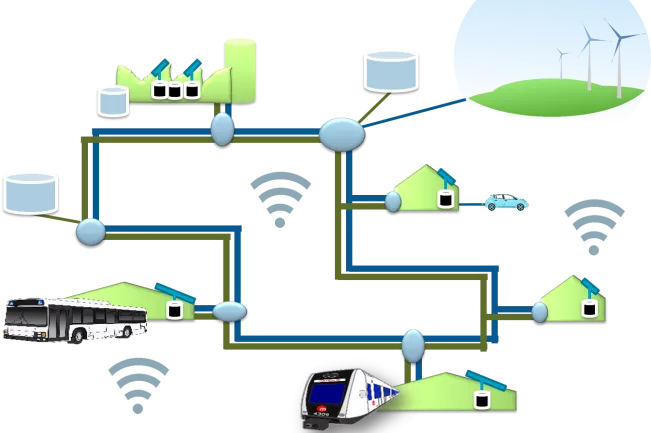
Networks working group
The working group deals with the modelling and simulation of infrastructure networks. In particular, it focuses on water, gas, electricity and heating networks on different scales, which can range from a household to supra-regional interconnected networks. With the help of computer experiments based on mathematical simulation, current issues relating to energy efficiency and security of supply and thus contributions to the energy transition can be provided.


Publication list
2020
Gerd Steinebach, Oliver Kolb:
Hydraulic modeling and energy view.
doi:10.4171/207-1/4 URL
BibTeX | RIS
Gerd Steinebach, David Dreistadt, Patrick Hausmann, Tim Jax:
Setup of simulation model and calibration.
doi:10.4171/207-1/7 URL
BibTeX | RIS
Tim Jax:
Network aggregation.
doi:10.4171/207-1/6 URL
BibTeX | RIS
Patrick Hausmann:
Demand forecast.
doi:10.4171/207-1/3 URL
BibTeX | RIS
Karl N. Kirschner, Dirk Reith, Wolfgang Heiden:
The performance of Dunning, Jensen, and Karlsruhe basis sets on computing relative energies and geometries.
doi:10.1080/1539445x.2020.1714656
BibTeX | RIS
Martin R. Schenk, Thorsten Köddermann, Karl N. Kirschner, Sandra Knauer, Dirk Reith:
Molecular Dynamics in the Energy Sector: Experiment and Modeling of the CO2/CH4 Mixture.
doi:10.1021/acs.jced.9b00503
BibTeX | RIS
2019
Dominik Wilde, Andreas Krämer, Knut Küllmer, Holger Foysi, Dirk Reith:
Multistep Lattice Boltzmann Methods: Theory and Applications.
doi:10.1002/fld.4716
BibTeX | RIS
2017
Tim Jax, Gerd Steinebach:
Generalized ROW-type methods for solving semi-explicit DAEs of index-1.
doi:10.1016/j.cam.2016.08.024
BibTeX | RIS
Contact us

Location
Sankt Augustin
Room
B 229
Address
Grantham-Allee 20
53757 Sankt Augustin
Telephone
+49 2241 8659751
Location
Sankt Augustin
Room
A042
Address
Grantham-Allee 20
53757 Sankt Augustin
Telephone
+49 2241 865 330
Dirk Reith
Computational Science and Engineering , Managing Director of the TREE Institute, Faculty Advisor BRS Motorsport
Research fields
Location
Sankt Augustin
Room
B 223
Address
Grantham-Allee 20
53757 Sankt Augustin
Telephone
+49 2241 865 9678
Tanja Clees
Engineering, particularly Informatics for Engineers, Modeling and Simulation, TREE - Member of Executive Board, Research Professorship
Research fields
Location
Sankt Augustin
Room
B 245
Address
Grantham-Allee 20
53757 Sankt Augustin
Telephone
+49 (2241) 865-9854Fraunhofer SCAI
Location
Sankt Augustin
Address
Schloss Birlinghoven
53757 Sankt Augustin
Telephone
+49 (2241) 14-4074