Research at the university
Research Database: Projects
Forschungsprojekte (253)
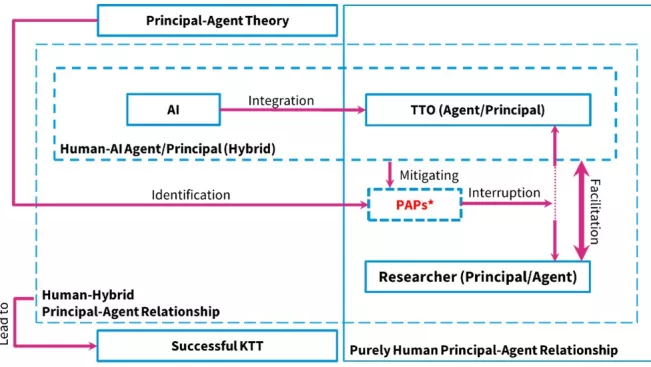
The PhD project of MASOUMEH TAVAKOLIGARGARI aims to improve how ideas from universities are turned into real-world innovations. Technology Transfer Offices (TTOs) often face challenges, especially in building effective relationships with researchers. The study explores how artificial intelligence (AI), using large language models and domain-specific data, can help overcome these issues. Following a design science approach, it develops and tests an AI-based system to support knowledge and technology transfer. The work also contributes to theory by extending Principal-Agent Theory to include AI-driven dynamics.
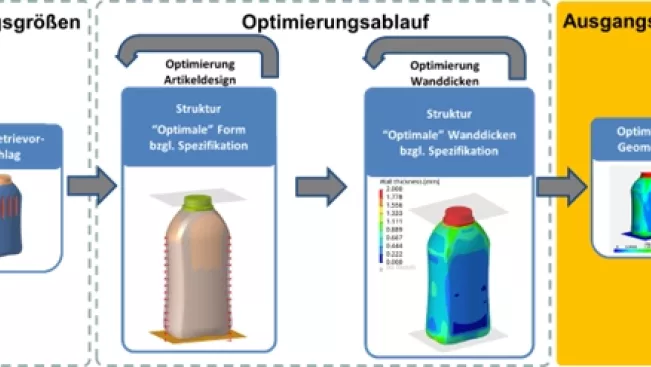
Plastics are widely used as packaging materials in many industries and can be produced particularly cost-effectively using extrusion blow moulds. However, there are often variations in the wall thickness - especially when recycled material is used. In order to develop robust and resource-saving products despite this, the shape and wall thicknesses must be specifically optimised. The aim of the PhD project of ALEXANDER BUSCH is to create a lightweight, stable product that functions reliably even considering variations in wall thickness.
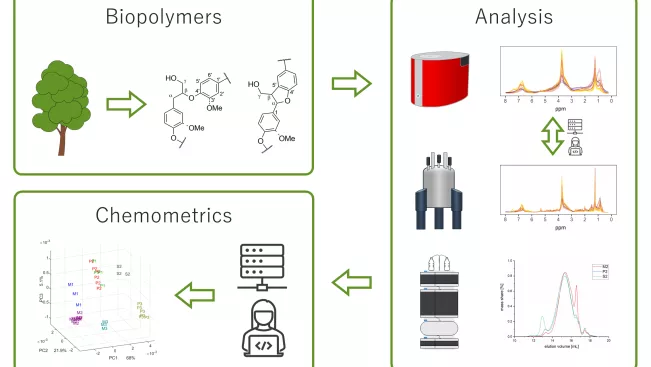
Biopolymers, i.e. natural plastics, are becoming increasingly important in medicine and industry. To be used reliably, their properties need to be known precisely - for example, how pure they are or how large their molecules are. PhD candidate RENE BURGER is developing new methods for this: he combines modern measurement methods such as infrared and nuclear magnetic resonance spectroscopy with intelligent data analysis. This saves time, conserves resources and makes the investigation simpler than with conventional methods.
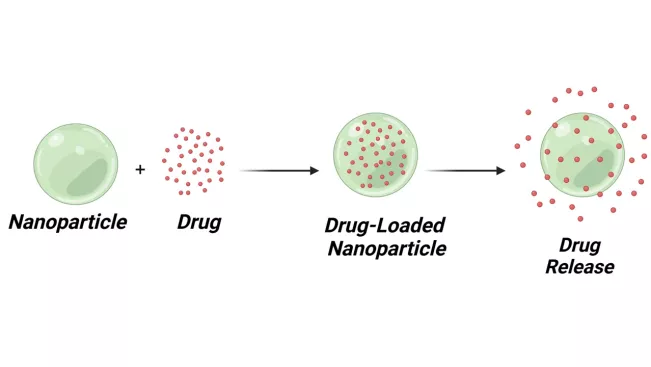
Biopolymers are increasingly employed in developing drug delivery systems (DDSs), which are designed to transport therapeutic agents to targeted sites while minimising side effects. An ideal DDS targets specific sites in the body and provides controlled and sustained drug release, protecting the active compounds from premature degradation during transport. Biopolymer-based DDSs offer a safer alternative to synthetic carriers due to their biocompatibility and biodegradability. Therefore, toxicity is reduced, and patient outcomes are improved. The PhD project of ALI MESHAL aims to synthesise and characterise biopolymer-based drug delivery carriers (nanoparticles), encapsulate bioactive compounds, and investigate their release behaviour over time.
High-quality water is one of the most widely used resources in industry, agriculture and private households. However, the treatment of raw and waste water to the desired water qualities (e.g. drinking water vs. ultrapure water) requires a large number of process steps in order to break down potentially harmful water constituents. Oxidation processes are widely used (e.g. by means of electrolytic ozonation), but these can also lead to the formation of critical disinfection by-products. PhD student PHILIPP GILLEMOT is therefore developing and characterising instrumental-analytical methods in order to differentiate between the oxidising substances produced during water treatment. These tools will be used to assess the extent to which the reductive treatment of contaminated water can be used as an efficient alternative to oxidative water treatment in order to render critical water constituents harmless.

The epithelial sodium channel (ENaC) plays an important role in sodium and water balance. Recently, it has been shown that ENaC also controls inflammatory responses such as the release of proinflammatory cytokines by immune cells. In her PhD project SARAH SHOUSHRAH aims to identify what specific ENaC isoforms are present in immune cells and how ENaC activity influences their function.
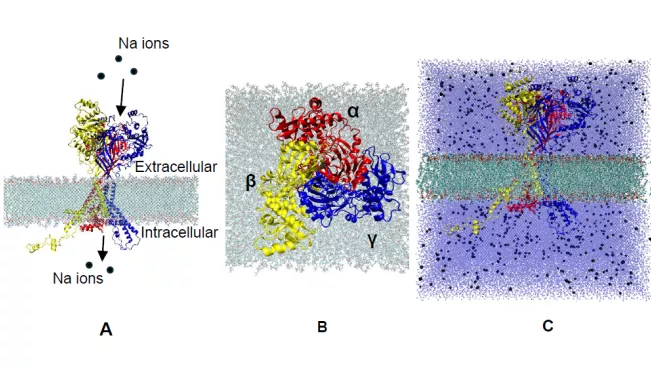
The doctoral project of KARAM BOTROUS deals with the epithelial sodium ion channel (ENaC), a heterotrimeric, membrane-bound protein, composed of α/δ, β, and γ subunits. ENaC is found in the epithelial cells of the kidney, lung, and colon. It mediates the reabsorption of sodium ions by allowing sodium to enter the cell. Therefore, it is essential for the regulation of the water-ion homeostasis and the control of blood pressure. Altered ENaC activity is associated with Liddle syndrome and salt-sensitive hypertension. The selective permeability of ENaC to sodium ions is maintained by the architecture of the channel and ist regulation through proteolytic cleavage in the extracellular domain. To understand how structural features of ENaC determine ion transport and channel functionality, high-performance molecular dynamics simulations employed to capture the structural dynamics of the channel. Elucidating the molecular mechanisms of the ENaC sodium channel provides critical insights into ENaC-related diseases and lays the basis for the development of novel targeted therapeutic strategies.
The doctoral thesis of MARIANA OCHOA MORENO examines how digital spaces can be made more democratic and what role digital citizenship and political communication play in this process. The focus is on the question of how vulnerable citizens such as young people, senior citizens or people with a migration background can be protected from digital risks and whether digital platforms can improve their participation in online political processes.

Wide-bandgap semiconductors enable high-efficiency and high-power-density converters, but their fast switching causes electromagnetic emissions that must be filtered for compliance. Traditional Passive EMI Filters (PEFs), especially bulky Common Mode Chokes (CMCs), add significant size, weight, and cost. Active EMI Filters (AEFs) mitigate this by using amplifiers to cancel noise, allowing smaller and lighter passive components.
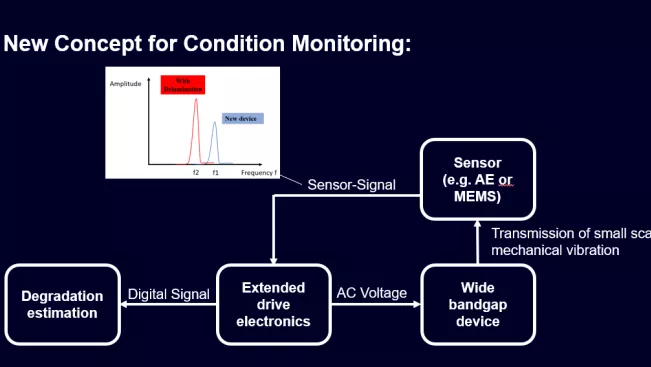
The research project of PHILIPP BICKEL investigates physical phenomena and metrological possibilities for the non-invasive ageing determination of power semiconductor modules, with a focus on thermally induced delamination and cracking of solder joints in power semiconductor modules, which are frequent causes of failure. Innovative approaches are being researched, such as the use of the piezoelectric properties of SiC and GaN semiconductors as actuators and sensors as well as the analysis of scattering parameters (S-parameters) to detect signs of ageing. The aim is to evaluate the suitability of these methods through simulations and laboratory tests and to create an engineering basis for more precise service life predictions in power electronics.
Contact Points
Centre for Science and Technology Transfer (ZWT)
Room
F 405
Vice President Research and Transfer
Campus
Sankt Augustin