Department of Social Policy and Social Security Studies
Public Policy und Transformation: Klima-Sozial-Politik (MA)

Offene Sprechstunde für Studieninteressierte
wir möchten Ihnen die Möglichkeit geben, der Studiengangsleitung und der Studiengangskoordination Ihre Fragen zum Studiengang zu stellen.
Sie finden hier zeitnah Termine, an denen eine Online-Sprechstunde stattfinden wird. Es ist keine Anmeldung notwendig.
Study Facts
Degree
Master's degree
Standard period of study
3 Semester
Lecture language
German & English
Campus
Sankt Augustin
Start of study
Summer Semester (March)
Type of study
Full-time
Admission requirements
A professional university degree (210 ECTS) with 30 ECTS from at least three of the following areas: politics, sociology, economics, communication, empirical methods: Further information on admission requirements
Admission type and application deadline
The Master's programme Public Policy und Transformation: Klima-Sozial-Politik can only be started once a year in the summer semester. You can apply to start your studies in the summer semester between 15 November and 15 March.
Language skills
German language skills at level C1 (CEFR) are required. Proof of this can be provided in the form of a German university entrance qualification or the following German language certificates: German language certificates. In addition, English language skills at level B2 (CEFR) are required. Proof of university entrance qualification is accepted if it demonstrates English language skills at the required level, or an English-language secondary school/university degree or the following English language certificates English language certificates.
Costs
Only the current semester contribution is payable for this degree programme: Semester contribution and fees.
Download flyer
Course Content and Qualification Objectives
Course of Study
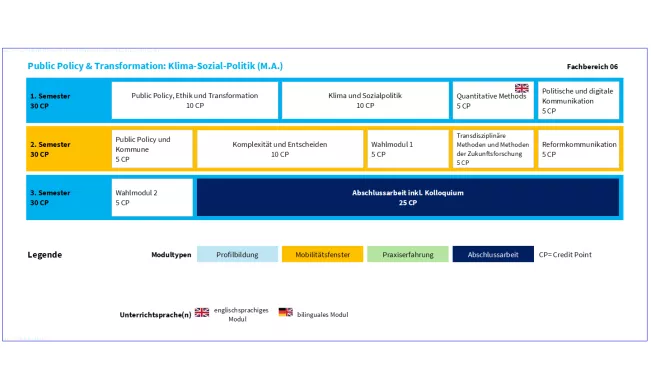
The interdisciplinary Master's programme Public Policy und Transformation: Klima-Sozial-Politik provides in-depth knowledge at the interface of ecological sustainability, public policy and social justice over three semesters. In the first two semesters, students acquire sound knowledge in sociology, political science, economics, ecology and quantitative and transdisciplinary research methods. This content is supplemented by modules on political communication and ethical reflection. The third semester focuses on an independent research project that prepares students for their Master's thesis and is carried out in close cooperation with practitioners. The programme follows the concept of planetary health and is based on the five core areas of this educational framework.
Prospects and Job Opportunities
The programme prepares students for careers in the public sector and in organisations that advise the public sector or generate and disseminate new knowledge in or for this field. Jobs in the fields of scientific collaboration, strategy development, coordination, communication and consulting are a perfect fit. Employers include all institutions with a focus on transformative action, in particular local authorities, ministries, political parties, planning offices, associations and NGOs, as well as think tanks and research institutions. Private sector institutions may also be potential employers, for example in the field of corporate social responsibility.
Practical Relevance and Teaching Formats
Students are empowered to view a problem from different disciplinary perspectives, thereby learning a variety of solution strategies and assessing their possible applications and implications. This is also achieved through the use of concrete case studies and problem-based learning approaches. In the third semester in particular, the focus is on a specific project, which students are then expected to work on as part of their Master's thesis. Close cooperation with practitioners is essential here and offers students direct contact with potential employers.
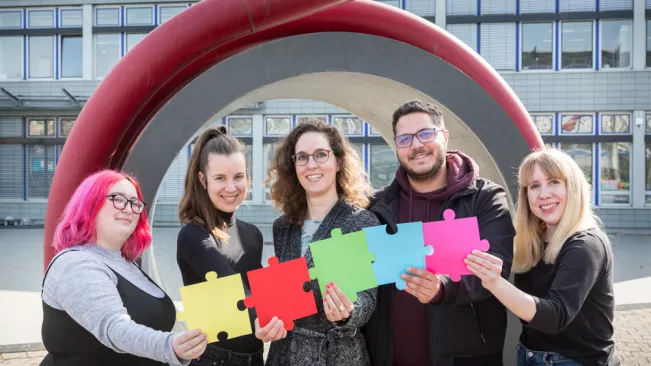
Studying in small groups also encourages students to actively participate in the teaching and learning processes and engage in cooperative and productive exchanges with the teaching staff.
Study Location and Learning Environment
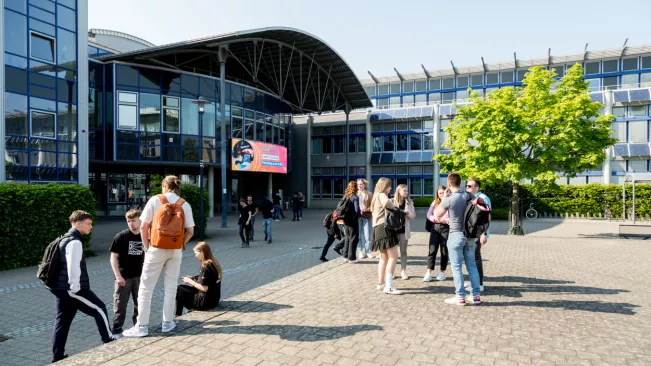
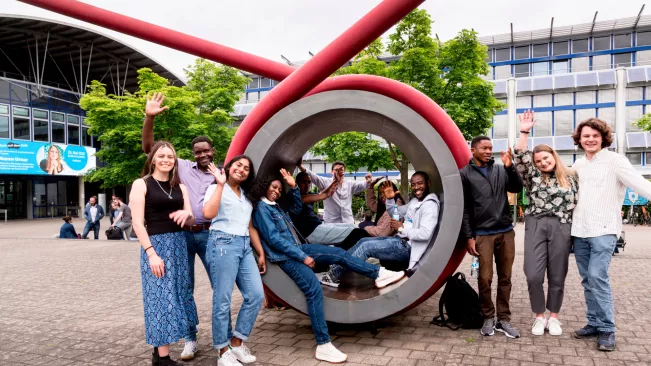
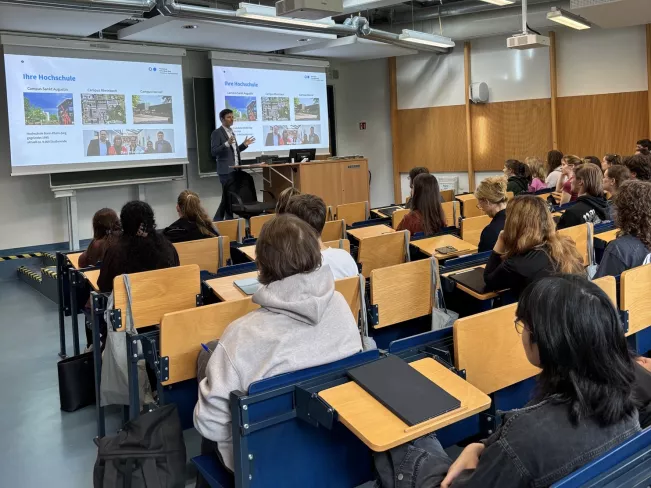
The Sankt Augustin campus is located in North Rhine-Westphalia and is easily accessible by public transport from Cologne, Bonn, Düsseldorf or Koblenz. Study and conduct research with us on a modern campus with excellent facilities. Small learning groups also enable you to establish good contacts with other students and lecturers. The university has a strong network and cooperates with around 90 foreign universities in more than 40 countries.
Course of Study


„As a graduate of H-BRS, I know how important it is to have an education that is both practical and academically sound. The Master's programme in Public Policy & Transformation prepares the next generation to actively shape the future of our cities and communities.”
Marcel Wolf - District Administrator, Vaihingen District Office (Stuttgart) & Alumnus of the BA programme in Sustainable Social Policy

Introductory offers and news for prospective students


Good reasons to study at H-BRS
















Accreditation
Contact

Location
Location
Sankt Augustin
Address
Grantham-Allee 2-8
53757 Sankt Augustin
Contact points
Course guidance service Master Public Policy und Transformation: Klima-Sozial-Politik
Campus
Sankt Augustin
Room
F203
Departmental Office Social Policy and Social Security Studies at the Sankt Augustin Campus
Campus
Sankt Augustin
Room
F 233
Opening hours
Tuesdays and Thursdays : 9.00 to 13.00
Contact to the Student Services
Opening hours
Telephone consultation hours: Monday - Friday: 10:00 - 12:00
Personal consultations by appointment only