Research at the university
Research Database: Projects
Forschungsprojekte (264)
The research project "Diversity of Insects in Nature protected Areas (DINA)" is the first of its kind in Germany and aims to address research deficits on the effects of agricultural use in the vicinity of nature conservation areas in the field of applied biodiversity research. Thus, the impact of agricultural use on biodiversity is to be assessed, with insects being the focus of the investigation.
Project management at the H-BRS
Prof. Dr Wiltrud Terlau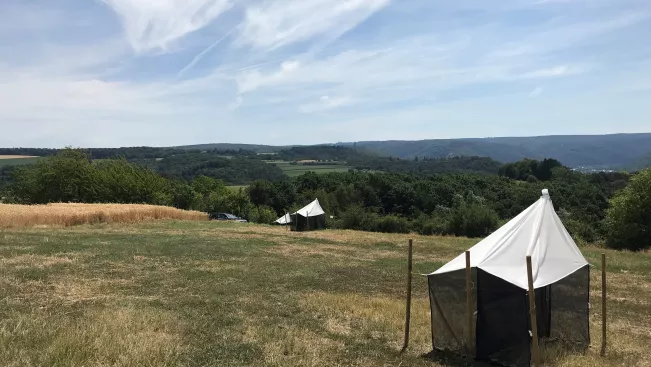
Modern sensor technology and mobile measuring systems enable close monitoring of environmental data and pollution. Examples are climate data and trends, pollution and emissions, or changes in the microclimate due to large-scale construction measures. Through municipalities ("Smart Cities"), but also in citizen science ("Citizen Science" and "Citizen Sensors") projects, a wide variety of sensor systems are used, which can also provide important information in the event of disasters and major damage.
Project management at the H-BRS
Prof. Dr André Hinkenjann Prof. Dr Ernst Kruijff Prof. Dr Peter-Michael Kaul Prof. Dr Robert Lange
"Dumsor" is the Ghanaian word for the frequent blackouts that happen on the country's electricity grid. Like many developing and emerging countries, Ghana suffers from frequent power cuts. On top of this, there is also the instability of the power grid. Both have a major impact on the health care services. Although electricity from photovoltaic systems could provide a solution, the photovoltaic (PV) market in Ghana remains relatively underdeveloped. This is where the EnerSHelf joint project steped in. Through dedicated research, research-practice collaboration in interdisciplinary teams, and on-the-ground implementation, the project paved the way for improved energy access and resilience within the healthcare sector, ultimately contributing to the well-being and prosperity of the Ghanaian population.
Project management at the H-BRS
Prof. Dr Stefanie Meilinger Prof. Dr Katja Bender
The reTURN project partners are stepping up to revolutionize the transportation sector through sector coupling and to demonstrate a process for producing climate-friendly synthetic fuels at a viable cost.
Project management at the H-BRS
Prof. Dr Stefanie Meilinger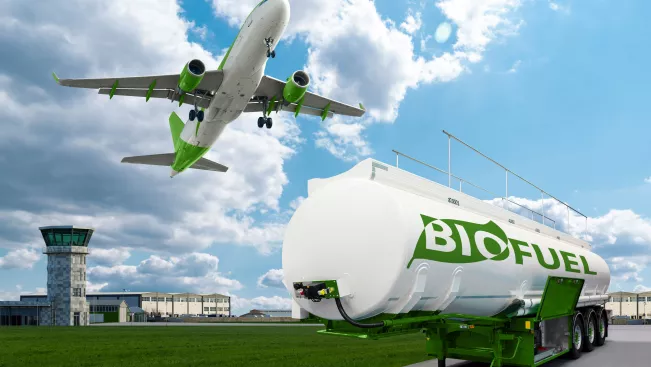
The continuously improving performance of UVC LEDs over the past few years offers new possibilities in the design and construction of UV photometers for the measurement of ozone. The aim is to develop an automated experimental setup to determine the long-term stability of the LED ozone sensor as well as methodology for monitoring.
Project management at the H-BRS
Prof. Dr Peter-Michael Kaul
The occurrence of N-nitrosamines is an important public health issue. Due to their good water solubility, they enter the aquatic environment via industrial and municipal input pathways. For companies, they are a major problem due to their carcinogenic potential, diversity and versatile occurrence due to frequent formation in technical processes. The aim is to develop a sensitive, sufficiently selective, economical, and on-site analytical method with sample preparation that can be automated as much as possible.
Project management at the H-BRS
Prof. Dr Michaela Wirtz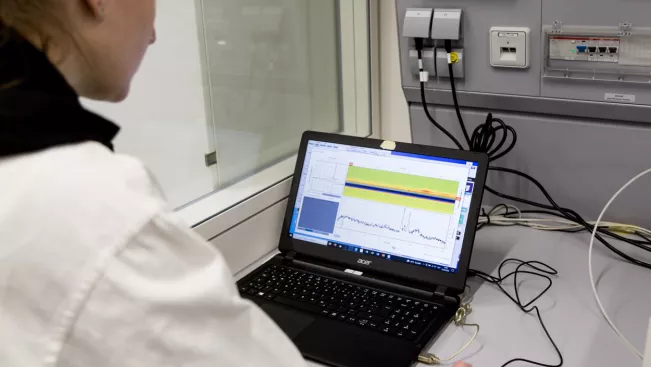
N-nitrosamines, along with other pollutants, have become a cross-sectoral, persistent, and important health issue in various areas of occupational, environmental and product protection in recent years. They are among the organic nitrogen compounds with a high carcinogenic potential. The aim is to provide a new method with which, firstly, nitrosamines in air and, secondly, also in other matrices can be measured more sensitively than before with simultaneous robustness and result validity.
Project management at the H-BRS
Prof. Dr Michaela Wirtz
The aim of ALBERO is to develop concepts and technologies for the safe integration of alternatively fuelled vehicles into RORO ferry services. Alternative propulsion systems such as electric vehicles and battery-powered cars as well as alternative fuels such as natural gas and hydrogen are to be considered. The project will develop technical, structural and organisational measures to enable safe transport and (for electric vehicles) safe charging during the journey.
Project management at the H-BRS
Prof. Dr Peter-Michael Kaul
Artificial intelligence methods can efficiently help us understand aftermath requirements, constraints, and decision-making processes at an early stage. Algorithms are typically used in late stages of engineering development projects. We want to reverse this and show engineers early on which types of solutions meet their requirements.
Project management at the H-BRS
Dr Alexander Hagg
In this project, the Bonn-Rhein-Sieg University of Applied Sciences will analyse the availability of brewer's grains and the sustainability of procurement and processing. The design of a suitable electrochemical electrolysis cell will be carried out at Robert Gordon University.
Project management at the H-BRS
Prof. Dr Tanja Clees Prof. Dr Stefanie Meilinger
Contact Points
Centre for Science and Technology Transfer (ZWT)
Room
F 405
Vice President Research and Transfer
Campus
Sankt Augustin